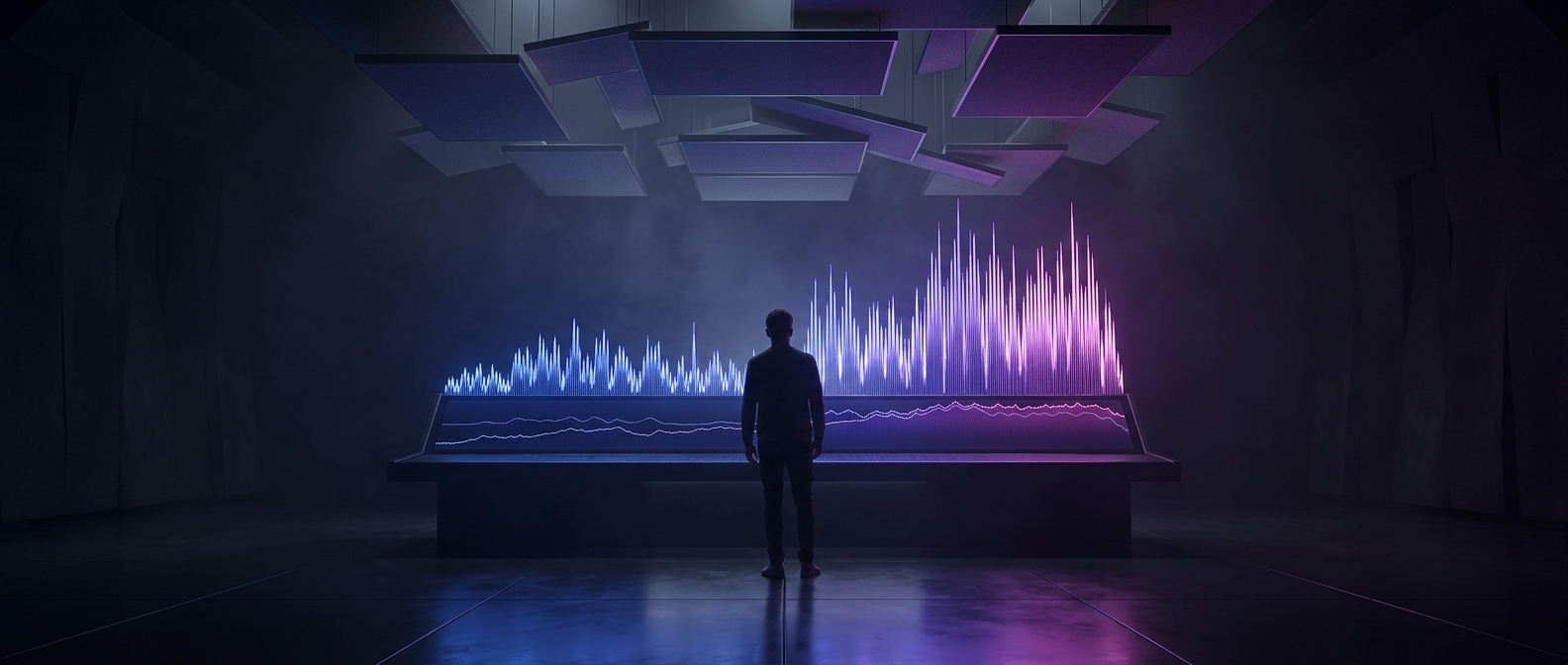
How compression brings quiet sounds forward
A song contains peaks and valleys: a kick drum may hit sharply while a singer’s breath or a fading guitar sits much lower. Dynamic range is the gap between those quiet and loud moments. In audio mastering, compression narrows that gap by turning down sounds that cross a chosen level. Engineers can then raise the overall level, bringing softer details closer to the peaks.
A limiter is a particularly forceful kind of compressor. It catches brief peaks that might otherwise clip—turning into harsh digital distortion—and holds them below a ceiling. Used aggressively, it lets a track stay loud for more of its duration, so it can seem fuller and more immediately present when heard beside a quieter recording.
The tradeoff behind the punch
That consistency can help a song cut through a playlist, car speakers, or a noisy room. But reducing the distance between a drum hit and the sound around it can blunt the hit’s contrast. Push the process too far and transients—the quick attacks that give drums and consonants their snap—can lose impact; the music may feel tiring or crowded.
Streaming services may turn tracks down to bring playback levels closer together. That changes the volume coming out of the player, not the master’s quiet-to-loud relationship. A heavily compressed song can therefore remain less dynamic even when the service lowers its playback level. The loudness listeners notice is not simply a contest in maximum volume: it is also how consistently a track keeps sound near that level.