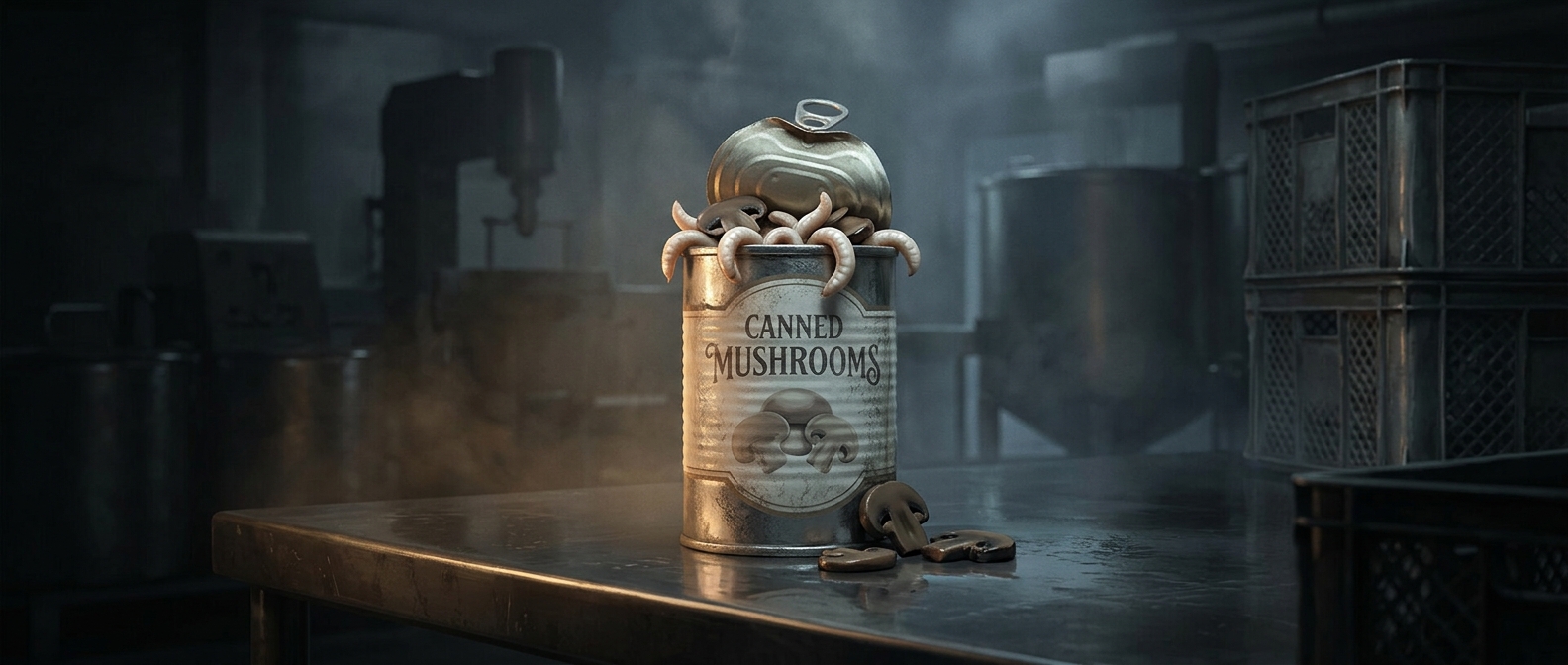
Why food rules tolerate a few insect larvae
Mushrooms grow in damp environments where small insects can lay eggs or hide among the caps and gills. By the time mushrooms are harvested, cleaned, sorted, and canned, some tiny larvae may still be difficult to spot. Washing and inspection reduce the problem, but removing every trace from a large crop would require increasingly intensive sorting—and still might not guarantee a completely insect-free product.
A limit is not a recipe
Food regulators set defect thresholds for certain foods, including canned mushrooms. These thresholds help determine when the amount of a natural, unavoidable defect is high enough to trigger enforcement. They are not a target for manufacturers, and they do not mean every can contains larvae or that a producer may deliberately add them.
That distinction matters: regulators weigh the practical limits of inspecting agricultural products against the need to keep contamination at a low level. A defect threshold is one way to draw that line consistently across a huge volume of food.
What happens to the larvae?
Canning uses heat to make the food safe from dangerous microbes when the product is properly processed and the can remains intact. The possibility of a tiny larva being present is therefore a quality defect, not the same thing as a live pest or a sign that the can is unsafe. The rule reflects how hard it is to make food grown outdoors perfectly free of every insect trace—not a preference for leaving them in.