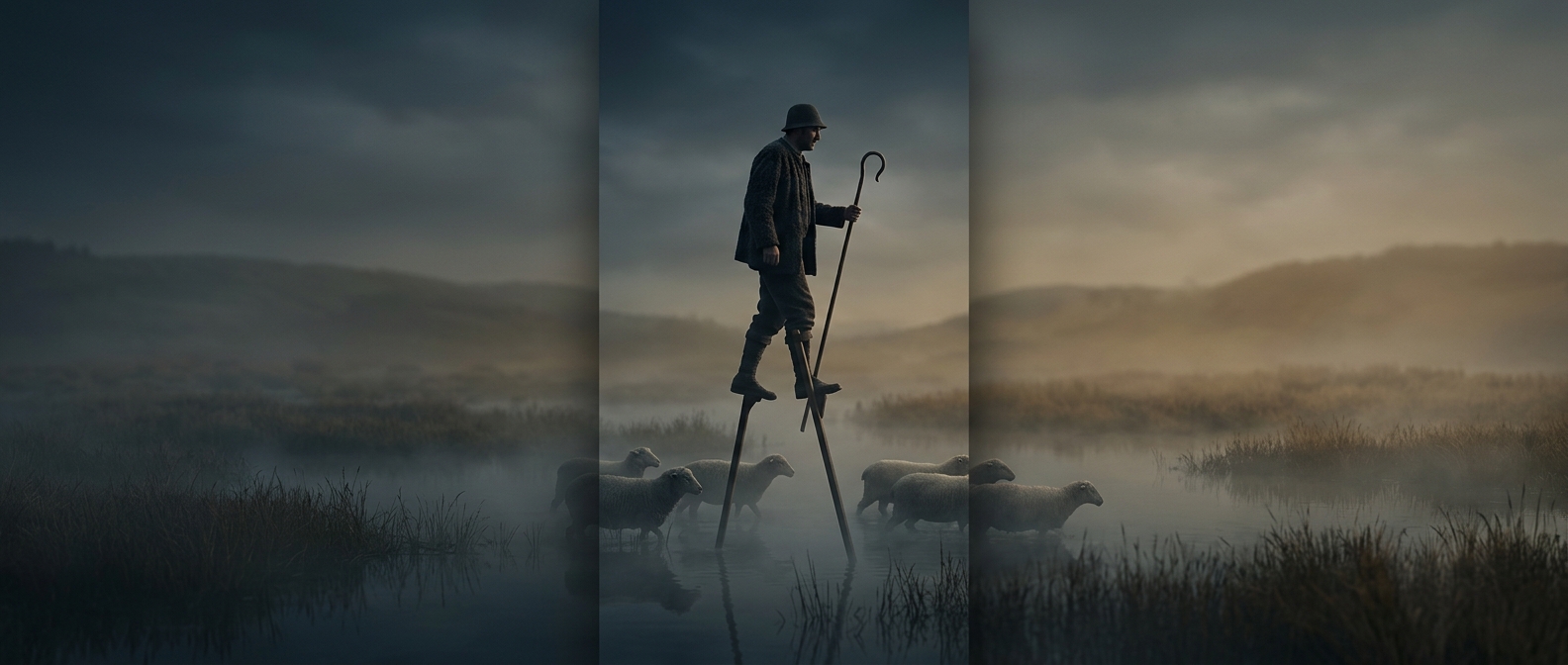
A simple way to rise above the Landes
In the flat, marshy Landes, ordinary walking could mean picking a slow route through damp, uneven ground. Shepherds’ stilts changed both the height and the reach of each step: wooden supports strapped to the legs lifted the wearer’s feet and gave a clearer view across low scrub. From higher up, a shepherd could keep track of scattered sheep without constantly pushing through the vegetation.
Height traded for balance
Stilts are a form of personal transport, but they do not make difficult ground disappear. They shift the walker’s weight onto narrow supports, so staying upright takes practice and each step has to be placed deliberately. In return, they can help a person move over ground that would be awkward to cross at ordinary height—and make it easier to see over plants that obscure a flock from below.
That tradeoff suited a job spent moving through open countryside rather than following a paved route. The shepherd gained elevation without a cart, road, or complex machinery; the cost was mastering an unfamiliar way of walking. The result was a strikingly practical tool: not a faster way to cover every kind of terrain, but a way to combine footing and lookout in one device.