Why a Small Bump Becomes a Big Challenge
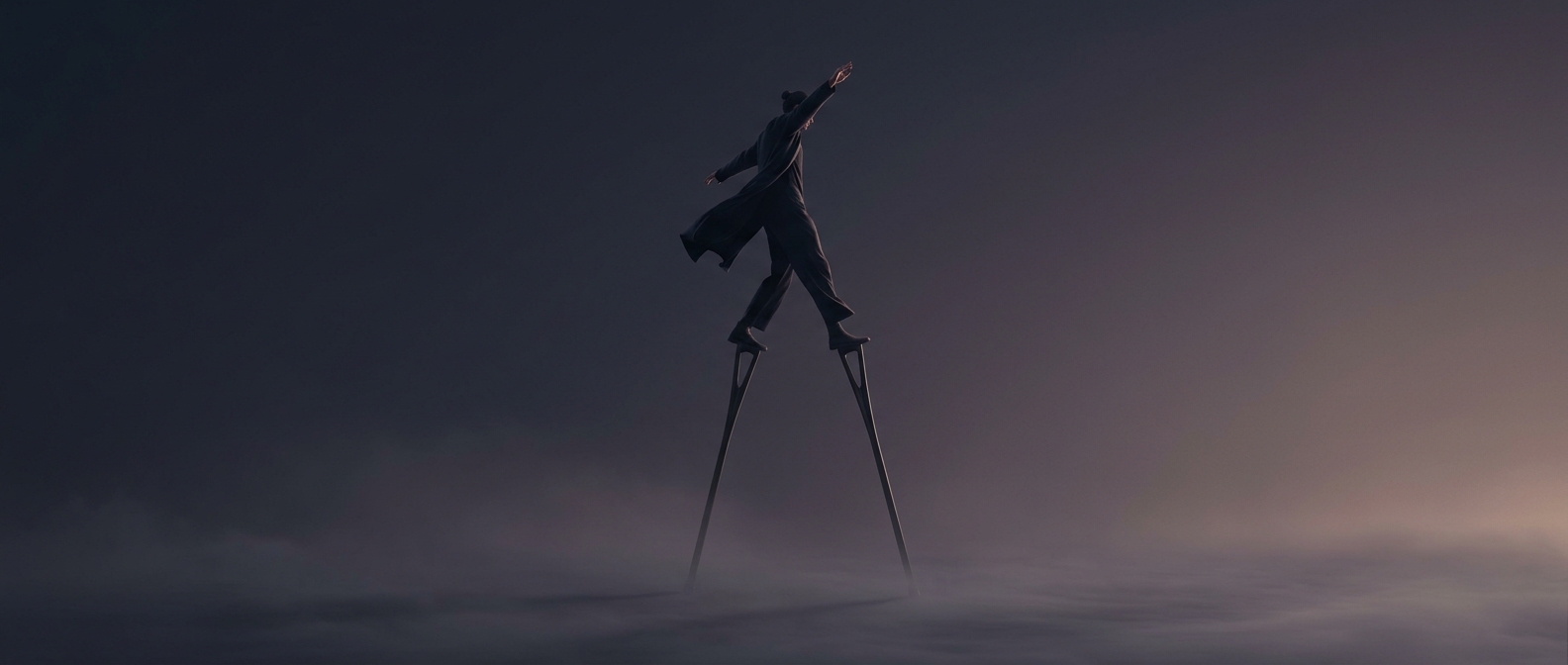
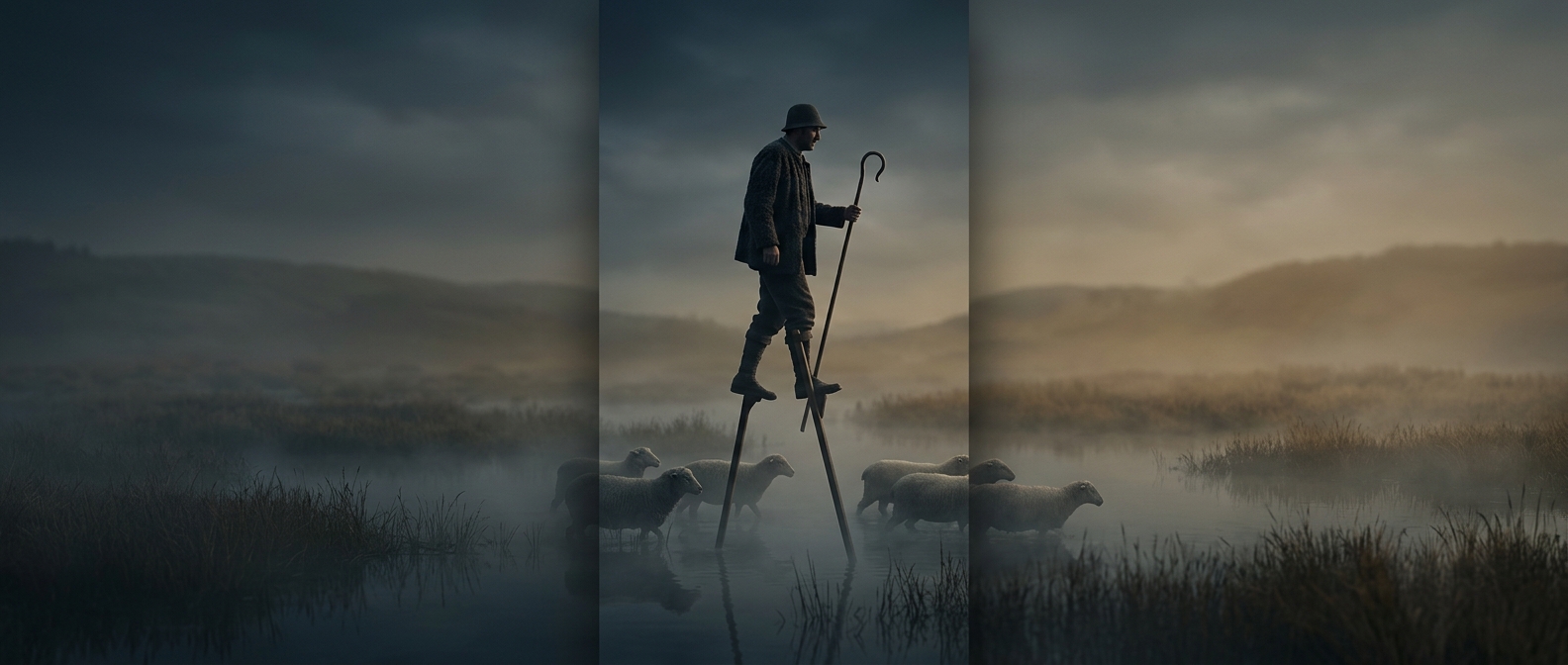
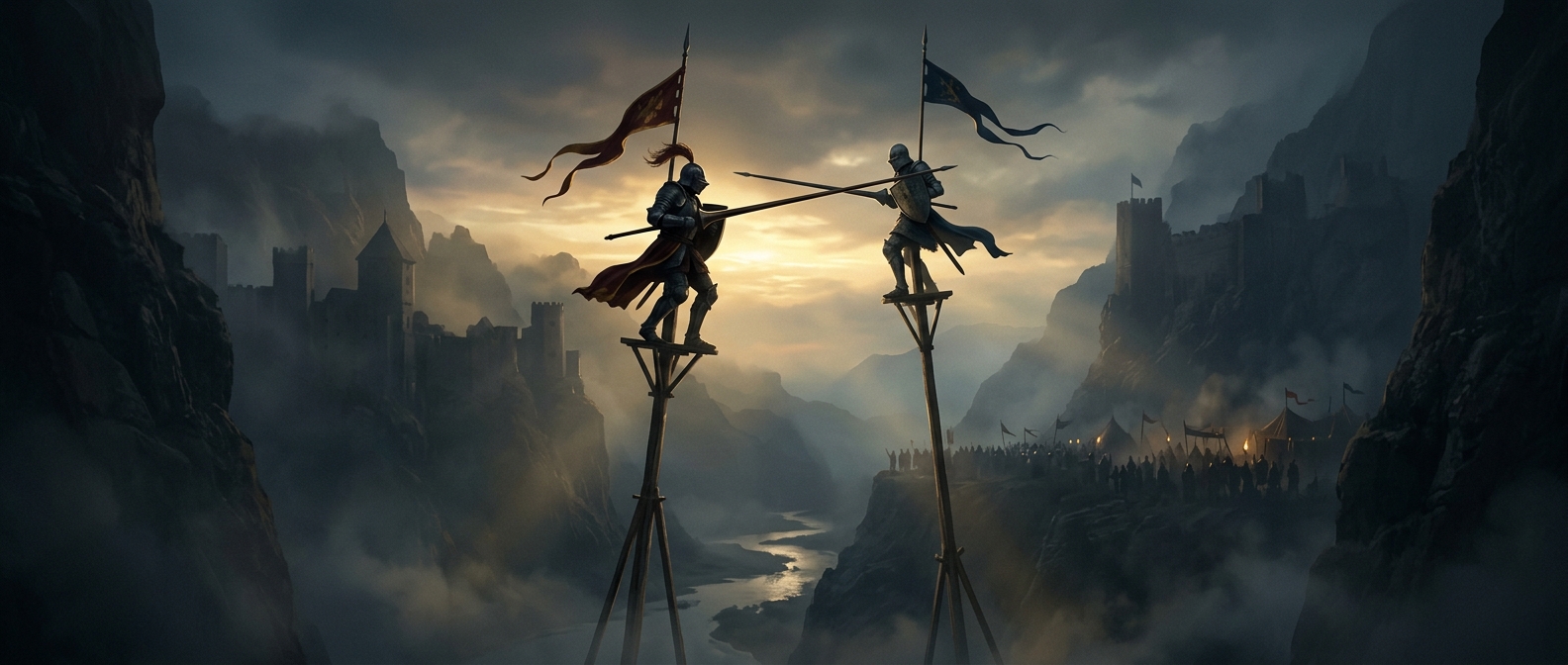
A person on stilts balances over supports that are much narrower than ordinary feet. That leaves little room to shift weight before the body’s center of mass—the point where its weight is effectively concentrated—moves outside the support area. Once that happens, the stilt begins to tip, and the rider has to correct quickly by adjusting posture or moving a pole back underneath the body.
Height makes those corrections more demanding. A sideways shove applied high above the ground creates a turning effect around the point where a stilt meets the floor. The higher the rider is, the more leverage that shove can have. So even contact that looks modest from the ground may require a rapid balance response.
Reach Without Extra Stability
The long poles solve a different problem: they let the jousters reach each other across the gap created by standing high on stilts. But extending reach does not widen the base beneath either rider. The contest separates two kinds of control: the pole extends the attack, while balance still depends on the small area underfoot.
That mismatch is what makes the exchange so precarious. A rider must manage the pole’s movement while keeping the body aligned over the stilts; a push can disturb that alignment just as the rider is trying to make contact. The higher position gives the joust its dramatic reach, but every correction still has to end at the narrow supports on the ground.