Why the Hierophant carries a three-barred cross
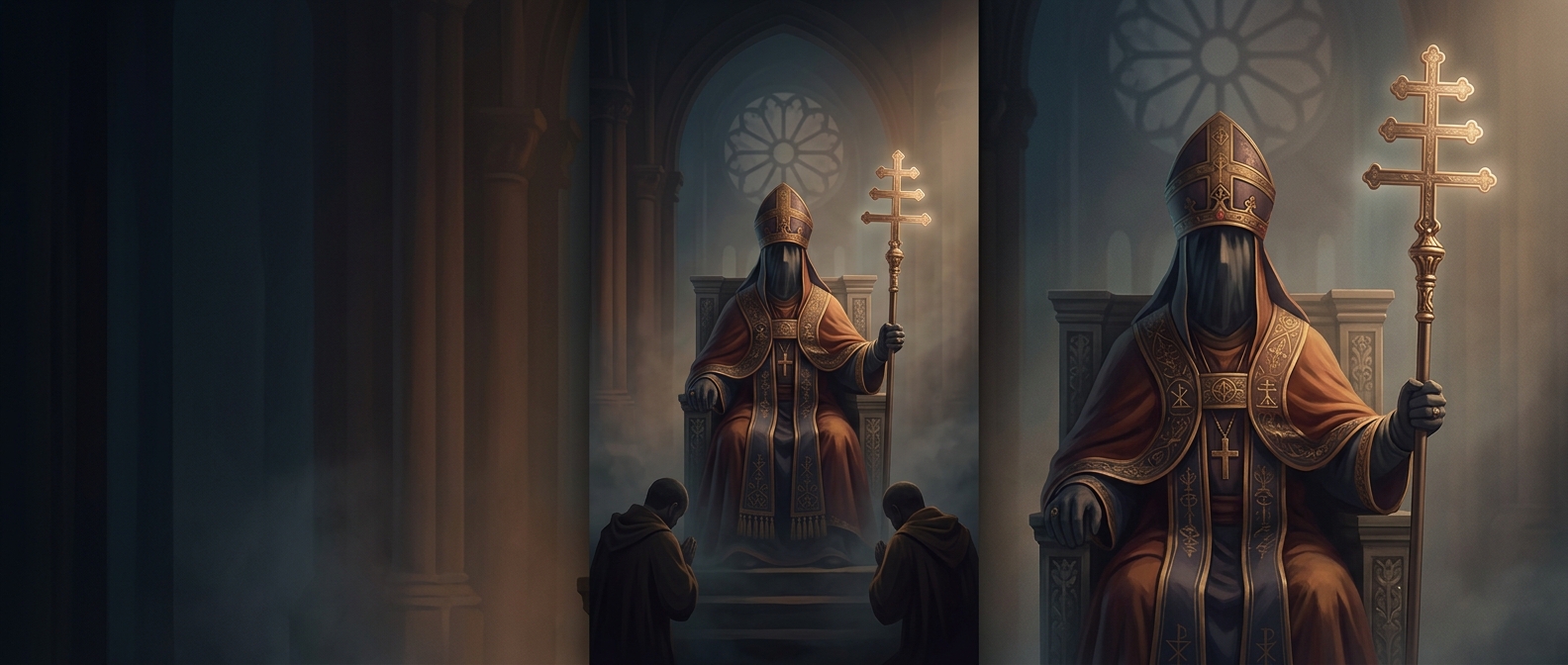
The cross on the Hierophant’s staff is more than a religious emblem: in the card’s visual language, it marks the figure as a bearer of institutional authority. Its stacked bars suggest rank and ordered layers of power, reinforcing the sense that this is someone who speaks for an established tradition rather than offering a private, unconventional path.
The design also echoes the triple-barred cross used in Christian imagery for high church authority. In the tarot card, that resemblance helps make the Hierophant legible as a religious teacher or presiding figure. The image draws on the familiar appearance of ceremony—robes, a staff, and attendants—to show how beliefs and rules are handed down through institutions.
A card about learning the rules
In readings, the Hierophant is commonly associated with instruction, shared values, and accepted ways of doing things. Its emphasis is less on blind obedience than on the structure that lets a community preserve and teach its practices. The same structure can provide guidance and belonging, but it can also press people toward conformity.
That tension is built into the image: the staff signals authority, while the card’s traditional associations point to the rules that authority protects. The Hierophant therefore represents not simply faith, but the social process by which a tradition tells people what to learn, follow, and pass on.