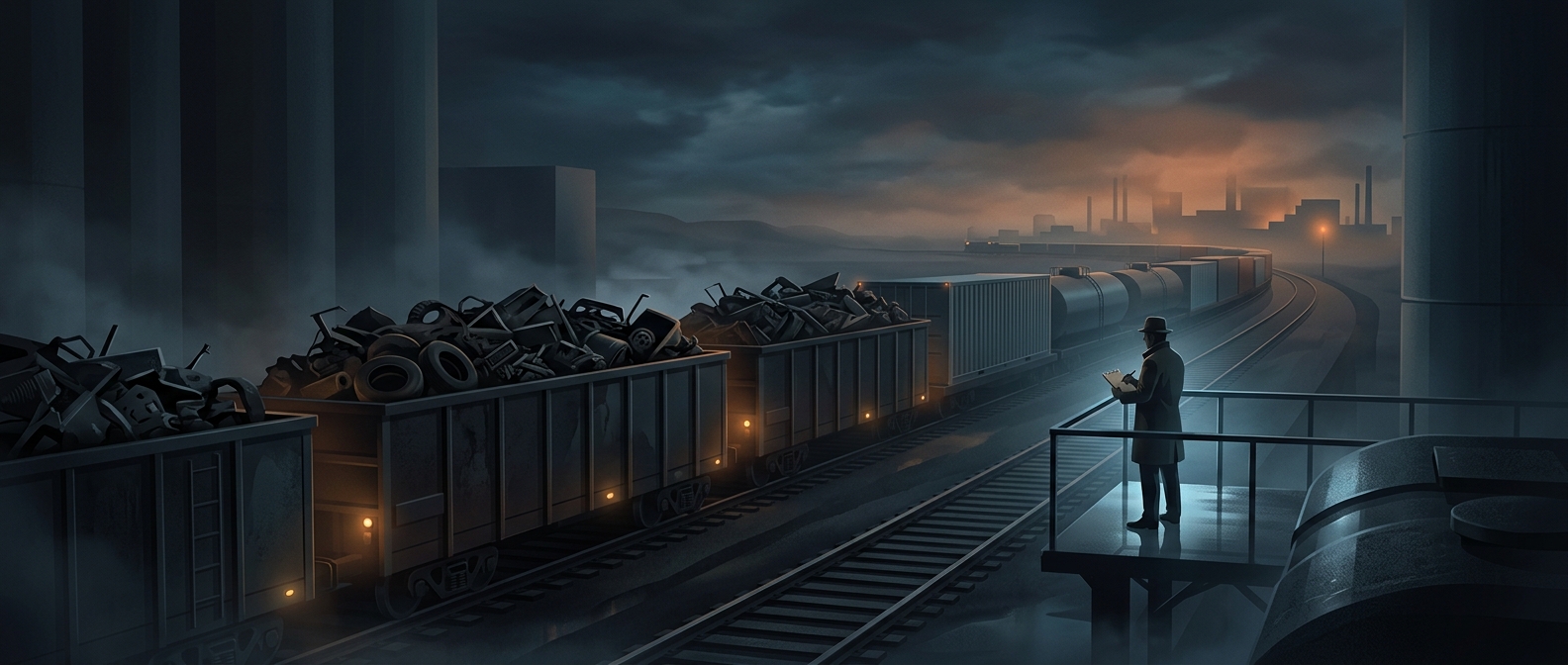
Industrial waste is a shadow of production
A factory’s output is only part of what moves through the economy. Making steel, machinery, appliances, and other goods also creates leftovers: scrap that can be recycled, damaged or excess materials, and packaging that must be hauled away. Those leftovers become freight, giving economists another way to track activity beyond the finished products themselves.
The signal comes from a simple chain. When production runs steadily, factories tend to generate a steady flow of waste. When orders weaken and production lines slow, less material is processed—and less industrial residue is available to ship. A change in rail traffic can therefore reveal a shift at the factory level, sometimes before it is obvious in broad economic statistics.
Why rail movements can be revealing
Rail is useful for this kind of monitoring because it carries large, heavy loads over long distances. Economists can watch whether shipments of industrial waste and scrap are holding up or falling, then compare that pattern with other measures of manufacturing and freight activity. The train is not carrying a recession forecast; it is carrying a physical byproduct of work being done—or not done.
That distinction matters. A drop in these shipments can reflect changes in where waste is collected, how it is recycled, or how it is transported, as well as a slowdown in production. No single freight stream can establish that the whole economy is contracting. But when waste shipments weaken alongside other signs of reduced activity, the pattern can help show that a slowdown is reaching the factories that supply goods to the rest of the economy.