How a Ball Bearing Carries a Load
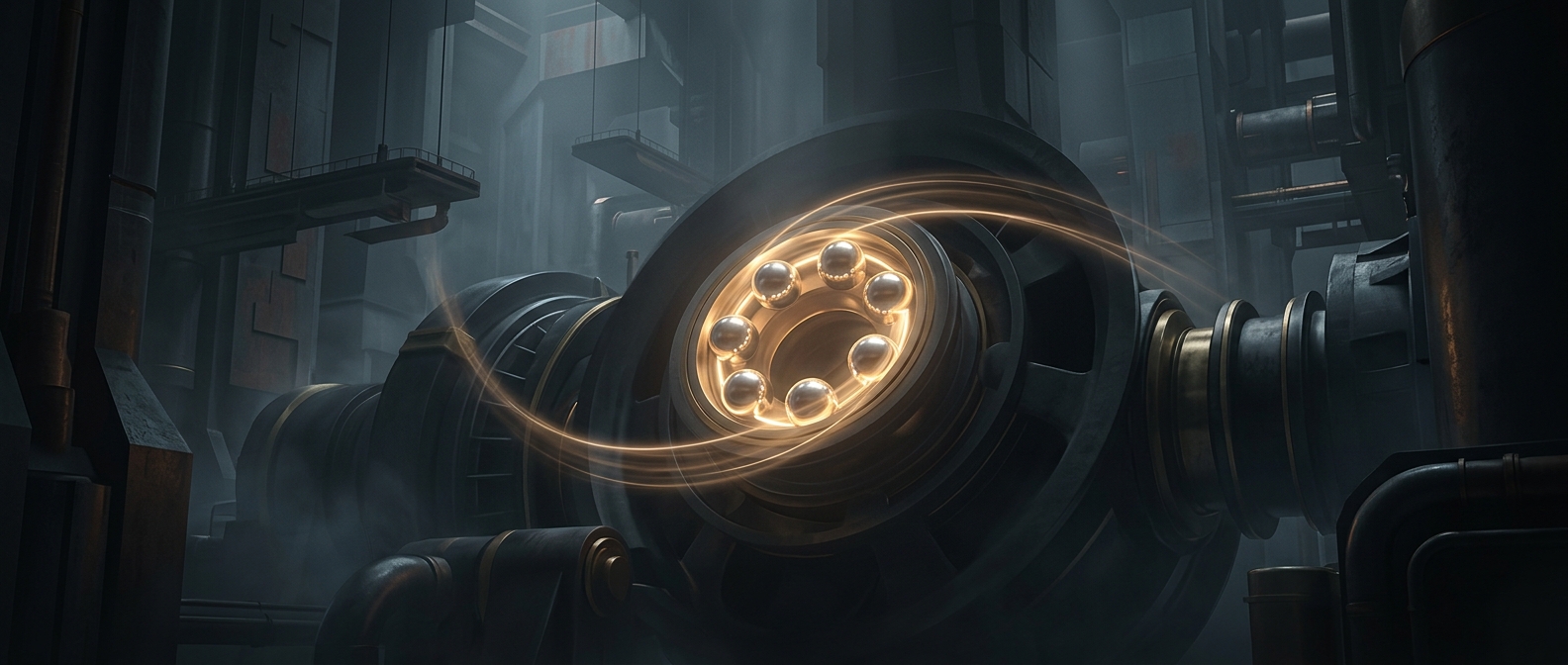
A bearing does more than put steel balls between two parts. The balls run in shaped grooves called raceways, one on the rotating shaft or hub and one in the surrounding housing. As the inner race turns, the balls roll along the grooves and carry the load across the narrow spaces between the parts.
That contact is small, so the steel must be hard and accurately shaped: a tiny flaw or dent can concentrate force and cause wear. Many bearings also use a cage to keep the balls evenly spaced. Lubricant forms a thin film over the moving surfaces, reducing wear and helping carry away heat. Rolling is not friction-free, but it generally takes less force than sliding the same loaded surfaces past each other.
Small Losses, Large Operating Costs
In a motor, vehicle wheel, or conveyor, bearings work continuously. If they create less resistance, the drive needs less energy to keep the equipment moving. Across machines that run for long hours, a modest reduction in wasted energy can matter to operating costs. Bearings also help equipment turn predictably, rather than letting shafts scrape against their supports.
The tradeoff is that bearings are precision components, not permanent ones. Dirt, inadequate lubrication, excessive loads, or poor alignment can damage the raceways and balls. As wear grows, the bearing may run hotter and noisier, eventually forcing a repair or shutdown. In a factory, the cost of a failed bearing can therefore include lost production as well as the replacement part.
A component small enough to fit in a wheel hub can help determine how smoothly an entire production line runs—and whether it keeps running at all.