How a gesture gives a problem somewhere to go
Imagine trying to picture how a block would look after two turns. You must keep its starting position in mind, apply the first turn, remember the result, and then apply the second. A hand can act out each rotation in space. Instead of preserving every intermediate step mentally, you can look at the movement and continue from there.
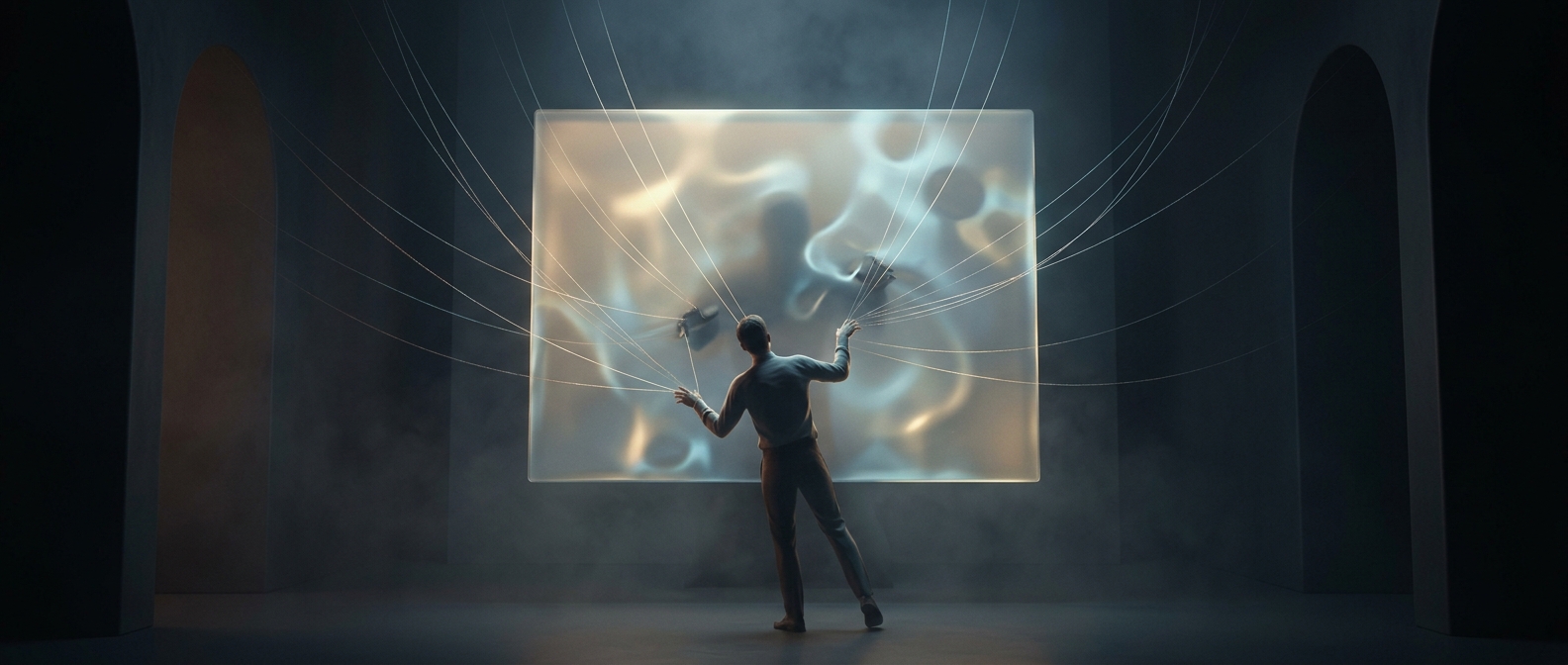
This is one reason gestures can help with spatial and mathematical problems: they make part of an idea visible and easier to manipulate. A pointing finger can mark which quantity changes; tracing a path can show a route; turning a hand can stand in for turning an object. The gesture does not solve the problem by itself. It gives thought a temporary physical scaffold.
Why movement can reduce mental load
Working memory—the mind’s limited capacity for holding and using information in the moment—can get crowded when several relationships must be tracked at once. A gesture may keep one relationship in view, freeing attention for another step. It can also make an abstract change feel more concrete: the hand moves from one position to another, rather than requiring the solver to imagine both positions at once.
Gestures can help the person doing the problem, and they can help someone else follow the reasoning. But the benefit depends on the movement matching the idea. A gesture that points to the relevant parts or represents a transformation can clarify; random movement can add distraction.
The practical implication is simple: when a problem involves position, direction, or change, try showing the relationship with your hands. A small movement can turn a thought you were struggling to hold still into one you can inspect and build on.