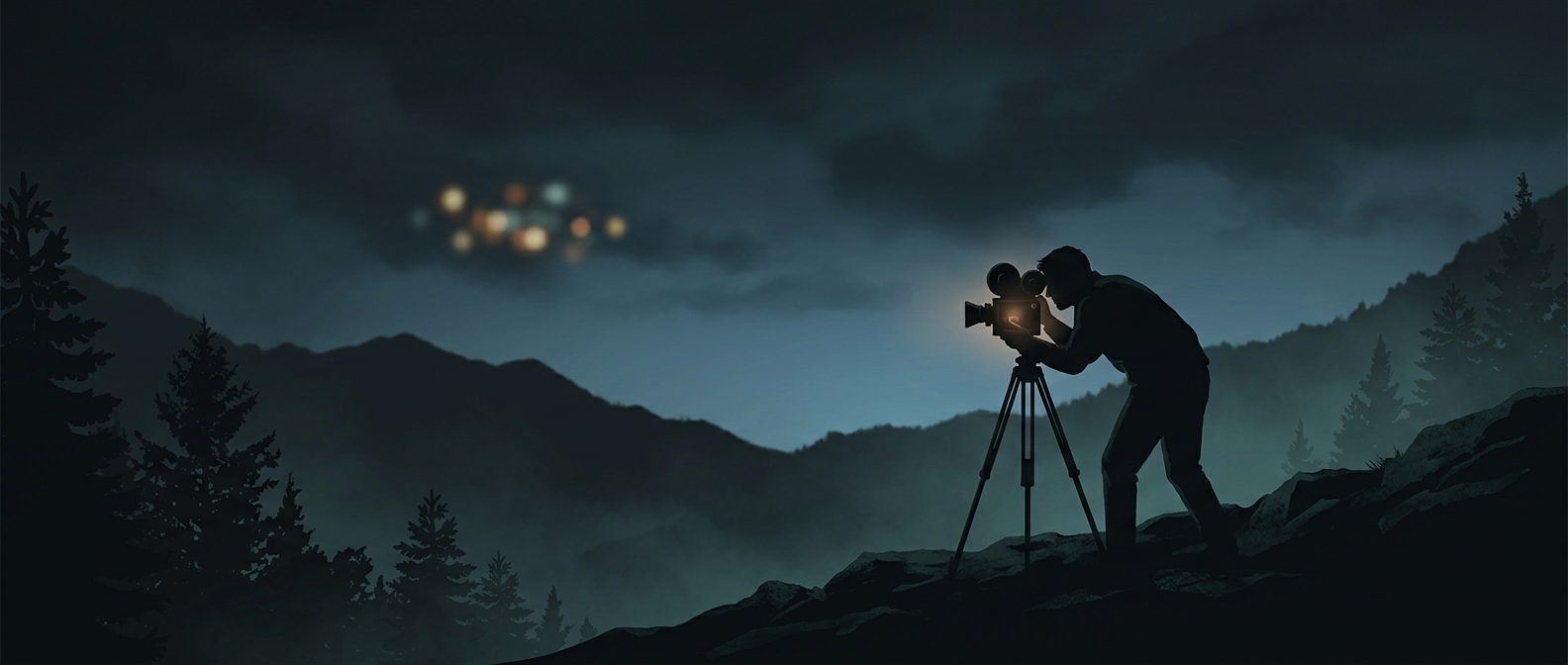
How a bright point becomes a saucer
A camera does not record an object exactly as the eye sees it. Light can bounce inside a lens, creating lens flare: extra spots, streaks, or hazy shapes that shift when the camera moves. If the light source is bright against a dark sky, the camera may also blur it, lose detail, or render it as a smear. A small light can therefore look larger and more structured in a recording than it was in the scene.
Why movement is hard to judge
A short clip rarely gives a clear sense of distance. A nearby insect, a distant aircraft, and a moving light can cross the frame in ways that seem similarly quick. When the camera pans or shakes, the background shifts too, making it harder to tell whether a spot is moving independently or only appears to move relative to the camera. Without landmarks, sustained footage, or a second viewing angle, apparent speed and shape are difficult to pin down.
From image to interpretation
The leap from “unidentified” to “visiting spacecraft” is not made by the pixels alone. Viewers bring expectations to an ambiguous image, and once a saucer-like outline seems visible, later glances can reinforce that reading. The clip may genuinely show an unusual light; what it cannot establish by appearance alone is what produced it. That gap between a striking image and a secure identification is why a blurry smudge can attract more certainty than the recording itself warrants.