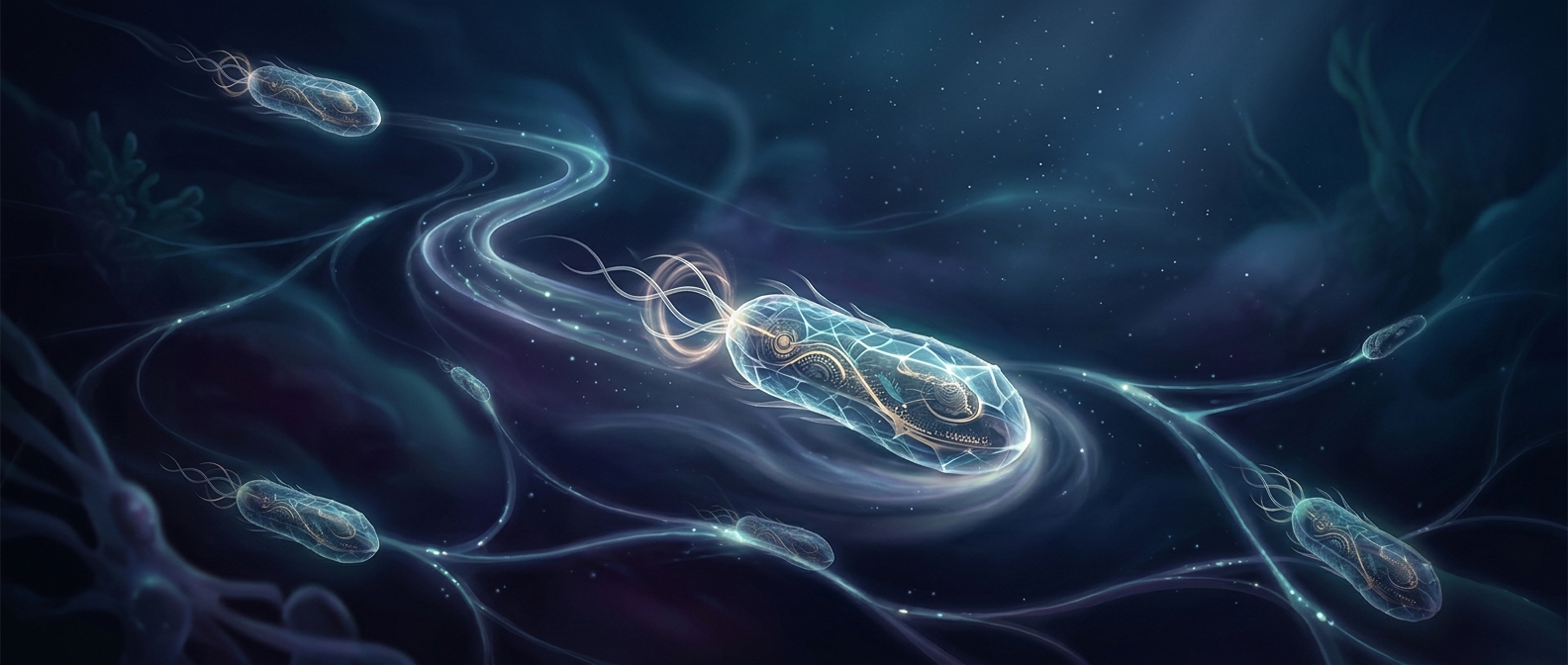
A microscopic journey measured against the swimmer
The striking part of a sperm cell’s trip is not its distance in ordinary units, but how far that distance is compared with the cell itself. A sperm is only a few dozen micrometers long; the route from the vagina through the cervix and uterus toward a fallopian tube spans many times that length. Scale both up together, and the trip becomes an immense endurance journey by human standards.
The tail supplies motion, but the route is not a straight pool
A sperm’s tail, or flagellum, bends from side to side, pushing against the surrounding fluid. That motion gives the cell forward movement, but the reproductive tract is a winding, changing environment—not an open lane. Cervical mucus can be difficult to pass, and the uterine and fallopian-tube passages guide and constrain movement. Sperm also do not all travel the same path or reach the same destination.
The comparison to swimming across large bodies of water captures the scale of the challenge, not a literal nonstop swim through still water. Conditions along the route matter, and the tract itself plays a role in transport.
A long route with very few arrivals
Many sperm begin the journey, but only a small fraction get far enough to approach an egg. The distance is therefore only part of the challenge: each cell must keep moving through a narrow, shifting route while the number of potential travelers dwindles along the way. What sounds like an epic voyage is, in the body, a microscopic trip where a slight change in the path can matter.