How mudskippers cross a mudflat
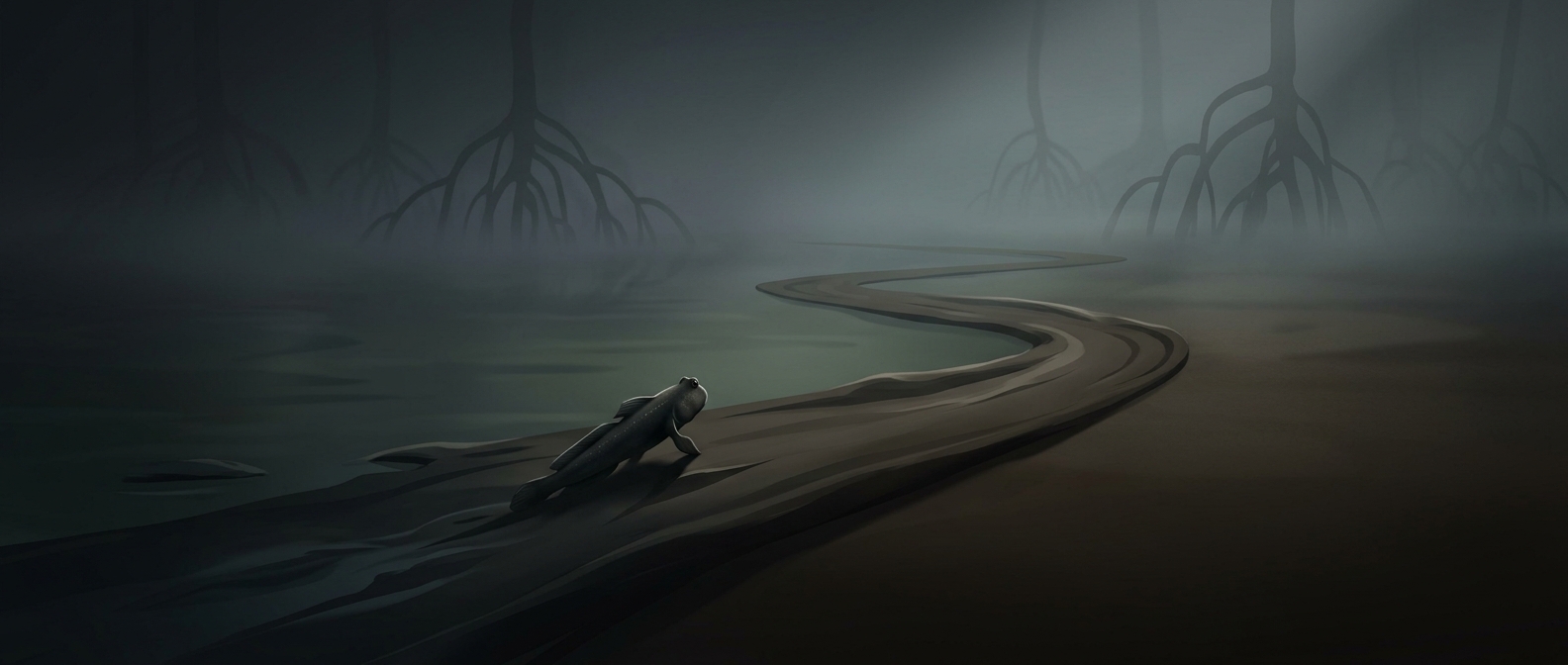
Mudskippers are fish adapted to the shifting edge between water and land, where tides repeatedly uncover muddy flats. Their pectoral fins—the paired fins just behind the head—do more than steer in water. On soft ground, the fish braces and pulls with them, using its body to help lurch forward over the mud.
That movement is useful in a habitat where a pool may be only a short distance away but the route between pools is exposed. It lets a mudskipper move across the uncovered surface instead of waiting for the tide to bring the water back.
Breathing without swimming
A fish’s gills normally take oxygen from water. Out of water, gills can collapse or dry, so a mudskipper has to keep its breathing surfaces damp. It can absorb oxygen through its moist skin; the moist lining of its mouth and throat can also help. Its gills remain usable when kept wet, including inside the water it holds around them.
The arrangement has a clear limit: the fish can stay active on land only while it avoids drying out. Mud and damp air help, and the animal can retreat to water when conditions become too dry. In a tidal landscape, that combination of fin-powered movement and moisture-dependent breathing turns a fish’s brief trip onto land into a practical way to cross the mud between pools.