A low-energy way of life
A sloth’s pace starts with its menu. Many sloths rely heavily on leaves, which provide relatively little usable energy and can be difficult to digest. Their digestive systems process meals slowly, and their bodies run at a low metabolic rate—the pace at which they use energy. Moving slowly helps match daily activity to that limited supply rather than spending energy they cannot easily replace.
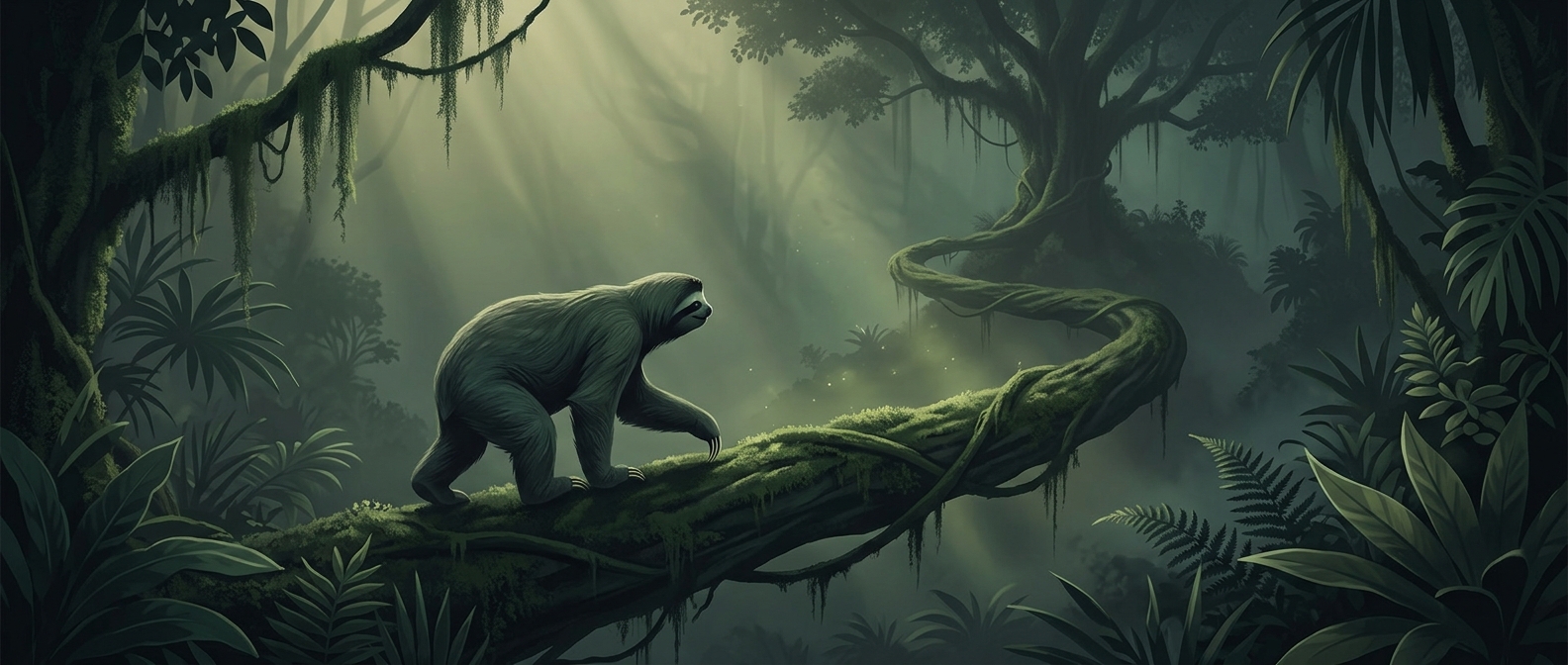
That tradeoff shapes life in the trees. Sloths conserve effort by gripping branches and spending long stretches resting, instead of making frequent, rapid trips between food sources. Their hooked claws make hanging and climbing possible without constantly working their muscles to hold on.
Fur that supports a tiny ecosystem
A sloth’s coarse outer fur has grooves that can hold moisture and provide a place for algae to grow. The algae can tint the coat greenish, helping it visually merge with leafy surroundings. It is not a deliberate disguise: the color comes from organisms living on the fur, and how noticeable it is depends on the light and background.
The slow movement adds another layer. A predator searching visually may be more likely to notice abrupt motion than an animal that stays still among branches. Together, stillness and a green-tinted coat can make a sloth harder to pick out—though neither makes it invisible.
The result is a striking forest adaptation: a low-energy diet favors a low-energy routine, while the sloth’s fur can take on the colors of the habitat where it spends that routine.