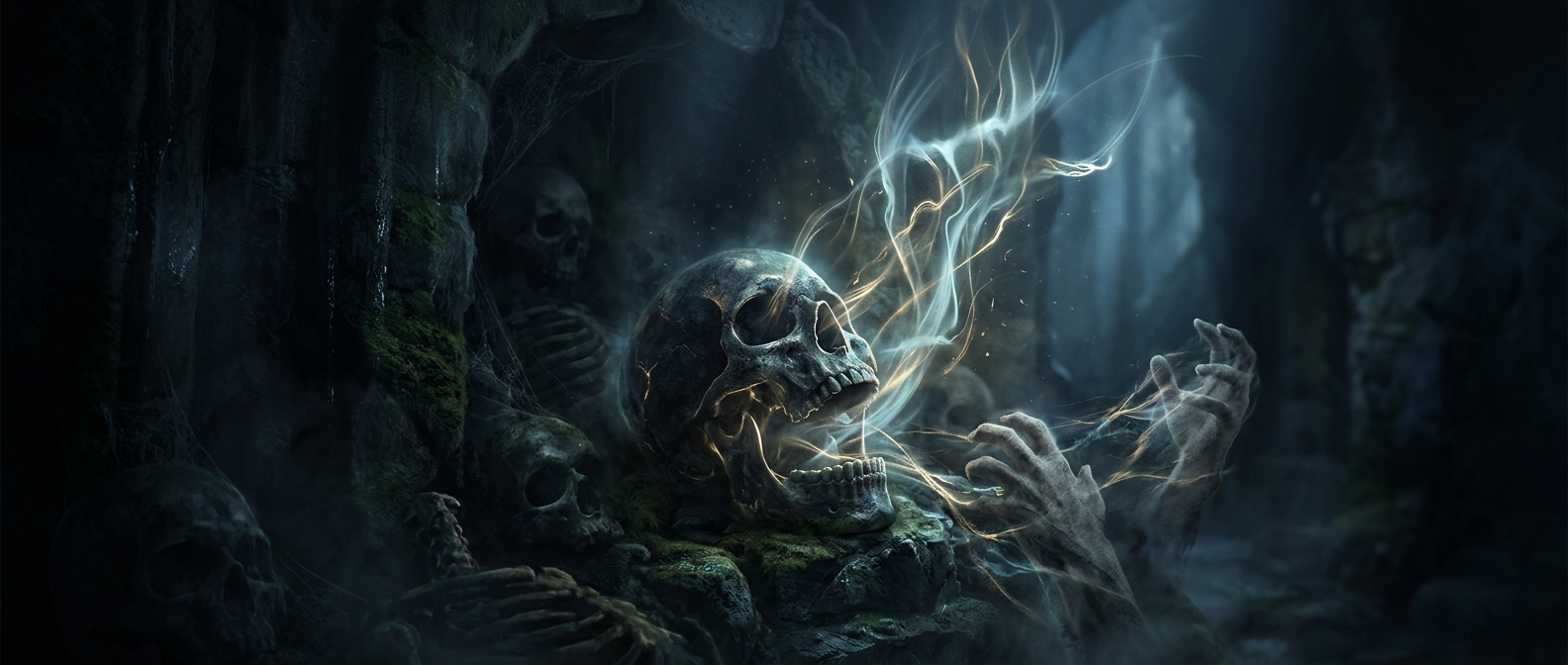
Why the skull must stay in the house
In English manor legends, a skull is not merely a relic from the past. It behaves like a presence with a claim on the household: take it away or bury it, and it answers with a scream, followed by misfortune. The story’s central rule is simple and unsettling: the skull must remain where it belongs.
That rule turns an ordinary domestic space into the scene of a haunting. A hallway, a room, or the family home itself becomes bound to the object. The shriek makes the skull’s objection impossible to ignore, while the bad luck gives the warning consequences beyond one frightening moment.
A household with an uneasy obligation
The legend also reverses the usual relationship between people and possessions. The family may own the manor, but it cannot treat the skull as something freely disposable. Its demand for a place in the home makes keeping it sound less like a choice than an obligation inherited along with the household.
That tension helps explain why the tale is memorable: the danger comes not from seeking out a haunted ruin, but from trying to tidy away something already inside the home. In the legend, removing the skull does not end its presence. It makes the house hear what it has been refusing to hear.