A bridge built beside the next console
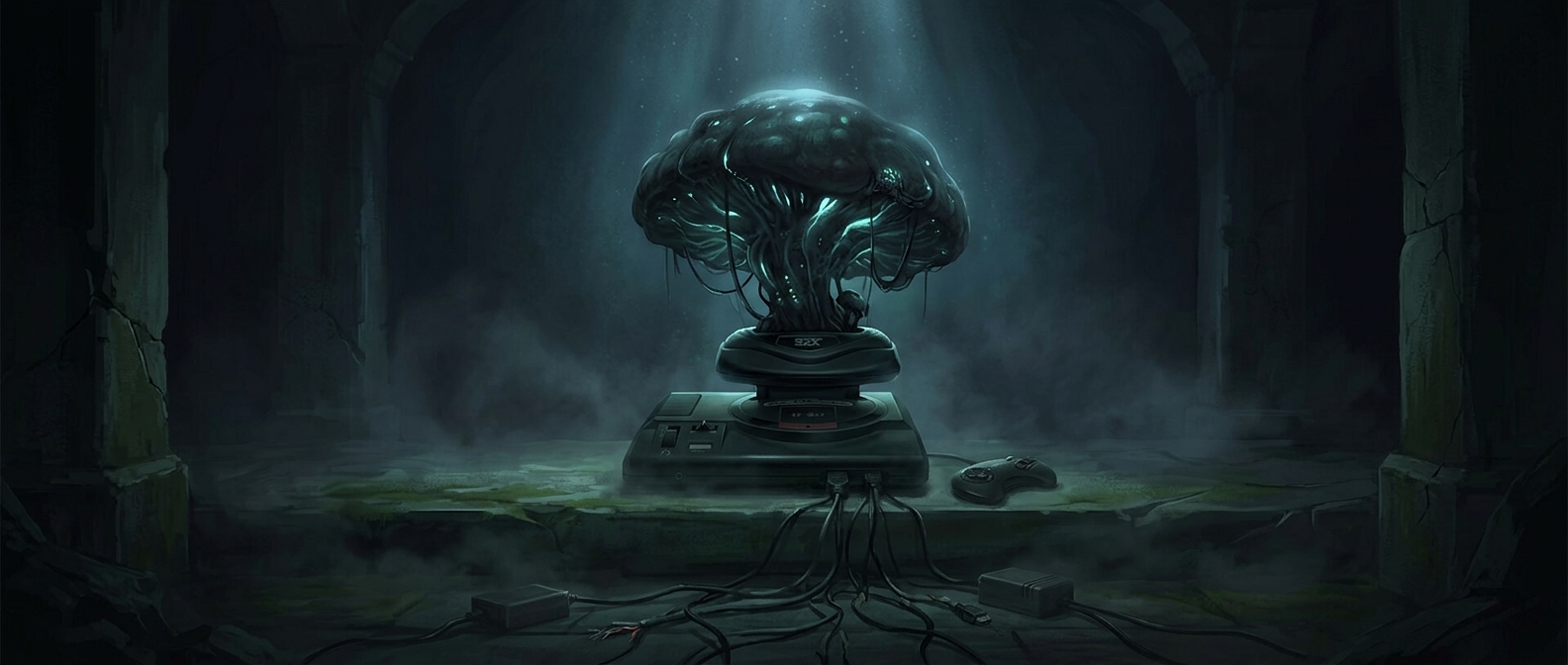
The 32X was meant to make Sega’s Genesis feel new again. It plugged into the Genesis’s cartridge slot and added its own processing hardware, allowing games to produce effects the older system could not handle as easily. For owners, that promised a cheaper step toward 32-bit gaming than buying an entirely new console.
But the bridge had an awkward destination: Sega’s next-generation Saturn was arriving at almost the same time. The 32X therefore asked customers to buy an attachment for a machine Sega was already preparing to replace. Some players faced a confusing choice between a Genesis upgrade, a new Saturn, or waiting to see which system Sega would support.
A small audience meant a thin library
An add-on depends on more than its technical ability. Developers need a large enough base of owners to justify making games for it, and buyers need games to justify purchasing the hardware. The 32X started that cycle at a disadvantage: it required a Genesis, while the Saturn offered a clearer route to Sega’s future. With Sega’s attention and development effort divided, the 32X never built the library needed to make its promise compelling.
That left owners with a costly extra piece of hardware and few reasons to keep using it. The 32X is remembered not simply as an underpowered experiment, but as a product caught between generations: it upgraded the old system just as the company’s strategy was pointing toward a new one.