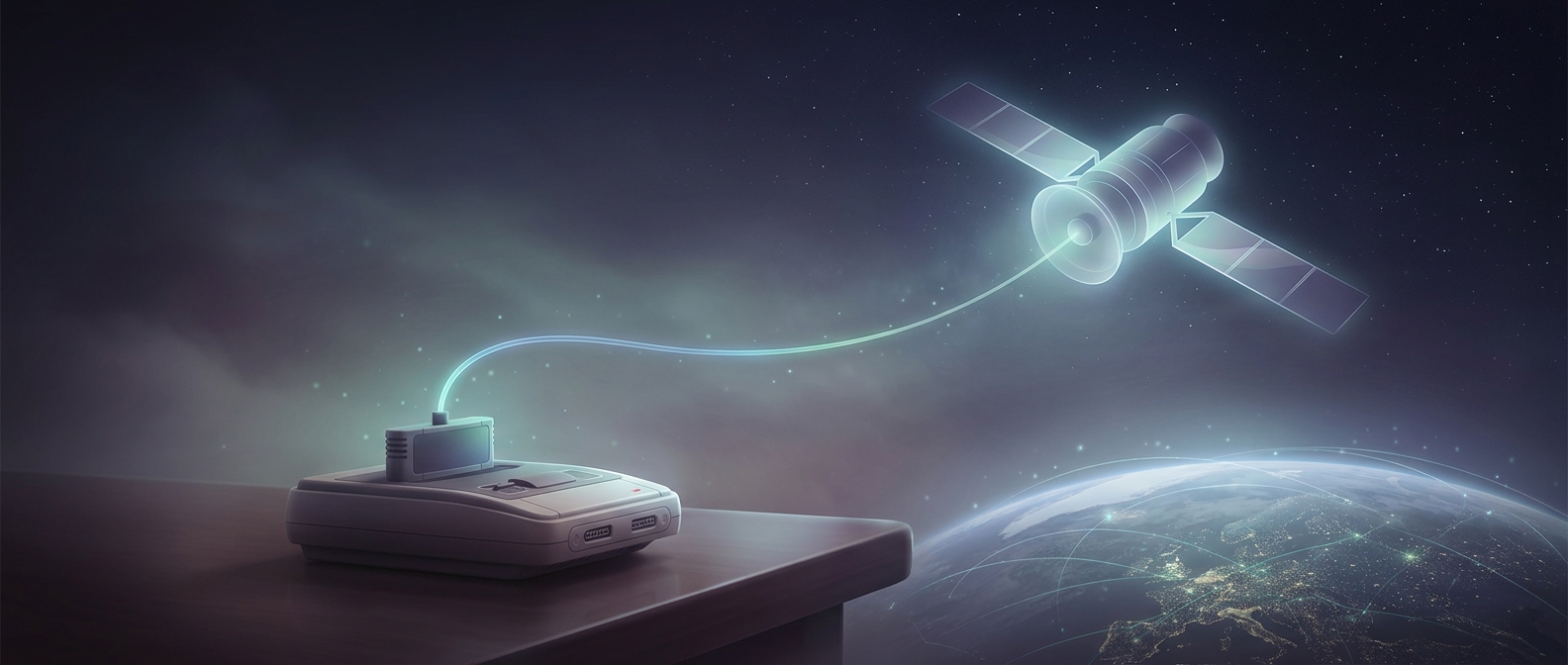
A broadcast could carry a game, not just a signal
Before home internet made downloads routine, some services used satellites to send games to television viewers. A satellite uplink beamed data to a spacecraft, which relayed it over a broad region. Homes with compatible receivers could capture the transmission, much as they received a TV channel.
The game data still had to be collected by the receiver and stored in the player’s system. This was not an interactive download: the satellite sent the same stream outward, rather than responding to each household’s request.
Why the schedule mattered
That one-to-many design made timing essential. The service broadcast a game—or a portion of its data—during a designated window. A player had to turn on the receiver then and let it capture the transmission. Miss the window, and there was no server to ask for another copy whenever convenient; the player had to wait for a later broadcast.
This also shaped what the service could offer. A satellite could cover many homes at once, but it could not tailor a transmission to each player’s choice or pace. Scheduling made limited broadcast capacity manageable, while turning access into an appointment.
Downloading became an event
The arrangement borrowed the logic of television: everyone tuned in at the appointed time, even though the thing being received was software rather than a program to watch. It made digital games available across areas where fast, two-way connections were scarce, but convenience depended on the broadcast calendar. For players, “getting a game” could mean planning an evening around a signal that might arrive only at certain hours.