A rival console, with a hardware bridge
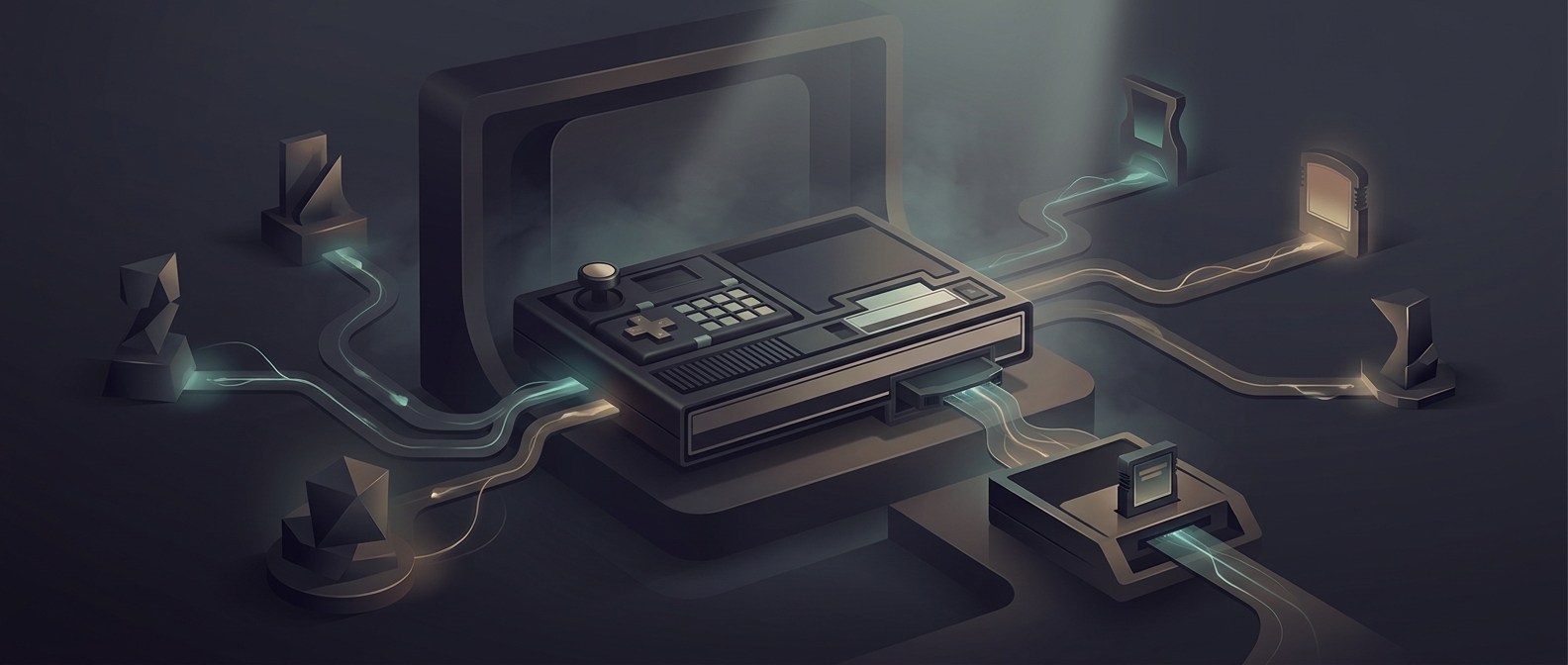
Coleco’s Expansion Module #1 gave the ColecoVision something unusual: access to the Atari 2600’s enormous library of cartridges. The key was that it did not ask the ColecoVision to understand Atari games on its own. The plug-in module supplied the hardware those games expected.
An Atari 2600 cartridge was built around the 2600’s particular processor and graphics-and-sound circuitry. A game’s instructions communicated directly with those components, so simply fitting an Atari cartridge into a different console would not work. The expansion module recreated the essential 2600 hardware behavior, allowing a cartridge to run much as it would in an Atari console. It was a hardware compatibility solution, not a software converter.
Compatibility came with a legal cost
The module also exposed the tension behind console compatibility: making a rival’s software work could mean reproducing parts of the rival’s system. Atari took legal action against Coleco over the device. The dispute ended in a patent-licensing agreement, rather than the module being abandoned.
For Coleco, the payoff was immediate in practical terms. Buyers could consider a ColecoVision without giving up access to the many Atari 2600 games they already owned—or wanted to buy. The expansion turned a competitor’s established game library into a selling point for Coleco’s own console, showing how valuable compatibility could be when one system had already built a large audience.