A trace of sound, not a playable recording
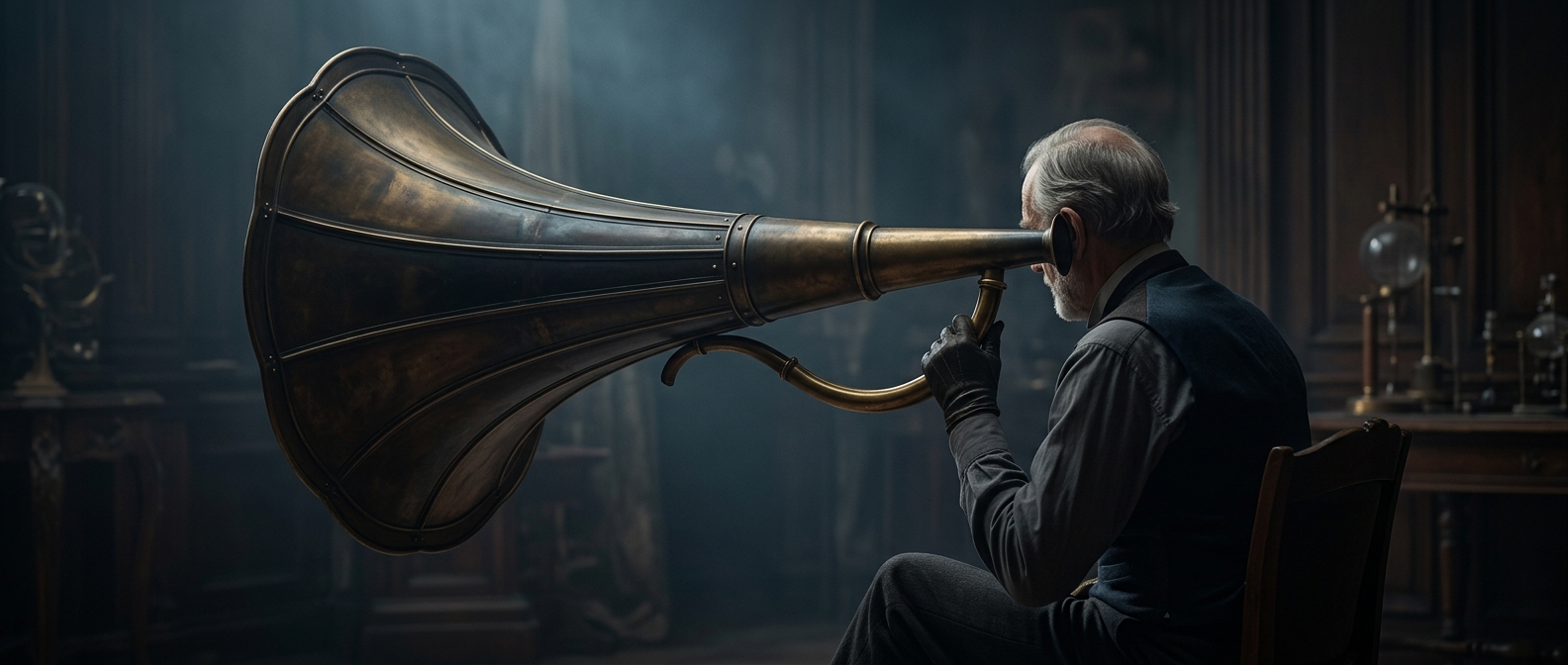
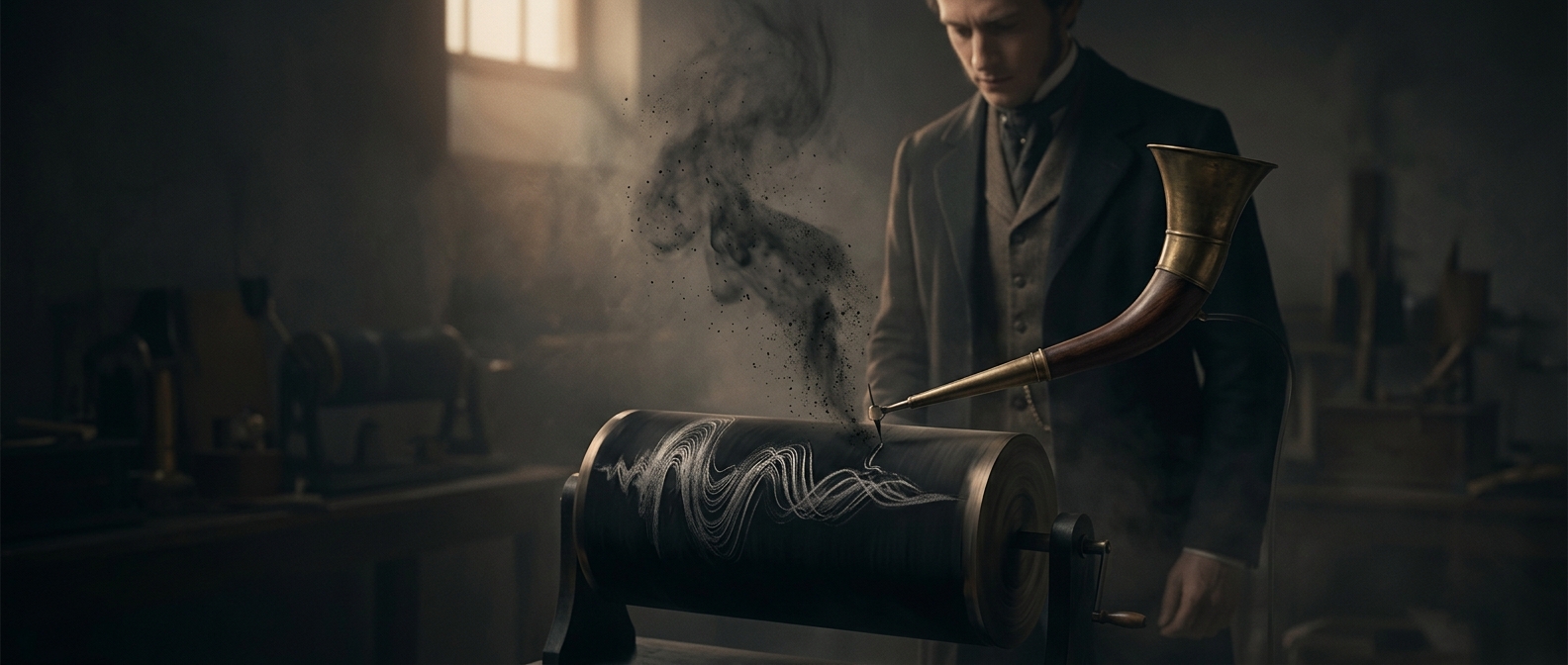
In 1857, French inventor Édouard-Léon Scott de Martinville built the phonautograph to make sound visible. A funnel gathered nearby sound and directed it toward a thin membrane. As the membrane vibrated, a bristle attached to it moved across soot-blackened paper, scratching a wavy line that represented the vibrations.
That line preserved a pattern, but the machine had no mechanism to turn the pattern back into moving air. The bristle followed the sound as it arrived; it did not cut a track that could later drive a membrane in reverse. Scott’s device could therefore show that a sound had occurred without letting anyone hear it again.
Why Edison’s machine could play sound back
Playback requires reversing the recording process. A stylus must follow a saved track, move a membrane, and make the surrounding air vibrate in a way that recreates the sound. Thomas Edison’s phonograph, introduced later, used a groove that could guide a stylus during playback—a crucial difference from the phonautograph’s visual trace.
Scott’s recordings were not useless, though: they captured sound patterns for study. Much later, researchers used optical scanning to read some surviving traces and convert their shapes into audio. The marks could be made to speak only after technology supplied the missing reverse step.