How a shock from outside the chest became possible
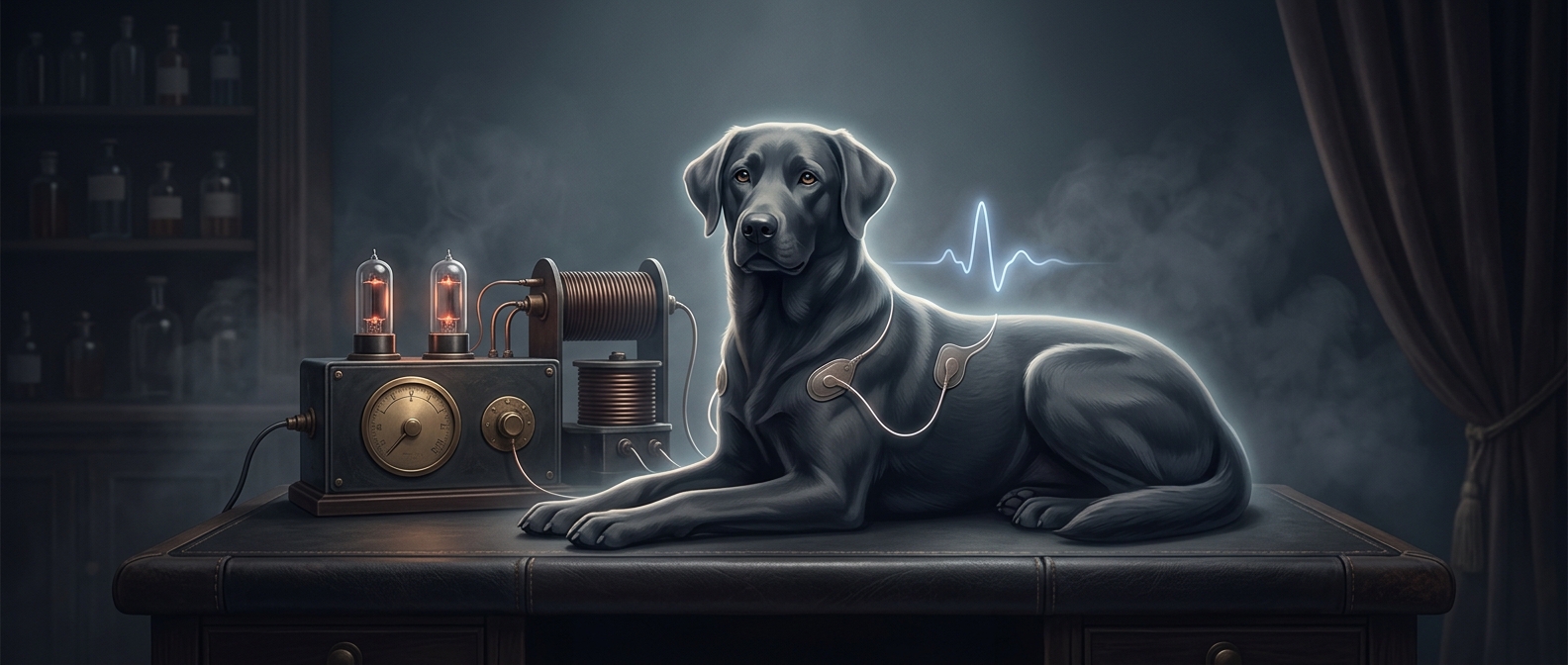
The early dog experiment addressed a practical obstacle: could electricity reach the heart through an intact chest strongly enough to stop a lethal rhythm? In closed-chest defibrillation, electrodes deliver a brief shock through the skin rather than directly touching the heart. The chest wall weakens the electrical pulse, so researchers had to find a way to deliver enough energy to affect the heart without opening the chest.
The animal’s cardiac arrest was deliberately induced so the team could test the procedure under controlled conditions. When the heart’s electrical activity becomes dangerously disorganized, its muscle fibers no longer contract together to pump blood. A defibrillation shock briefly disrupts that activity, giving the heart’s own electrical system a chance to reestablish a coordinated rhythm.
What the experiment could—and could not—show
A successful result in a dog could demonstrate that an external shock was physically capable of correcting the rhythm. It could not, by itself, establish that the method was safe or effective for people. Human use would require separate testing and a way to deliver the shock quickly and reliably in emergencies.
The distinction matters because a defibrillator does not simply “restart” every heart that has stopped. It is intended for particular abnormal rhythms; it cannot correct every cause of cardiac arrest. The animal experiment’s lasting significance was narrower but crucial: it showed that rescuers might treat a dangerous rhythm without first opening the chest, bringing the heart’s electrical problem within reach from the outside.