A public attraction kept a medical experiment running
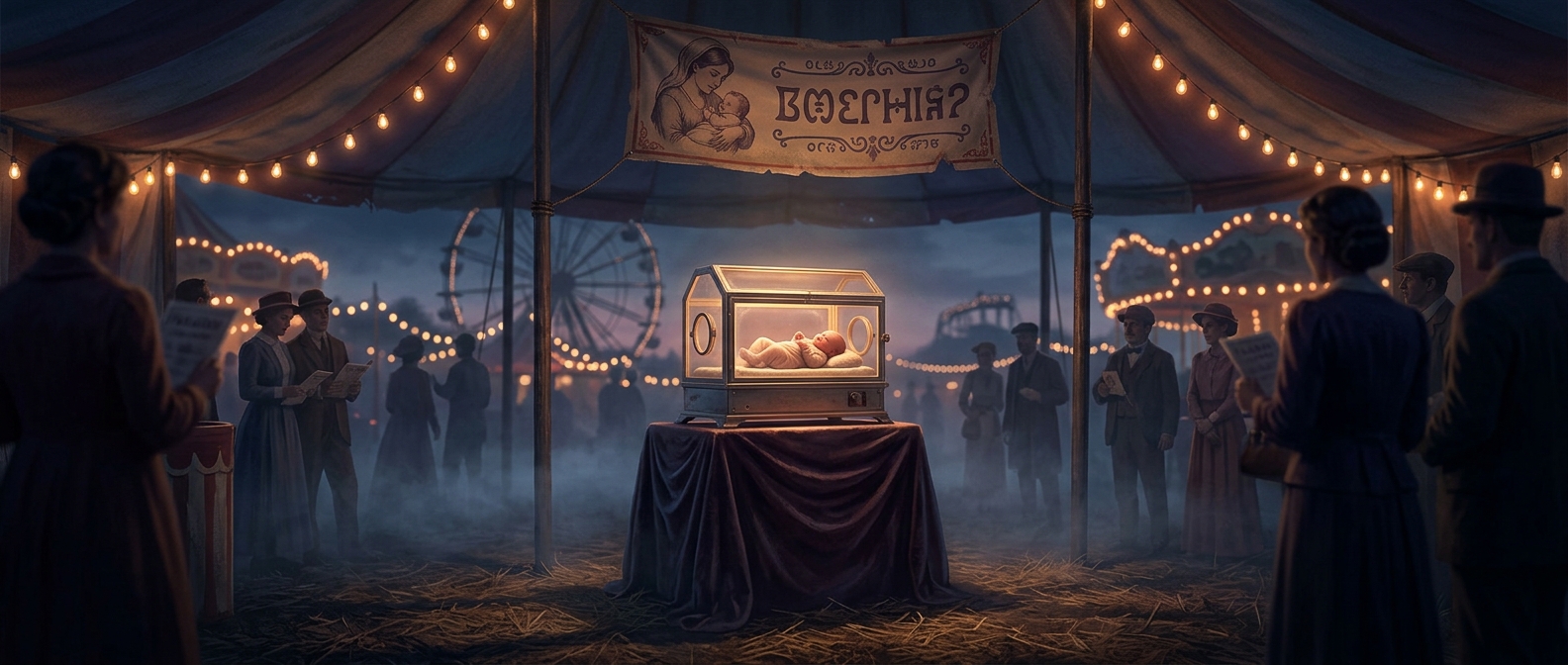
In the early 1900s, hospitals did not routinely provide the specialized care that very small, premature infants needed. Martin Couney brought incubators to amusement parks, where visitors could pay to see the babies. The admission money helped cover the cost of keeping the infants alive and maintaining the equipment.
That arrangement joined two worlds that usually kept apart: medical care and public entertainment. The crowds were not incidental. Their fees helped make the infant-care operation financially possible at a time when conventional institutions were not reliably taking it on.
Why an incubator mattered
A premature newborn can struggle to keep its body warm. An incubator is an enclosed, heated space that helps maintain a steady environment around a fragile infant. It does not make a baby mature faster; it reduces the strain of coping with conditions the newborn may not yet be able to manage alone.
The machine also required constant attention. It was not enough to place an infant inside and leave it there: the equipment and the baby needed care. The park exhibits therefore functioned as more than a display of unusual devices. They provided a way to fund ongoing care while showing the public what incubators could do.
Care, spectacle, and a lasting tension
To visitors, the tiny infants were a spectacle; for Couney’s operation, public curiosity helped pay for treatment. That dependence on admission fees makes the story uncomfortable to modern readers, who may see the babies’ display as an intrusion on their privacy. At the same time, the exhibits kept incubator care available when it was not yet a dependable part of hospital practice.
The striking consequence is that, for some premature infants, the route to medical care ran through a carnival ticket booth: the crowd’s curiosity helped sustain the technology protecting the babies it came to see.