Seven bars turn numbers into patterns
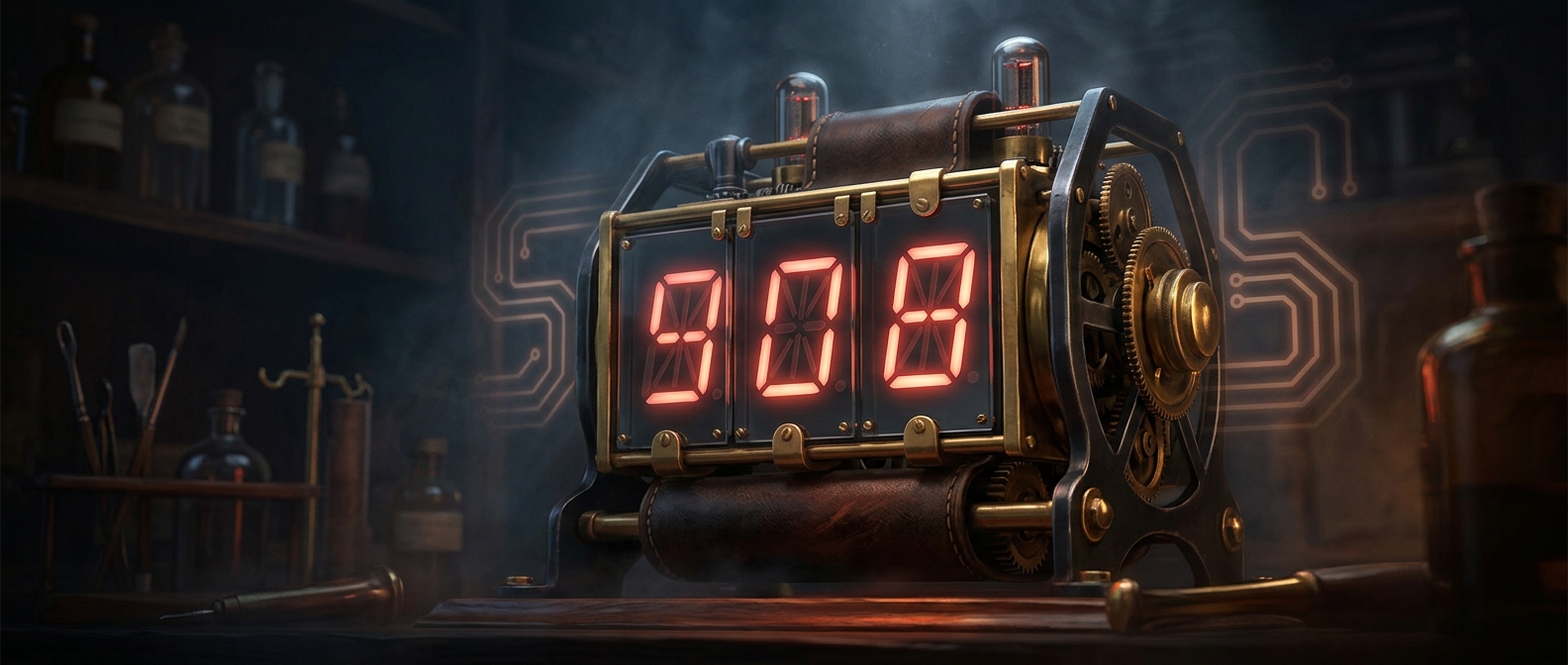
A seven-segment display is built from seven separate bars arranged like a blocky numeral eight: three horizontal bars and four upright ones. To show a digit, a clock lights or darkens a particular combination. A zero uses six bars; a one needs only the two on the right. The pattern is simple enough to recognize quickly, even when the display is small.
A practical compromise
The layout works because ordinary digits can be distinguished without drawing their curves. A small electronic circuit selects the right pattern for each number, while the display itself may use light-emitting diodes or liquid-crystal segments. In an LED display, selected bars glow; in an LCD, they become visible by changing how the panel handles light.
Seven bars cannot reproduce every shape cleanly. Letters are especially awkward, and some digits can look similar depending on the segment pattern and viewing angle. The design is therefore suited to counters, timers, and clocks, where a narrow set of familiar numerals matters more than elegant typography.
Why the old design endured
A century-old patent shows that the basic idea predates modern digital electronics. Its longevity comes from a useful division of labor: the circuit handles counting and timing, while the display reduces each result to a few on-or-off choices. Even a modern clock can show the passage of time with the same compact pattern of glowing bars.