A face turned CPR practice into a human encounter
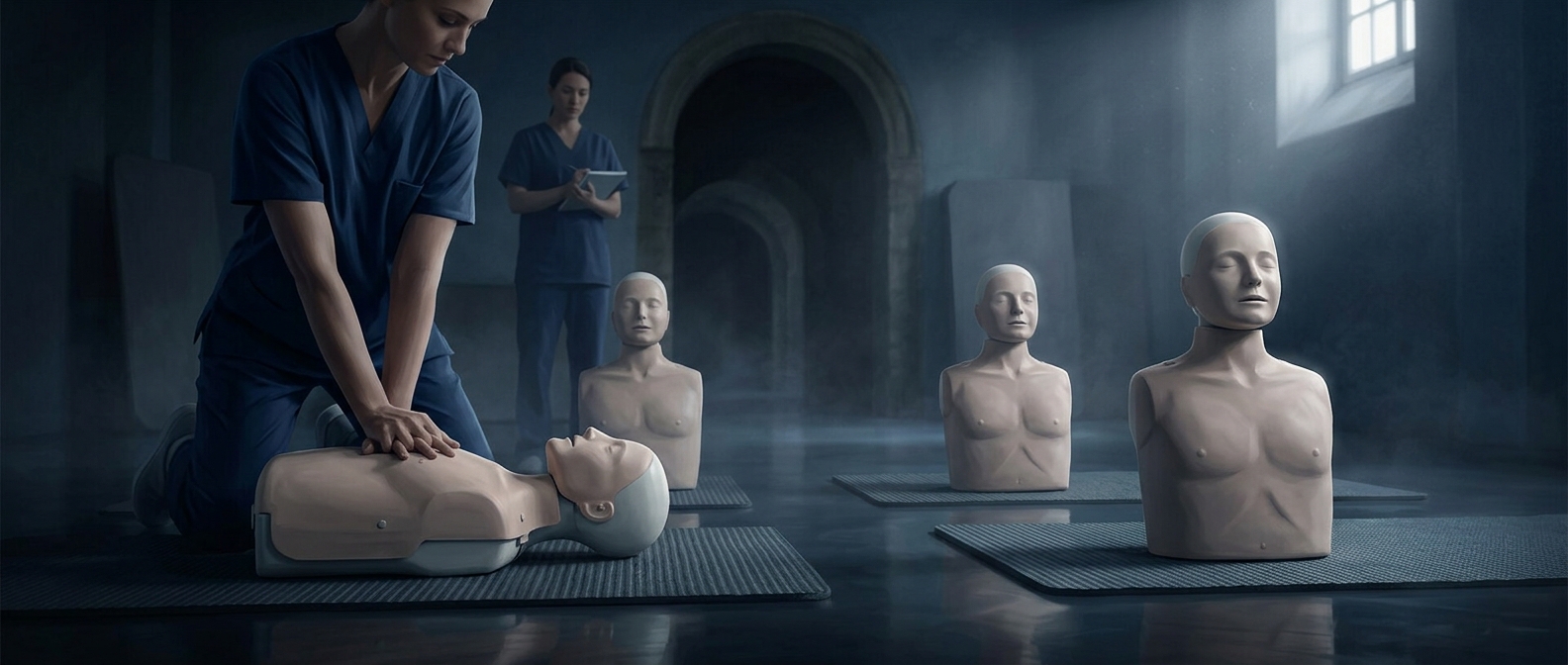
A CPR mannequin has to do more than resemble a person. It must let learners rehearse the physical sequence: position the head to open the airway, give breaths when trained to do so, and press the chest firmly enough for compressions. A mannequin can be reset and used again, so students can repeat those movements without practicing on a patient.
Resusci Anne’s recognizable face adds an unusual element to that equipment. The mask associated with L’Inconnue de la Seine supplied the model, but the young woman’s identity—and the account of how the mask was made—cannot be established with certainty. The face’s origins therefore remain a mystery, even as the mannequin itself became familiar in CPR classes.
Why a training face matters
CPR is a response to a person in immediate danger, yet learning it requires controlled repetition. A mannequin makes the hands-on steps teachable: an instructor can demonstrate them, learners can try them, and mistakes can be corrected before an emergency. The face gives that practice a human focus without making the mannequin a real patient.
That combination helps explain the contrast at the heart of Resusci Anne’s story. An uncertain image from a Paris river became attached to a practical tool used to teach lifesaving skills. In classrooms, the anonymous face is not merely something to recognize; it is the surface on which people learn what to do when someone needs help.