A light source had to travel with the instrument
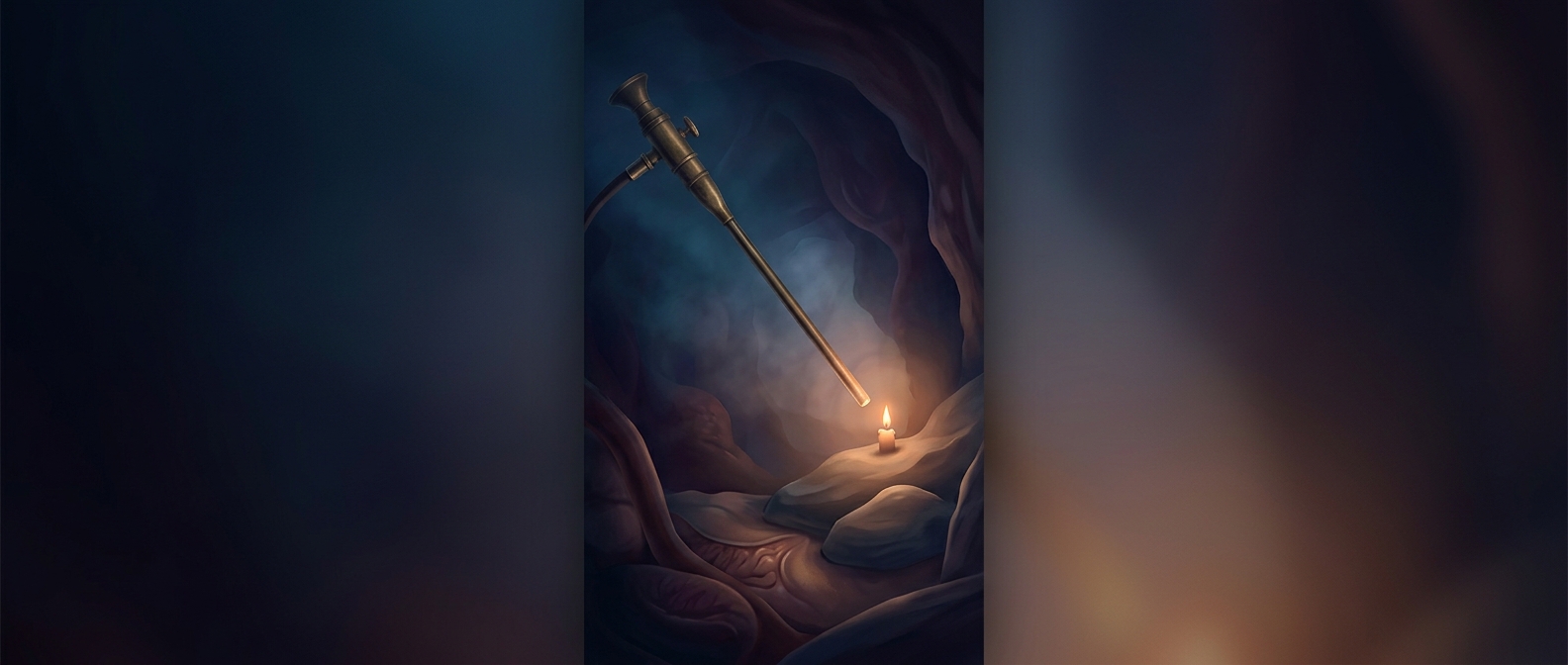
Before electric lamps and miniature cameras, looking inside the body posed a basic problem: the examiner needed to send light into a dark, narrow space and bring an image back out. Philipp Bozzini’s 1806 instrument, known as the Lichtleiter—German for “light conductor”—addressed both tasks with a candle and carefully arranged mirrors.
The mirrors redirected the candle’s light through a tube toward the area being examined. A separate viewing path let the physician look in, rather than requiring the flame itself to sit at the end of the instrument. In effect, the device tried to separate illumination from observation while keeping both within a handheld tool.
The tradeoff was built into the design
A candle could provide light where daylight could not reach, but it was an awkward source to bring close to a patient. Its flame produced heat and smoke, and its brightness was limited. The mirrors and narrow passages also had to direct enough light without blocking the view. These constraints made an examination difficult and potentially hazardous, even as the design demonstrated a new possibility: an instrument could carry illumination into the body instead of relying on light from outside.
Bozzini’s device was not a modern endoscope, but it anticipated a central challenge of endoscopy: getting light and a view through a small opening. Later instruments would replace the open flame with safer, more controllable lighting. The candle’s role was therefore less about making internal examination practical at once than about revealing what the instrument had to accomplish.