A computer built for shared work
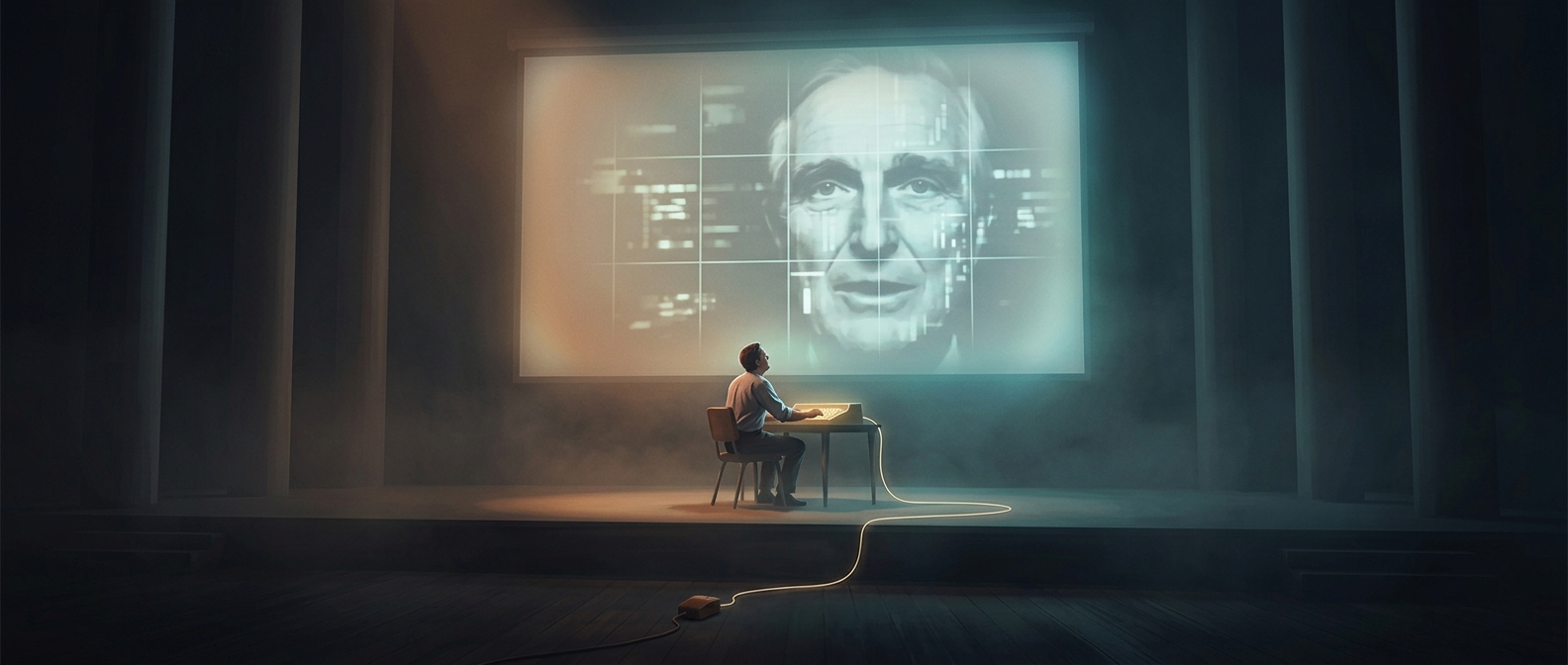
Douglas Engelbart’s 1968 demonstration was more than a preview of familiar office gadgets. It showed a computer system designed to help people organize information and work together. At the time, most people encountered computers as machines for specialized calculations, not as interactive tools for writing, navigating documents, or communicating across distance.
Engelbart and his team at the Augmentation Research Center had built the system around a different idea: people could use computers to extend their ability to think through complex problems. The mouse was one part of that design. Moving it controlled a pointer on the screen, giving users a direct way to select text, follow links, and manipulate information rather than relying only on typed commands.
Linking documents changed the task
The system, called NLS, let users create and connect pieces of text. These links made it possible to move between related information without reading a document from beginning to end—a practical form of hypertext. Users could also edit text on screen, while shared displays and video connections let distant collaborators see and discuss the same work.
Those features mattered most in combination. A colleague could point to information, connect it to another passage, revise it, and show the result to someone elsewhere. The computer was not merely storing a finished document; it was supporting an ongoing process of finding, shaping, and sharing ideas.
Why the vision took time to become ordinary
The demonstration made the possibilities visible, but it did not instantly make them everyday tools. NLS depended on costly, specialized equipment and a networked setup unlike the personal computers that later reached homes and offices. The lasting influence was the working model it presented: an interactive screen, a pointing device, linked information, and communication woven into the same workspace.
That model helps explain why the presentation is remembered not as a single gadget reveal, but as a glimpse of office work becoming something people could navigate and edit together.