How the camera stopped inheriting every footstep
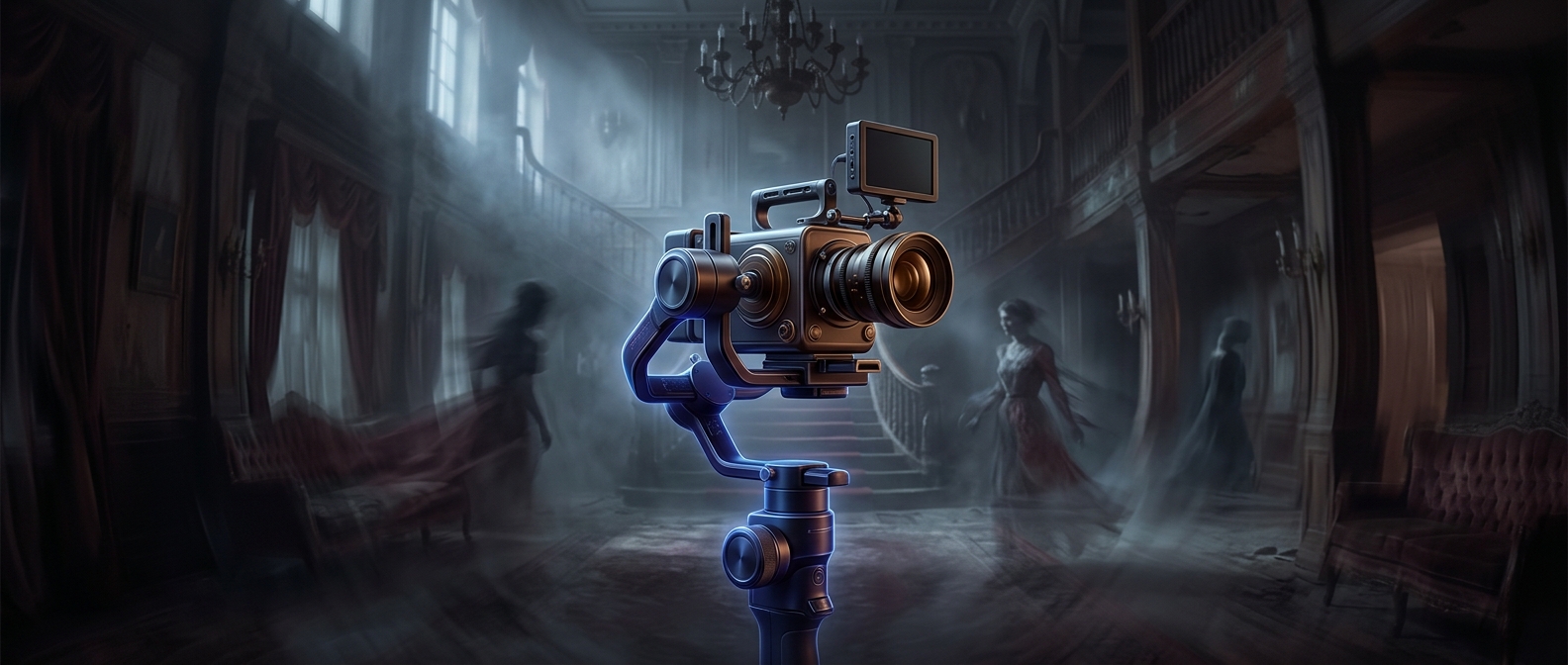
A handheld camera moves with the person carrying it: each step adds a small rise, dip, and jolt. Garrett Brown’s Steadicam separated those motions from the camera using a wearable support system. A vest carried the rig’s weight, while a spring-loaded arm flexed as the operator walked. A gimbal—a pivot that lets the camera turn without being forced to follow every movement of its support—helped keep the image steady. Counterweights balanced the camera so it could glide rather than tip with each shift in the operator’s body.
The system did not make the operator’s movement disappear. It transformed it. The operator could still steer, change direction, and choose what the camera looked at, but the arm softened the vertical bounce that would otherwise make walking footage shudder.
Why a hallway chase showed what it could do
In The Shining, the camera follows a child riding a tricycle through the hotel’s long corridors. The shot has the low, forward-moving perspective of someone traveling behind him, yet it remains smooth as the route continues. That combination is the point: the camera can move with a person through a real space without the rigid track a conventional dolly shot would need.
Tracks can produce exceptionally smooth movement, but they must be laid along the route and take up room. A wearable rig trades that setup for access and flexibility. Its operator can follow turns and move through spaces where rails would be awkward, while still producing a controlled image. The result is not weightless—the equipment is supported on the operator—but on screen, the camera seems to pass through the hallway without the ordinary evidence of someone walking after it.