How winter work helped make the cuckoo clock
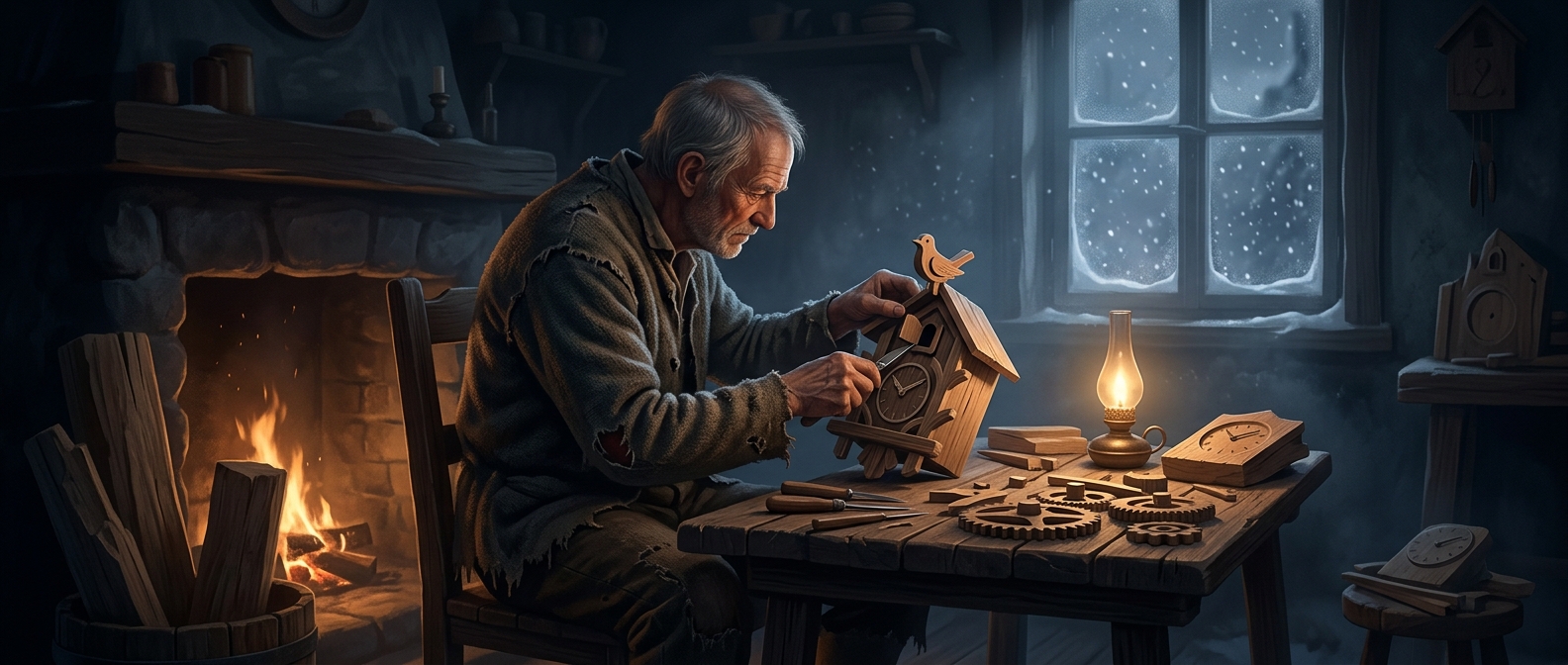
In the Black Forest, farming could not occupy every household through the cold season. When outdoor work slowed, clockmaking offered a way to turn time indoors into income. It fit a rural economy in which families combined farming with craft work rather than relying on a single year-round trade.
A wooden clock could be assembled and decorated at home, making the work compatible with the rhythms of a household. As the craft spread, clocks became a product that could be carried beyond the villages where they were made. The winter sideline was therefore not just a way to pass the season: it helped connect local skills to wider markets.
A small mechanism with a memorable sound
The cuckoo’s call depends on a simple air-powered device. Inside the clock, bellows—small air chambers—rise and fall as the mechanism runs. Their puff of air passes through tiny whistles, producing the familiar two-note call. At the same time, a little door opens and the bird appears.
That combination made the clock more than a timekeeping tool. Its carved wooden case showcased a maker’s craft, while the moving bird and sound gave buyers an instantly recognizable feature. The seasonal trade had a distinctive product to sell, one that could stand out even among other clocks.
From household craft to regional identity
Cuckoo clocks became closely associated with the Black Forest because generations of local makers developed and sold them there. Their story links a practical response to winter’s limits with a design built around motion, sound, and skilled woodworking. The result is a clock whose signature moment—an opening door and a brief call—still carries traces of the work that once filled long winter days.