A membrane hidden inside a sausage casing
The key to Willem Kolff’s artificial kidney was not the cans or the cooling equipment. It was the cellophane casing. Blood could flow inside the thin tube while the tube sat in a surrounding liquid. Small dissolved waste products could pass through the membrane into that liquid; blood cells and larger components stayed inside. This process, called dialysis, does not make the casing a filter in the usual sense: it separates substances by how readily they cross the membrane.
How the improvised machine cleaned blood
Kolff arranged the cellophane tubing around a rotating drum and passed blood through it while the drum turned through a bath of fluid. Rotation spread the tubing through the bath, giving waste molecules a route out of the blood and into the surrounding liquid. The bath’s composition mattered: it provided the conditions that encouraged wastes to cross the membrane without simply drawing everything out of the blood.
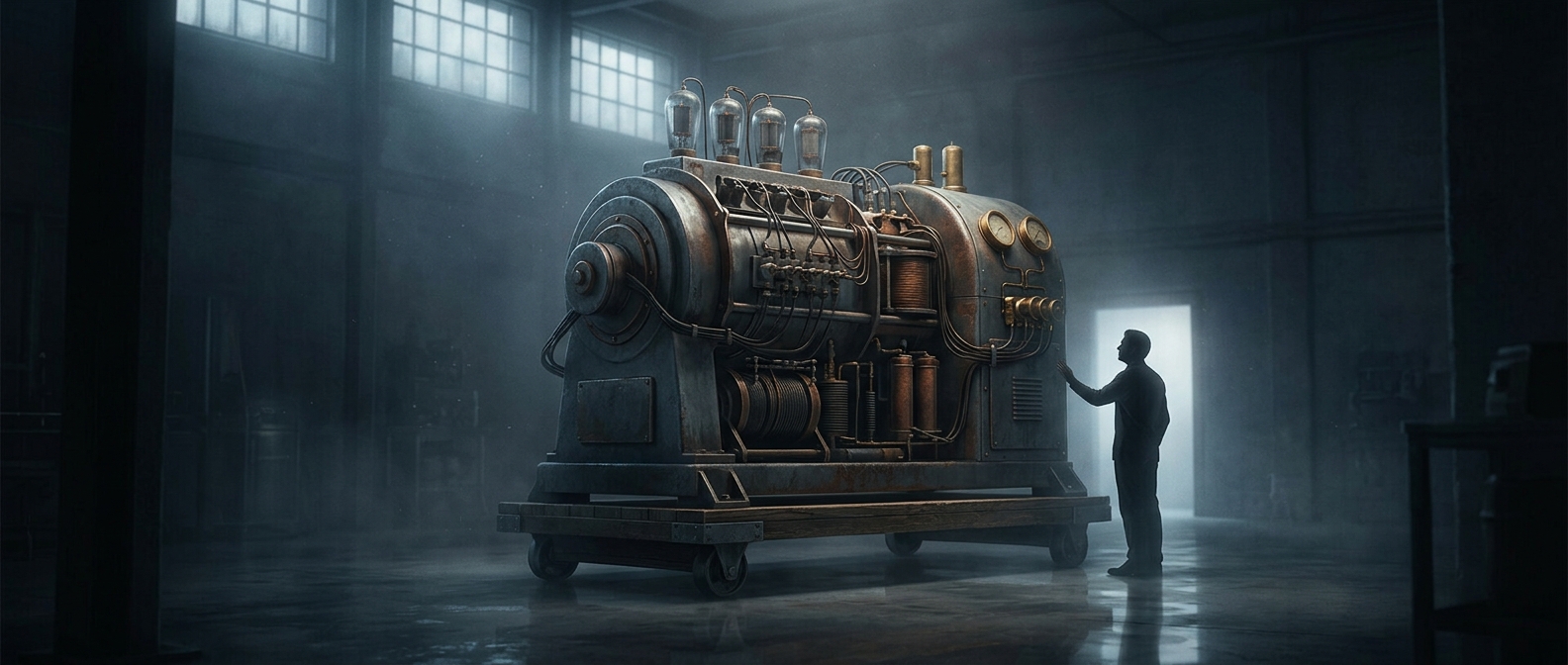
The other scavenged parts helped make that exchange possible. A circulation system moved blood through the tubing, while the cans and mechanical components served as practical supports and equipment in a machine built from what was available. The unusual materials were not a gimmick; they were a way to assemble the essential pieces of a working dialysis system.
From workshop materials to a medical principle
The machine addressed a problem the body normally handles continuously: removing dissolved waste from blood. When the kidneys fail, those wastes can accumulate. Dialysis can take over part of that clearing function by moving blood past a membrane and replacing the body’s usual filtration with a controlled exchange.
Kolff’s contraption was crude by later standards, but its central design idea endured: a membrane can clean blood without mixing it with the fluid that carries the waste away. A material made for sausage casings thus became a workable boundary between two streams—and the heart of an artificial kidney.