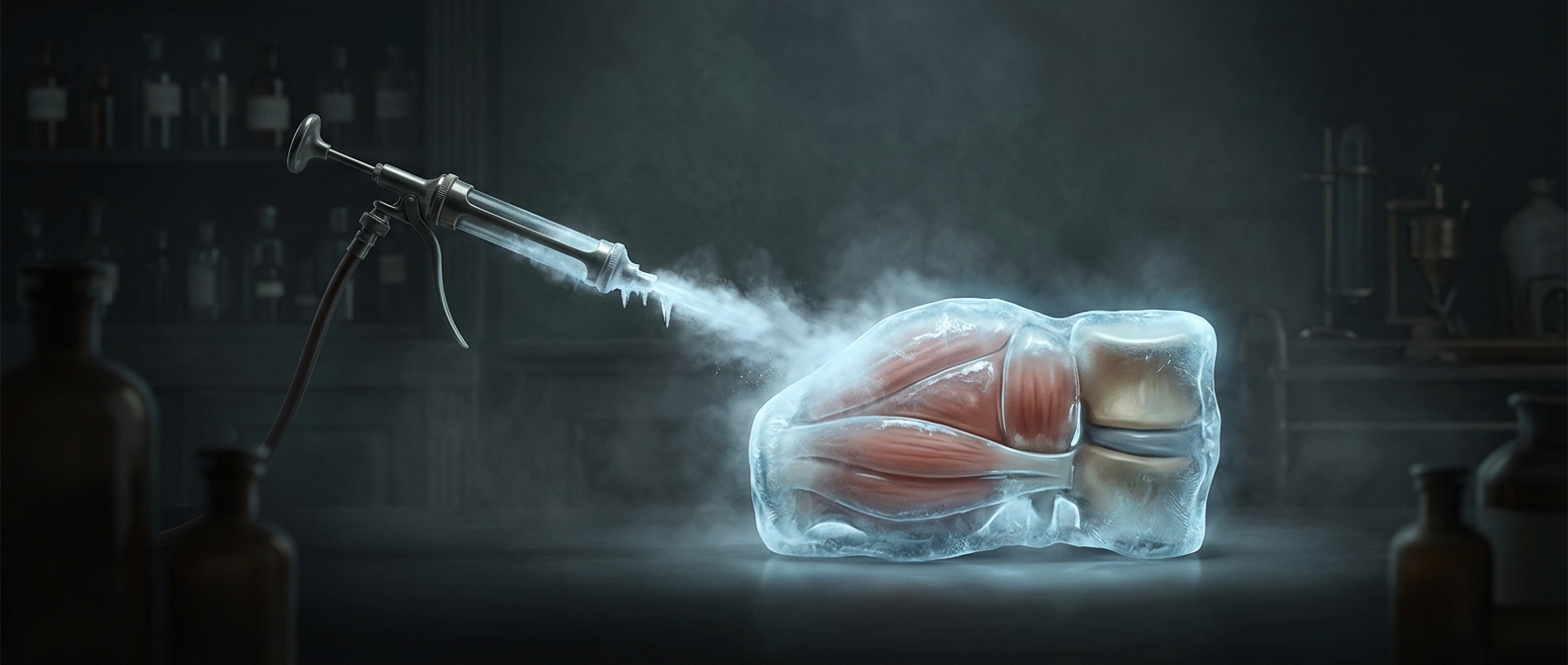
Why a liquid spray could chill skin
Ether and similar volatile liquids evaporate readily: they turn from liquid into vapor at the skin’s surface. That change takes heat from the nearby tissue. Spraying the liquid over a small area made the cooling happen quickly, lowering the skin’s temperature enough to temporarily dull sensation.
The cold affected the tiny sensory nerves that carry pain signals. When tissue is chilled, those nerves become less able to transmit signals to the brain, so the treated spot can feel numb. The effect was local rather than a whole-body anesthetic: it did not put a patient to sleep or block sensation everywhere.
Numbing by freezing had a narrow margin
The same cooling that interrupted pain could also injure tissue. If the skin was chilled too severely or for too long, freezing damaged cells—a small, intentional form of frostbite. That made the method a tradeoff: rapid cooling could provide brief relief, but the cold itself had to be controlled.
Unlike an injected anesthetic, a spray worked from the outside inward. Its effect was therefore best suited to superficial areas, where cooling the skin could reach the tissue involved. The striking part is that the anesthetic action and the danger came from the same mechanism: the spray dulled pain by taking heat away, and too much heat loss became an injury.