How a Fault Became a Sound
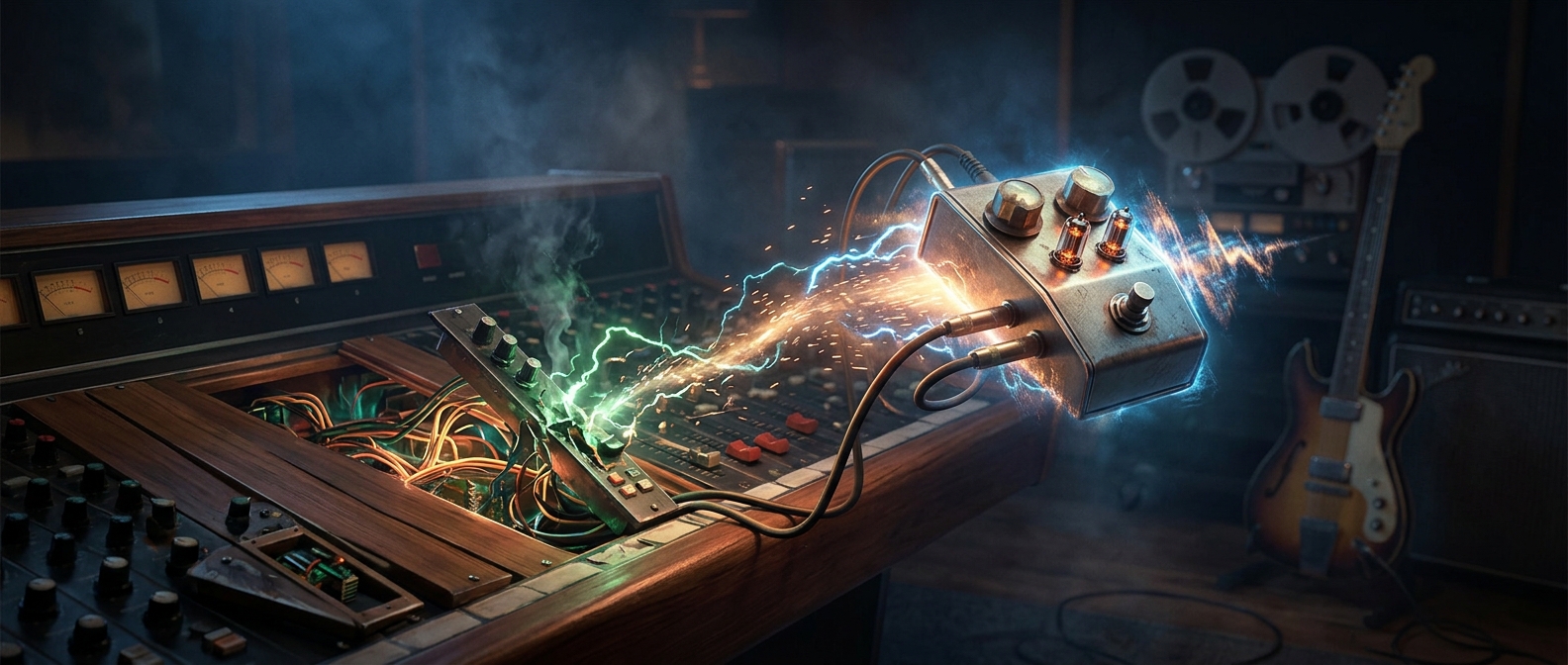
A bass guitar normally produces a rounded low note. In the recording setup, a failed transformer—the component that transfers electrical energy between parts of audio equipment—changed the signal instead of passing it through cleanly. The result was a rough, buzzy tone, with extra higher-pitched components that made the bass sound more like an overdriven guitar.
That change was not simply “more volume.” Distortion reshapes an audio signal: its smooth waves become harsher, adding the rasp and sustain listeners hear as fuzz. A technical fault had produced a new musical texture, and the musicians chose to keep it.
From Breakdown to Pedal
The accident was difficult to reproduce on demand. A transformer could fail unpredictably, and relying on damaged equipment would make the sound hard to control. Fuzz pedals offered a more dependable route: electronic circuits deliberately distort the instrument’s signal, giving players a portable way to switch the effect on and off.
The key design move was turning an unwanted electrical change into a controllable one. Instead of waiting for equipment to break, musicians could choose how much grit to add and use it wherever a song needed a more aggressive tone. A recording glitch thus became a repeatable instrument effect—and a reminder that musical innovation can begin when performers decide a mistake sounds better than a clean take.