Why steady engine noise is easier to cancel
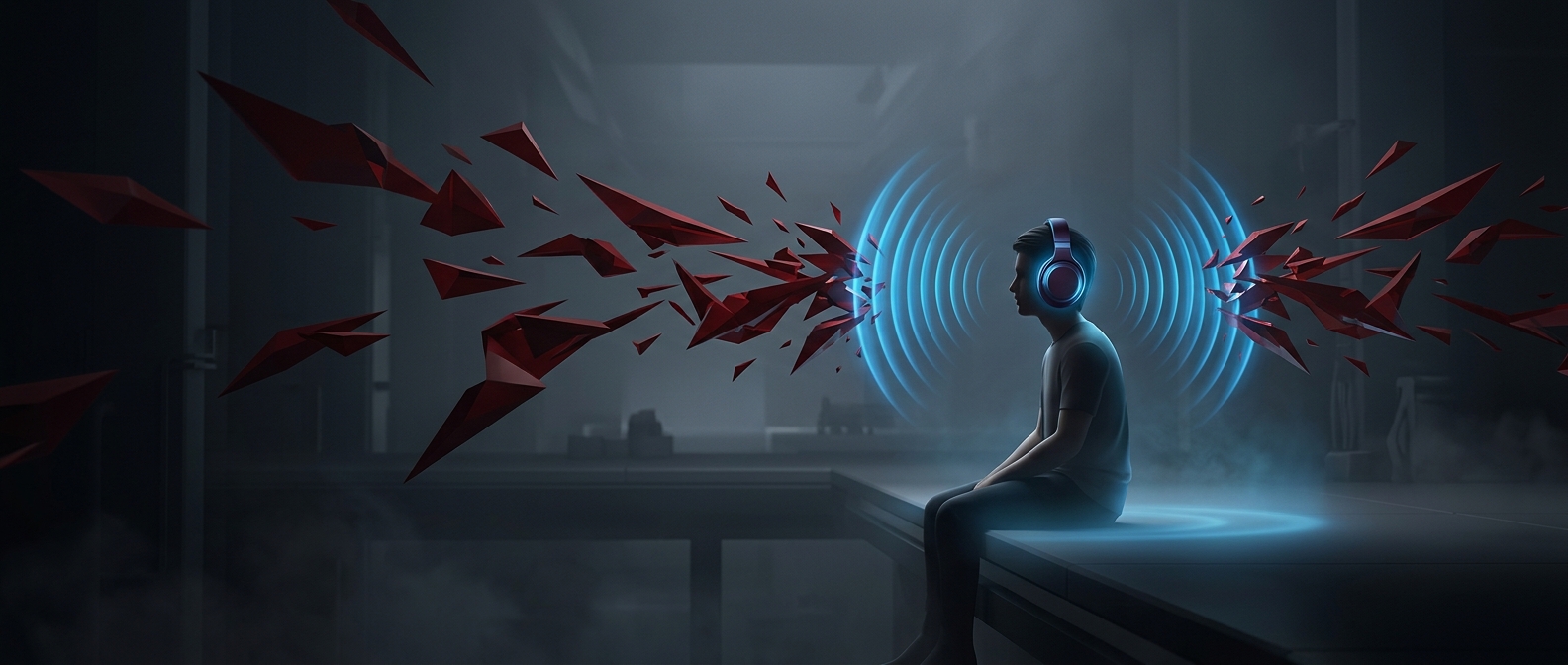
An airplane cabin fills with a low rumble that changes gradually rather than stopping and starting abruptly. That matters: noise-canceling headphones work best when they can predict how a sound will continue. Tiny microphones sample the sound near the ear, and the headphones’ electronics quickly calculate a matching signal with the opposite waveform.
How the waves undo one another
Sound travels as pressure fluctuations in the air. In the headphone’s “anti-noise,” a pressure peak is timed to meet a trough in the incoming rumble. Where the two waves overlap, they partly cancel, reducing the sound that reaches the eardrum. This is called destructive interference—not silence created by blocking sound, but two sounds combining to make a smaller fluctuation.
The match must be close in timing and strength. Because the ear sits inside the headphone, the system measures and produces sound in a very small space, where it can target the noise reaching the listener more effectively than noise across an entire room.
Why voices and sudden sounds remain
A rumble’s low pitch has a relatively long wavelength, so small timing errors matter less than they would for a high-pitched sound. Engine noise is also fairly continuous, giving the electronics time to track it. A sharp clap or a changing voice is harder to predict; by the time the headphones respond, the sound may already have shifted. Ear cushions help by physically reducing some sound, especially higher frequencies, while active cancellation handles much of the persistent low-frequency drone.
The result is a quieter cabin, not a soundproof one: the engine’s steady thrum can fade while announcements, conversation, and abrupt noises remain audible.