How a Burning Trail Could Mark the Hour
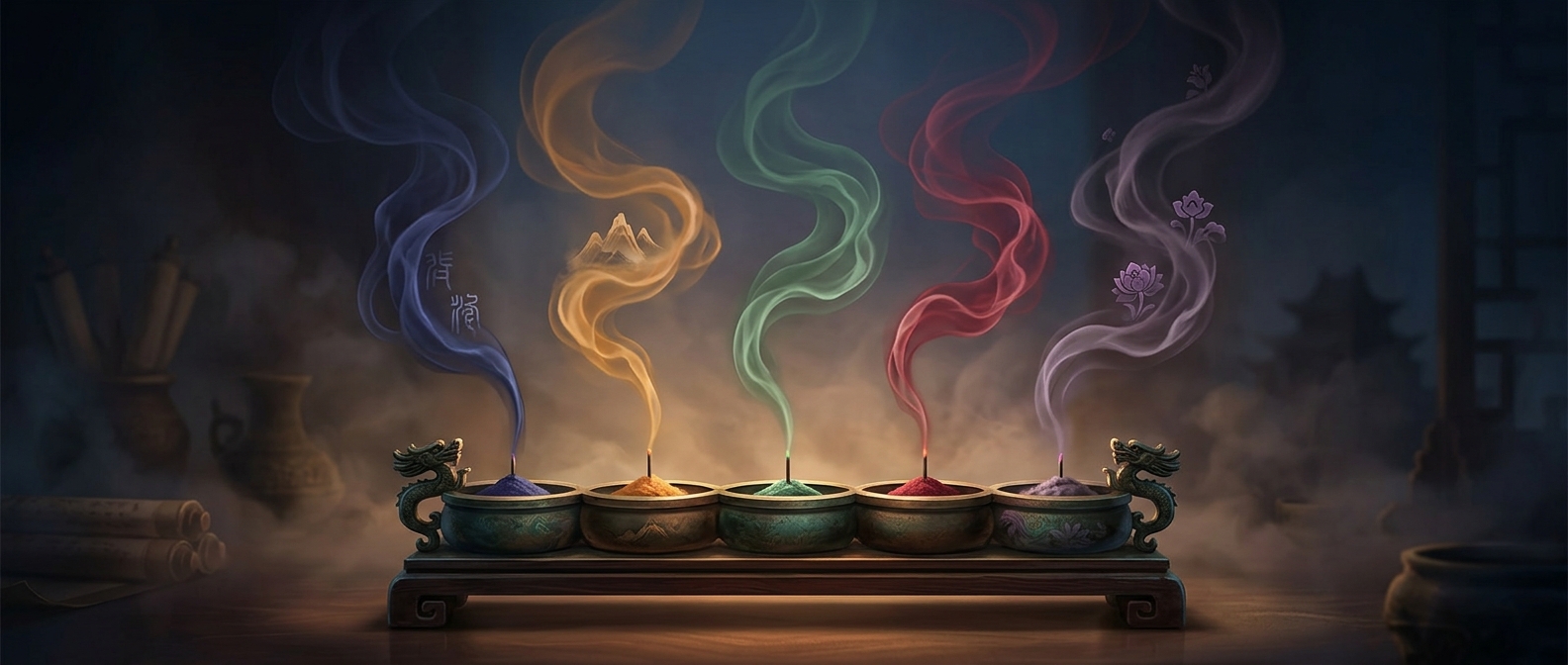
An incense clock turned timekeeping into a slow, visible—and fragrant—process. Instead of watching hands move across a dial, a person let incense burn along a prepared path. Because the powder was arranged to burn at a measured pace, its progress could divide the passing time into intervals.
At a marked point, the changing fragrance served as a signal. The scent was not merely a pleasant side effect: it was the clock’s alarm. Someone nearby could recognize that a particular interval had passed without needing to keep their eyes on the burning material.
A Clock You Had to Tend
The method depended on a predictable burn. The path and quantity of incense had to be arranged so that the signal came at the intended time; a draft or uneven burning could make the schedule less reliable. Unlike a mechanical clock, it also consumed its fuel as it measured time, so it had to be prepared again for another run.
That tradeoff shaped what the device was good for. It offered a quiet way to mark intervals in a room where people could notice the scent, but it was not a glanceable display of the time. The hour arrived as an event to smell, rather than a number to read.