How 1922’s 3D effect reached the audience
The Power of Love, generally cited as the first feature-length 3D movie, tried to make the screen feel deeper by giving each eye a slightly different view. The camera recorded two images from nearby viewpoints, mimicking the small gap between human eyes. Seen together, those differences help the brain perceive depth.
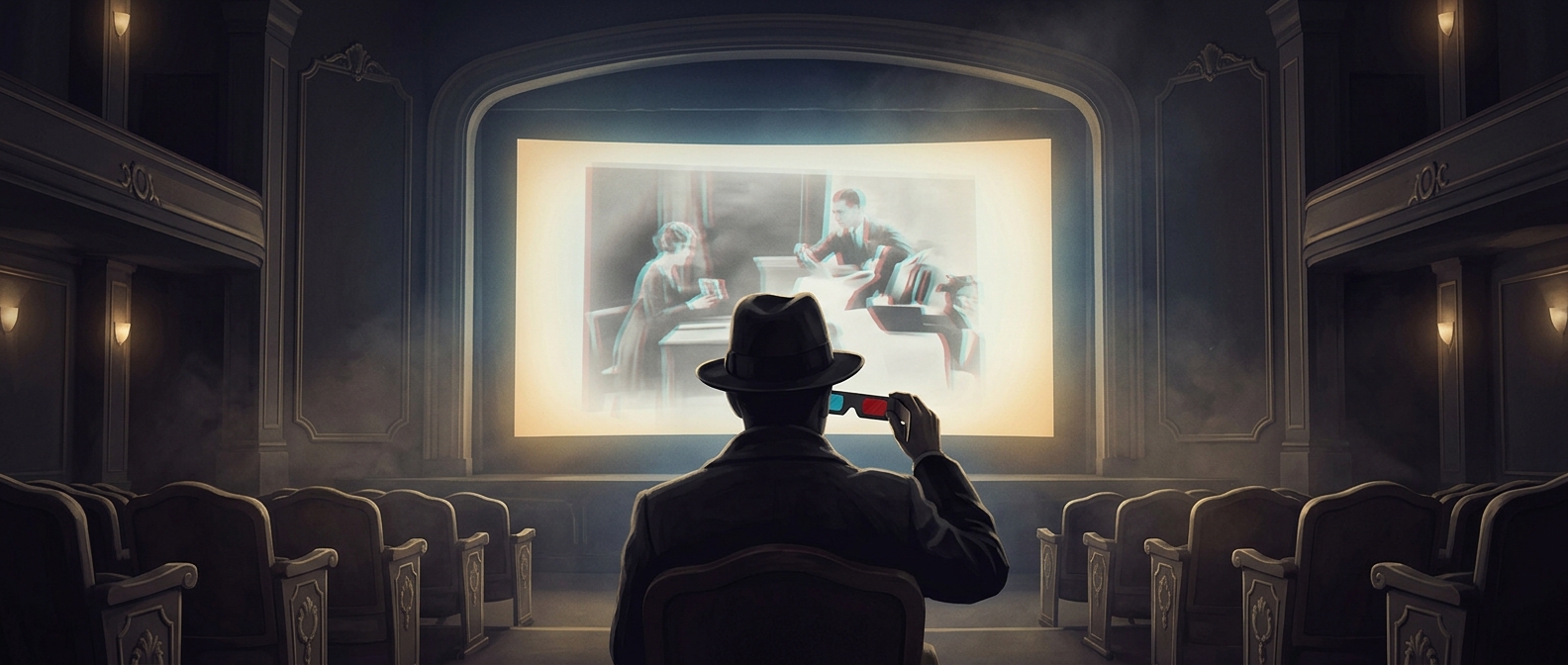
The theater used anaglyph glasses: one lens was red and the other green. The projected images were printed or projected in corresponding colors, so each lens filtered out much of the image meant for the opposite eye. The brain then combined the two views into a stereoscopic picture. It was a clever workaround for showing two perspectives on a single screen—but one that could tint colors and make the image harder to watch.
The theater was part of the technology
3D was not simply a film format that any cinema could show unchanged. The projection and colored glasses had to work together, and audiences had to wear the glasses throughout the screening. That extra equipment and setup made the effect an exhibition challenge as well as a filmmaking experiment.
The movie failed to find a lasting audience, and its original 3D reel is lost. That means modern viewers cannot judge the effect directly. What remains is the significance of the attempt: filmmakers were already confronting a problem that would recur throughout 3D cinema—how to create convincing depth without making the viewing process itself a distraction.