How Andean nights turned potatoes into chuño
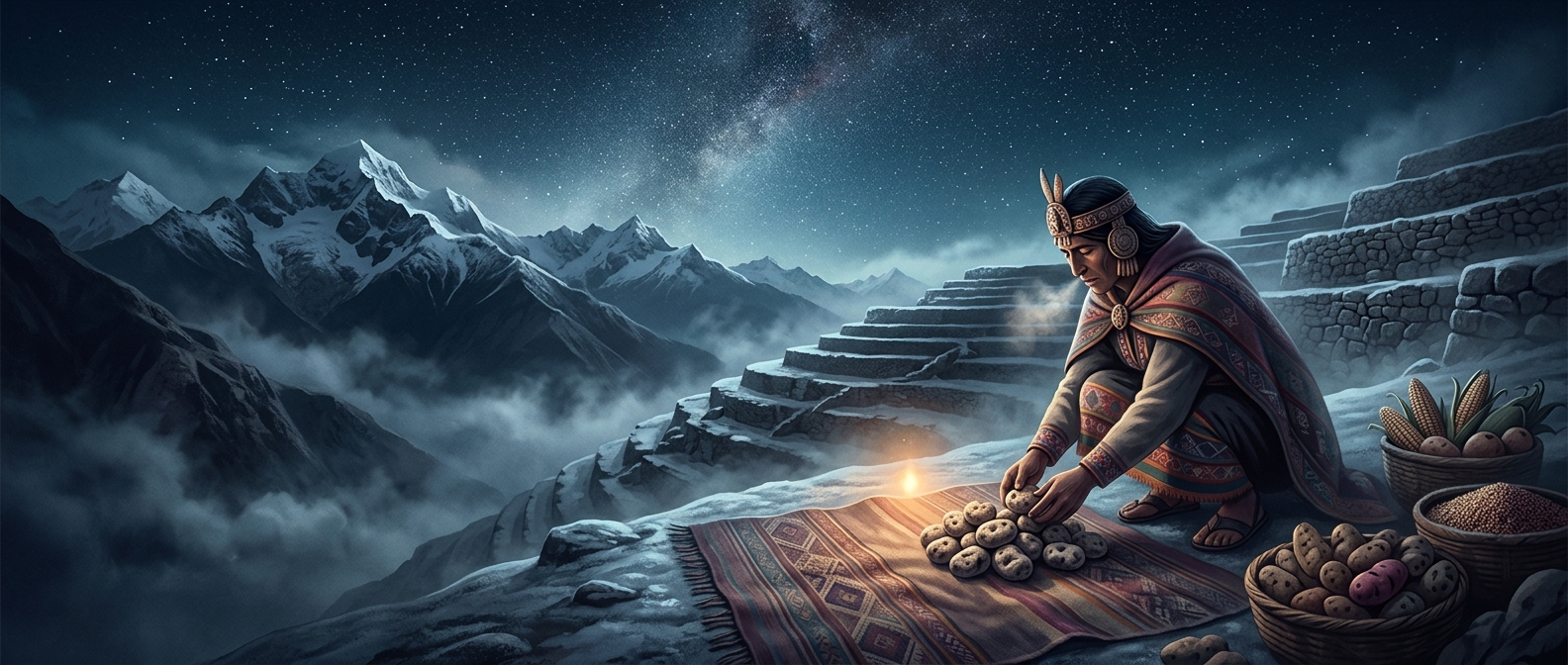
In the high Andes, a potato could be left outside through a freezing night and then exposed to strong sunlight by day. The Incas and other Andean peoples used this daily swing to make chuño, a durable form of potato suited to storage and travel.
The cold froze water inside the potatoes. As they thawed, people trampled or pressed them, squeezing out moisture and breaking down the flesh. Repeating the freeze-and-dry cycle helped remove still more water; the thin, dry mountain air and sun completed the job. With little moisture left, the potatoes were far less likely to spoil than fresh ones.
Preservation shaped the food
Chuño could be stored for long periods and rehydrated for cooking. That made it useful when fresh crops were unavailable and helped communities keep food through difficult seasons. Its lightness also made it easier to carry than sacks of fresh potatoes, linking a local preservation method to food supplies across the highlands.
The process resembles freeze-drying because freezing and drying both help preserve food, but it is not the same as modern industrial freeze-drying, which removes ice under controlled low-pressure conditions. Chuño depended instead on the Andes’ particular mix of cold nights, bright days, dry air, and human labor. The mountain climate was part of the preservation equipment.