A hidden image needed a chemical reveal
A daguerreotype began as a highly polished silver-coated copper plate. Before exposure, the photographer treated its surface with iodine vapor, making it sensitive to light. The camera’s brief exposure formed a latent image: a pattern created by light that was present on the plate but not yet visible.
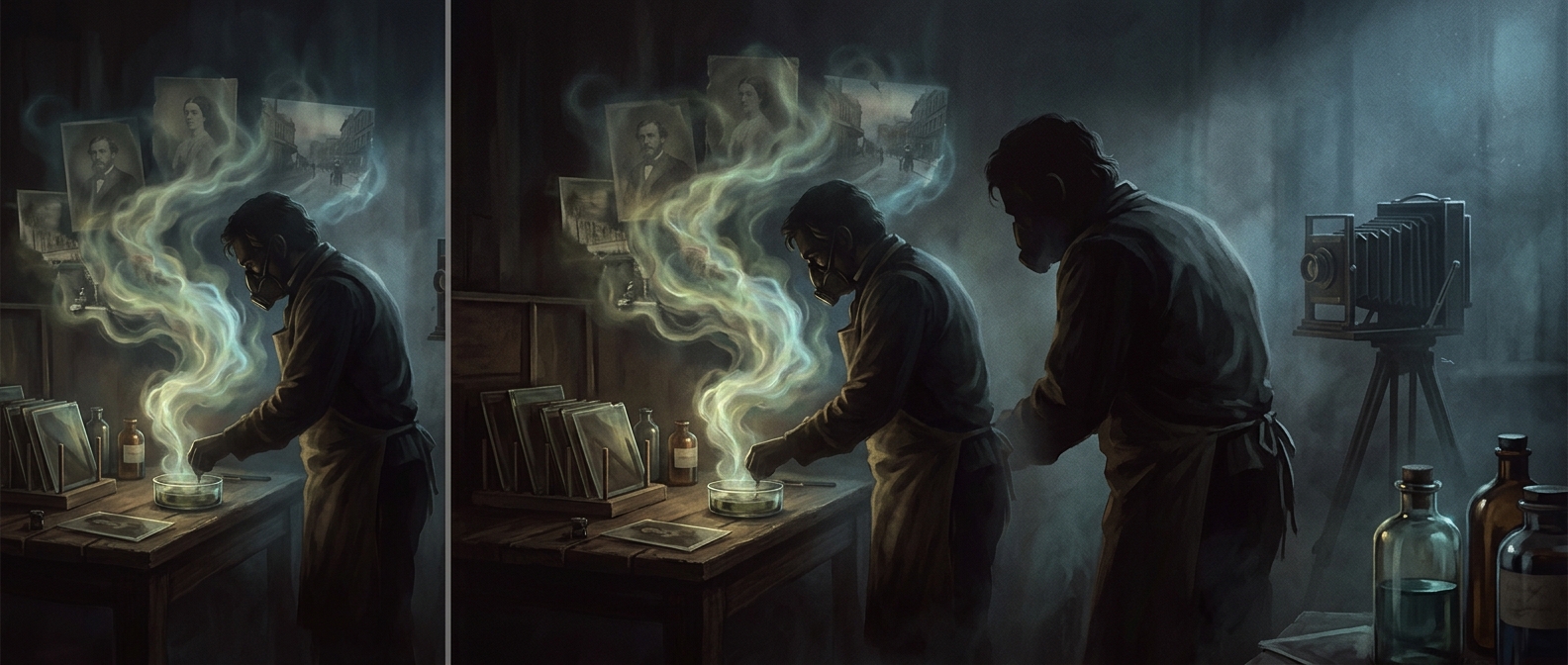
To reveal it, the photographer placed the plate in a closed developing box above heated mercury. Mercury vapor reacted with the silver in the image-bearing parts of the surface, building up a pale deposit that made the picture visible. The result could show remarkably fine detail—but this was not a process that kept the photographer safely apart from its chemistry.
The danger was in the vapor
Mercury is especially hazardous when inhaled as vapor. It can enter the body through the lungs and damage the nervous system; repeated exposure can also harm other organs. Handling a contained plate was not the only concern: developing required mercury to be heated and its vapor brought close to the worker. Poorly controlled fumes could linger in the workspace or escape from the apparatus.
That made daguerreotype work an occupational risk, particularly for people who developed plates repeatedly. The striking image was produced through a precise chemical reaction, but the substance that helped make it visible could also be taken into the body with each breath.
A tradeoff built into the process
The mercury step was part of what gave the daguerreotype its distinctive, detailed image. It also meant that photographic skill included managing dangerous materials, not just framing a subject and operating a camera. The plate could preserve a face with extraordinary clarity; the invisible cost was borne in the developing room, where the image emerged from mercury vapor.