A clock could set the pulse, not shape the phrase
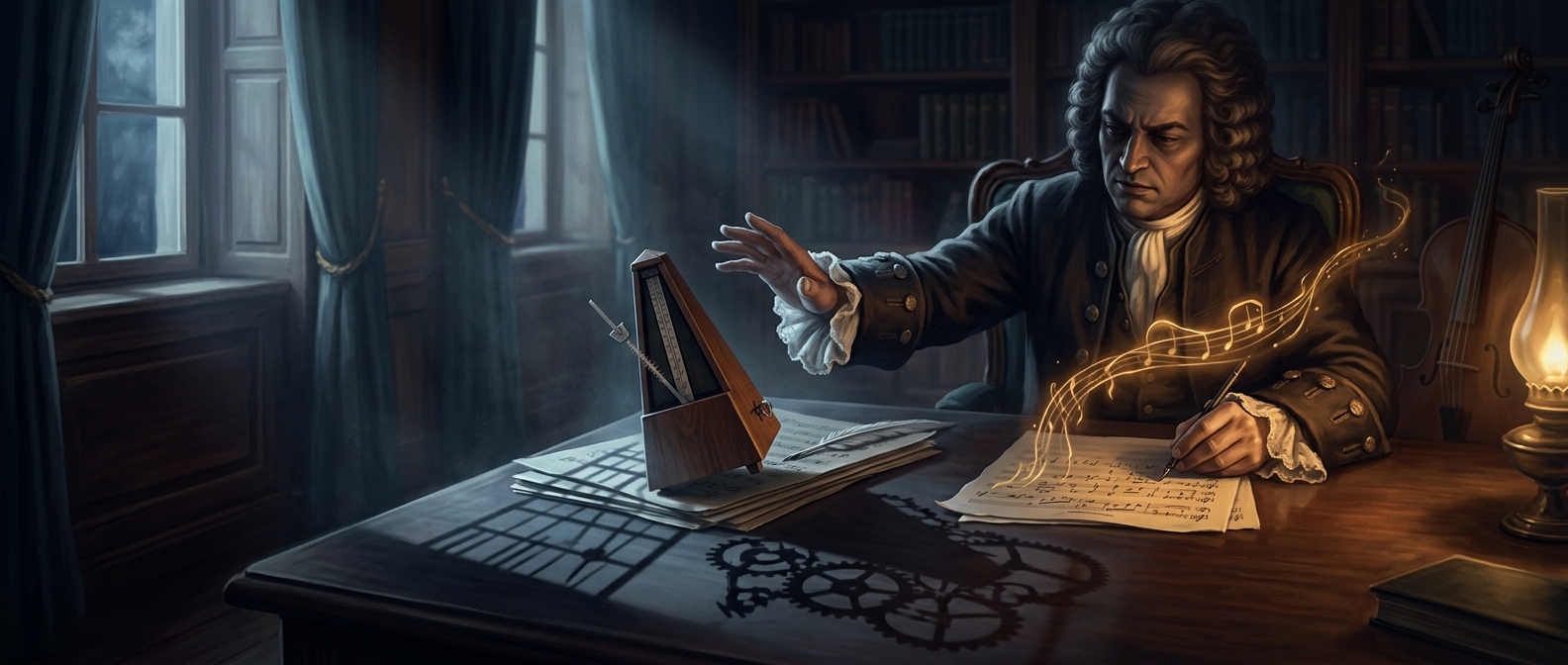
An early metronome turned musical time into a countable sequence of clicks. Its pendulum swung back and forth, and a sliding weight let the player speed up or slow down the beat. That gave composers and performers a shared reference for tempo—the pace of the music—rather than relying only on words such as “slowly” or “briskly,” whose meanings could vary.
But a click can keep equal intervals; it cannot decide how a melody should breathe. A singer may linger on an expressive note, or an orchestra may gently press forward through a rising passage. If every beat is treated as equally fixed, that give-and-take can feel constrained, even when the underlying pulse remains steady.
Why a number felt like too little
A tempo marking could make a score more precise, especially when musicians had never rehearsed together. Yet a single setting could not describe every change of pace within a piece, and composers feared that performers might follow the number mechanically instead of responding to the music’s shape. Some therefore declined to put metronome markings in their scores at all.
The dispute was not simply about machines versus human feeling. It was about what a score should communicate: a measurable starting pace, or guidance that left more room for interpretation. A metronome could help an ensemble agree on the beat, but the musical character still depended on what players did between—and around—the clicks.