Why Two Views Reveal More Than One
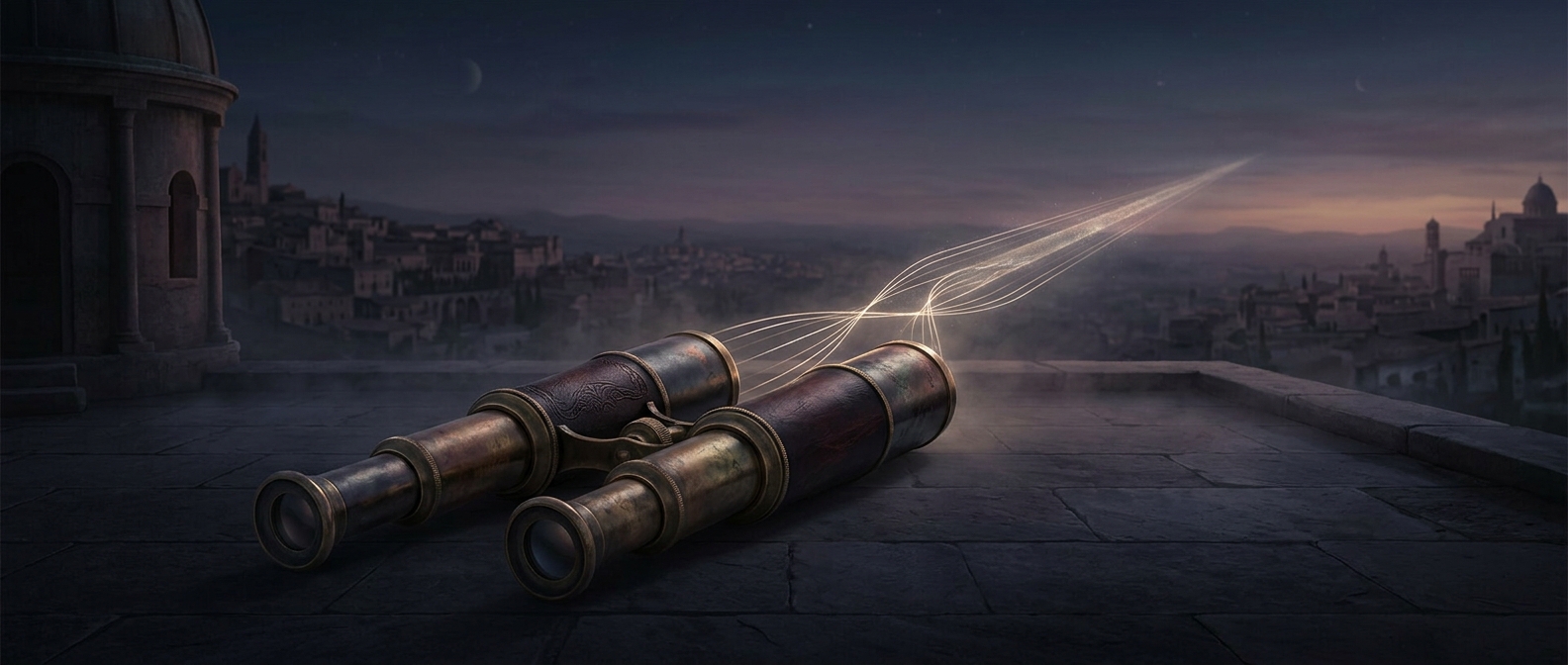
A single telescope magnifies distant objects, but it gives both eyes essentially the same view through one optical channel. That makes it harder to judge distance by comparing the slightly different images each eye normally receives. Put a telescope in front of each eye, and the brain can use those differences—called binocular disparity—to recover a stronger sense of depth, especially for nearby objects.
The basic idea created a new problem: two magnifying tubes are bulky, and each must deliver a clear, upright view to the correct eye. Their optical paths also have to stay carefully aligned. A small mismatch can make the images uncomfortable to fuse.
How Prisms Make the Design Practical
Prisms solve more than a packaging problem. Inside a prism binocular, light reflects through angled glass surfaces, changing direction so the objective lenses—the large lenses at the front—can sit farther from the eyepieces than the instrument’s overall length would otherwise allow. The prisms also turn the inverted image produced by the objective lenses upright, so the scene appears in its normal orientation.
Different prism arrangements shape the instrument differently, but the goal is the same: preserve two separate views while routing each one through a compact body. That is why binoculars can offer the depth cues of paired telescopes without requiring two long, straight tubes. The practical payoff is not just portability: the viewer can keep both eyes open and read distance and movement more naturally while scanning a landscape or following a subject.