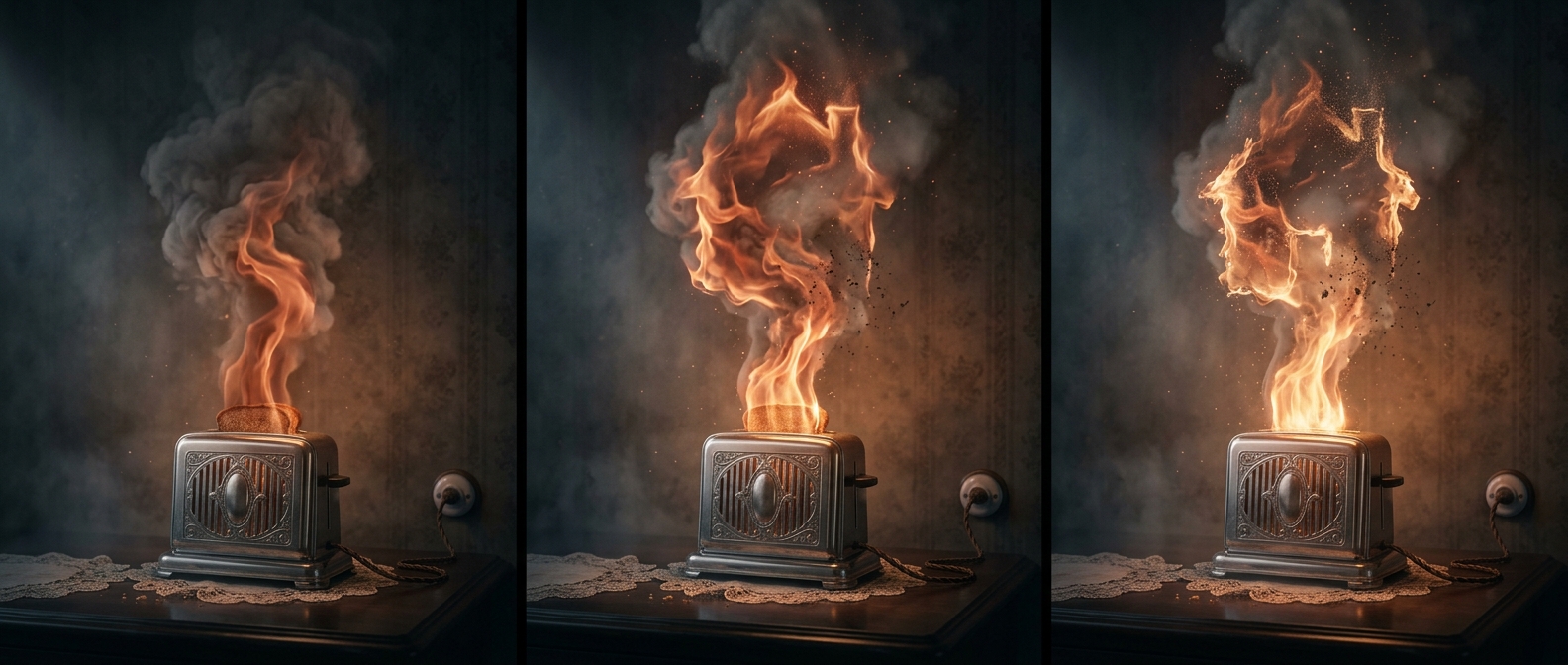
Why an early toaster needed watching
An electric toaster makes heat by sending current through a thin metal wire. The wire resists the current and glows hot—much like the exposed coils in early toaster designs. With no automatic shutoff, the appliance kept heating until someone unplugged it or removed the bread.
That made browning a hands-on job. Bread could be held near the hot element, then turned to toast the other side. Leave it there too long and its surface could char; in a dry kitchen, a flame or a smoldering piece of bread could ignite nearby paper, cloth, or other easy-to-burn material.
From glowing wire to pop-up toast
Later designs put the bread in slots and enclosed the heating elements behind metal guards. This reduced direct contact with the coils, though the toaster still needed a way to stop heating at the right moment. Automatic mechanisms eventually made that decision for the user: a timer or heat-sensitive control cuts power and, in pop-up models, releases the toast.
The change was more than a convenience. It turned toasting from a task that depended on someone noticing the bread in time into a repeatable appliance cycle. Even modern toasters still need space around them: enclosing a hot appliance or letting crumbs build up can preserve the very fire risk the automatic shutoff was meant to limit.