A computer assembled from switches
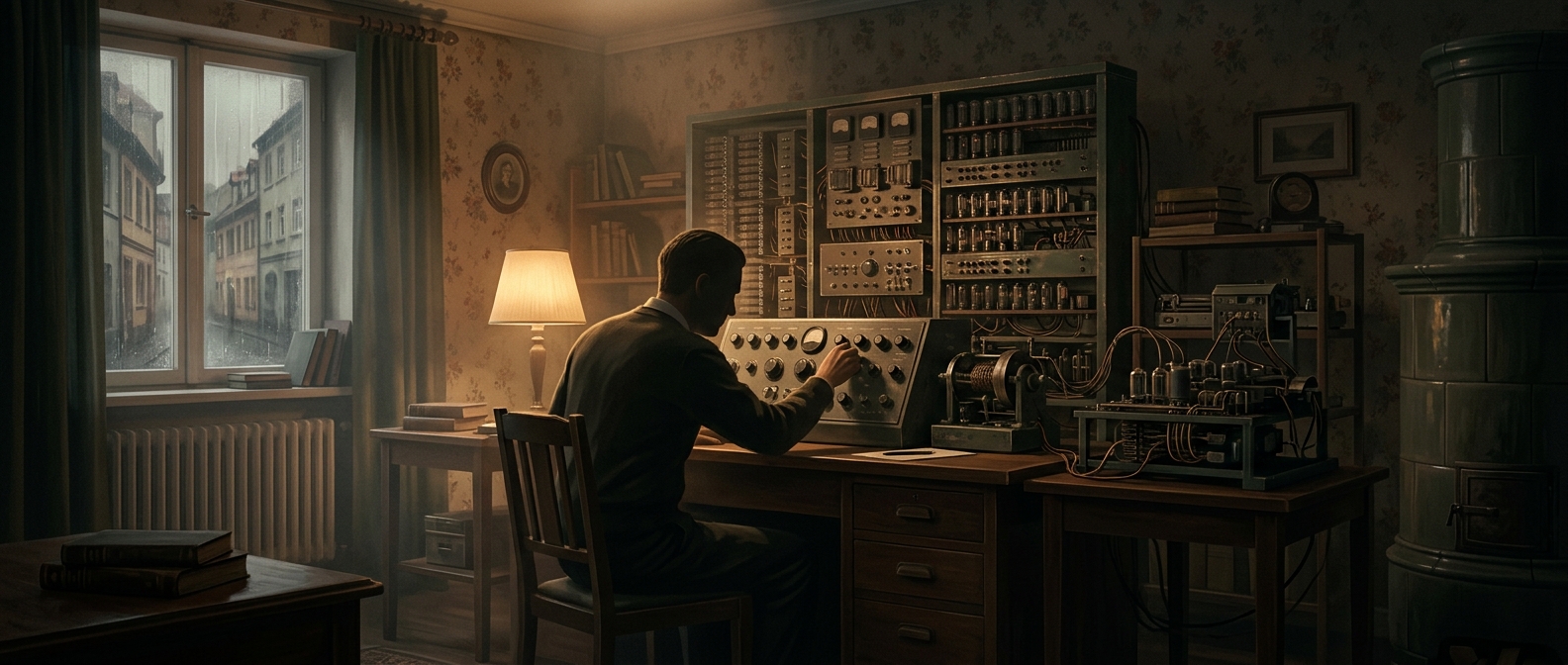
Konrad Zuse built the Z3 in his parents’ home using telephone relays: electrically controlled switches that could represent the two states of binary arithmetic. A relay’s state could also help control the next operation, letting the machine carry out a sequence of instructions rather than merely perform one calculation at a time.
That distinction made the Z3 programmable. Its instructions were fed in on punched film, which told the machine what operations to perform and in what order. The program was separate from the machine’s working memory, unlike the stored-program design common in modern computers.
Why floating point mattered
The Z3 represented numbers in binary floating point. Instead of reserving the same number of digits for every value, floating point stores a number using a significant part and an exponent—much like scientific notation. This lets a machine work with numbers of very different sizes, an important capability for engineering calculations.
The computation itself depended on relays switching in patterns that encoded the numbers and operations. That made the Z3 a strikingly different kind of machine from a hand-operated calculator: once supplied with a program, it could execute a long chain of arithmetic steps automatically.
A fragile home for a new machine
The Z3 was completed in 1941, but the setting was hardly a purpose-built laboratory. Zuse’s parents’ home served as his workshop, and the original machine was later destroyed when the house was bombed during World War II. Its loss makes the surviving account of the machine’s design especially important: a relay-based computer built at home had already joined binary arithmetic, automatic control, and programmable instructions in one working system.