Before Flippers, the Ball Played Itself
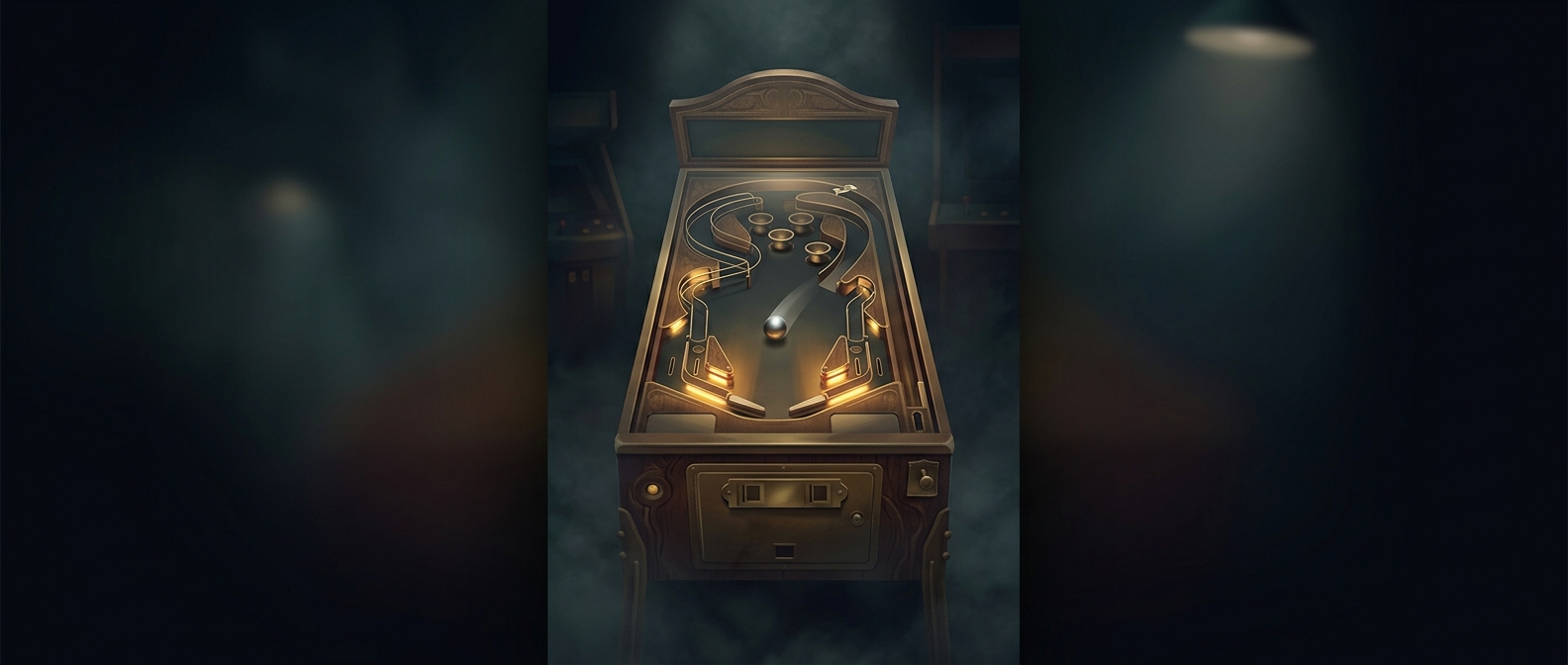
Early pinball tables offered little direct control once the ball left the plunger. Gravity carried it through a field of wooden pins, which deflected it unpredictably toward scoring pockets. Players could influence the run by nudging or slightly tilting the table, but those movements offered limited control—and too much tilt could stop play.
That made the game feel less like a contest of quick reactions and more like a wager on where the bouncing ball would land. The player chose when and how to launch; after that, the table largely took over.
Flippers Changed the Player’s Role
In 1947, the game Humpty Dumpty introduced flippers: hinged paddles operated by buttons at the sides of the cabinet. Instead of merely watching the ball descend, players could strike it back into play and aim it toward other parts of the table.
The change created a new loop of action: watch the ball’s path, time a button press, and redirect it before it drained. Pinball still involved chance—the ball’s bounces remained difficult to predict—but players now had repeated chances to respond. A machine built around passive bouncing had become a test of timing and control, one shot at a time.