How a landing loads the springs
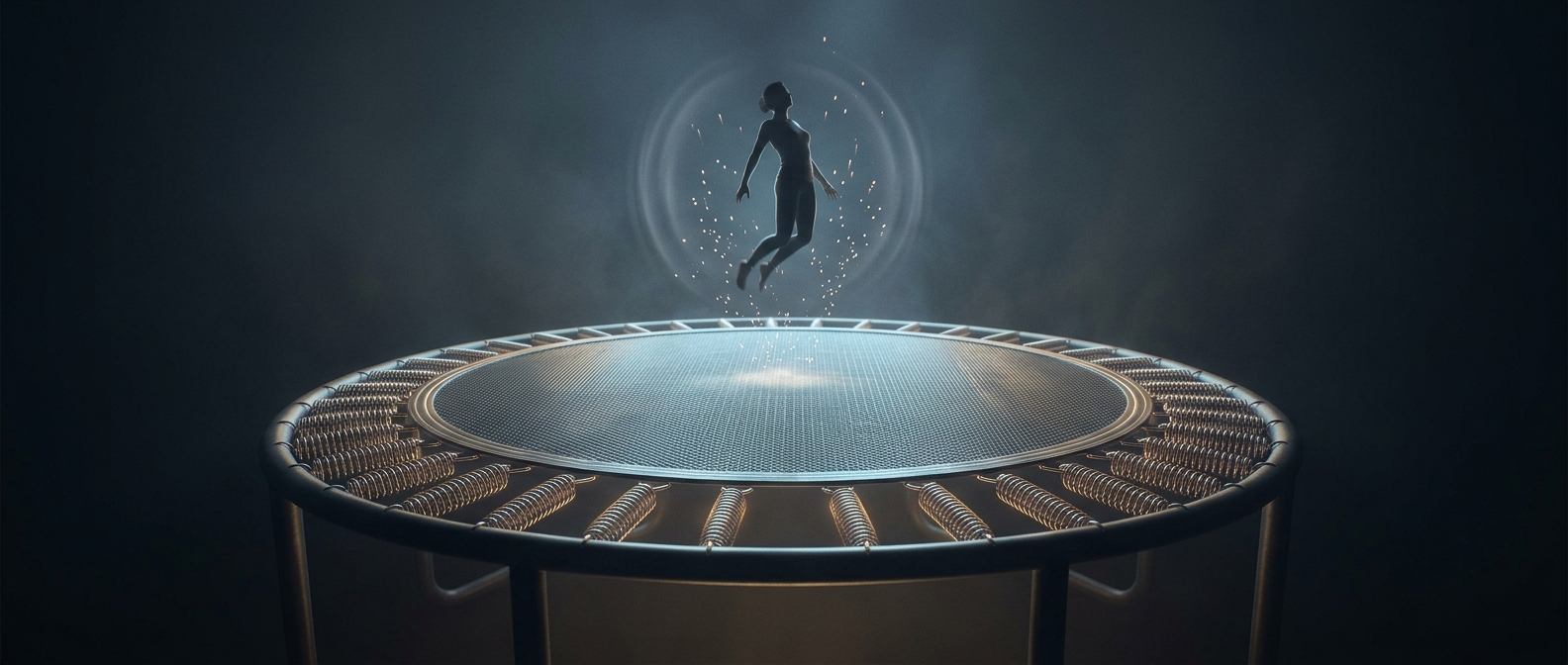
A trampoline’s mat is not a rigid platform. When a jumper lands, the fabric bows downward, and its edge is pulled toward the middle. That movement stretches the metal springs linking the mat to the frame. The springs resist the stretch, storing some of the landing’s energy as elastic energy—the energy held in a material that has been deformed but can spring back.
The mat and springs work together: the mat spreads the force of the landing across many attachment points, while the stretched springs pull the mat back toward its resting position. Their recoil helps accelerate the jumper upward. The frame provides the fixed anchor that lets the springs pull against something rather than simply shifting with the mat.
Why the bounce rises and fades
The springs do not return every bit of the energy they receive. Some becomes heat as the metal flexes, while air resistance and movement in the fabric also take energy from the bounce. That is why a jumper eventually settles if they stop adding energy with their legs.
A trampoline’s feel depends on the combined behavior of its mat, springs, and frame. Stiffer or more tightly tensioned springs resist stretching more; the result also depends on how far the mat can travel and how the jumper lands. The key is that the springs turn a downward landing into a temporary stretch—and then into an upward pull, rather than acting like a simple cushion that merely absorbs impact.