Why a Hammer’s Claw Can Pull a Nail
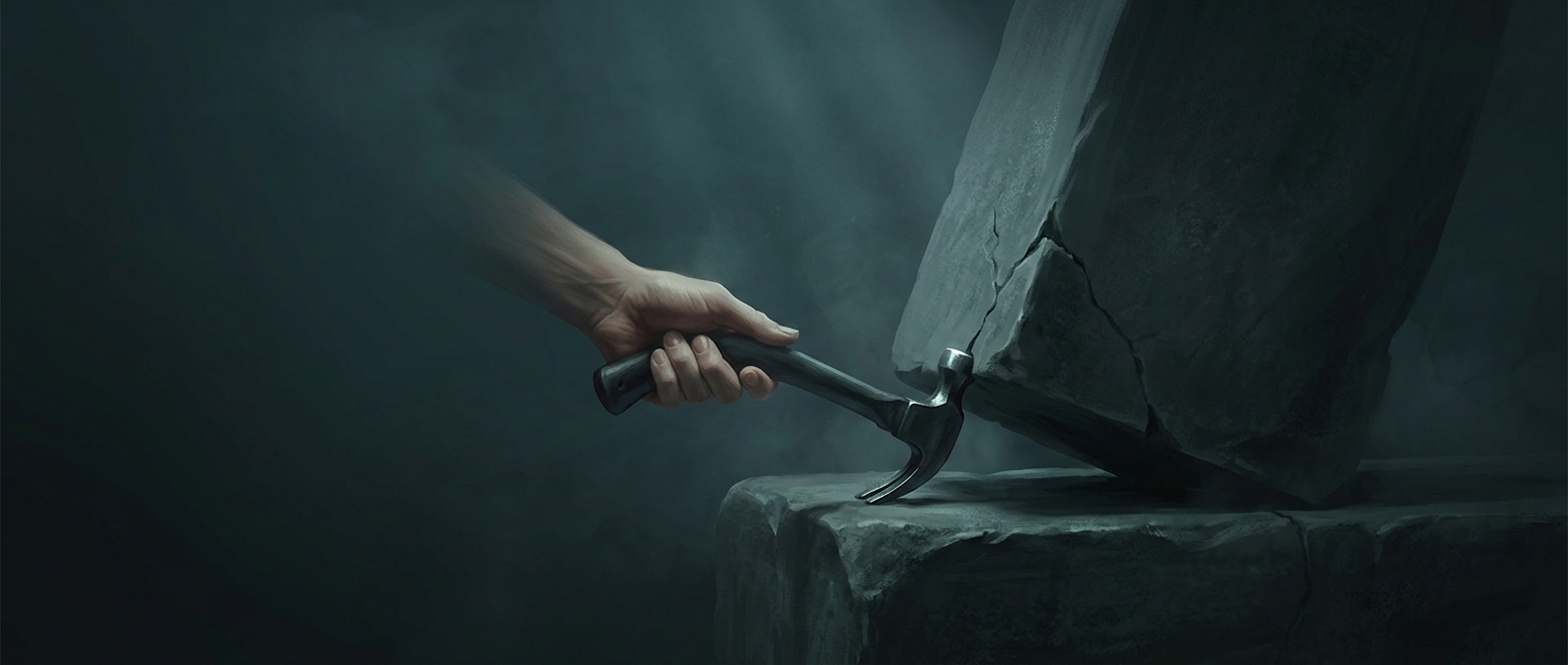
The curved end of a claw hammer turns the tool into a lever. The nail sits in the claw’s notch, while the rounded hammer head presses against the wood. That contact point acts as a fulcrum—the point a lever pivots around. Pulling the handle moves the claw through a short arc, drawing the nail upward.
The handle matters because leverage depends on distance from the fulcrum. A long handle gives your hand a longer arm to work with, so a modest pull can produce a stronger force at the nail. The tradeoff is that the nail moves only a little with each movement of the handle.
Why You Rock the Hammer Back
As the nail comes out, the claw’s grip and angle change. Rocking the head lets you keep the claw engaged and continue pulling without trying to lift the entire nail in one motion. For a deeply embedded nail, you may need to reposition the claw as the exposed shaft gets longer.
The head’s rounded back also helps it pivot against the surface. If the wood is easy to dent, placing a thin scrap beneath that contact point spreads the pressure and helps protect the finish. The same curved geometry that makes the hammer useful for striking also gives it a ready-made pivot for extraction.