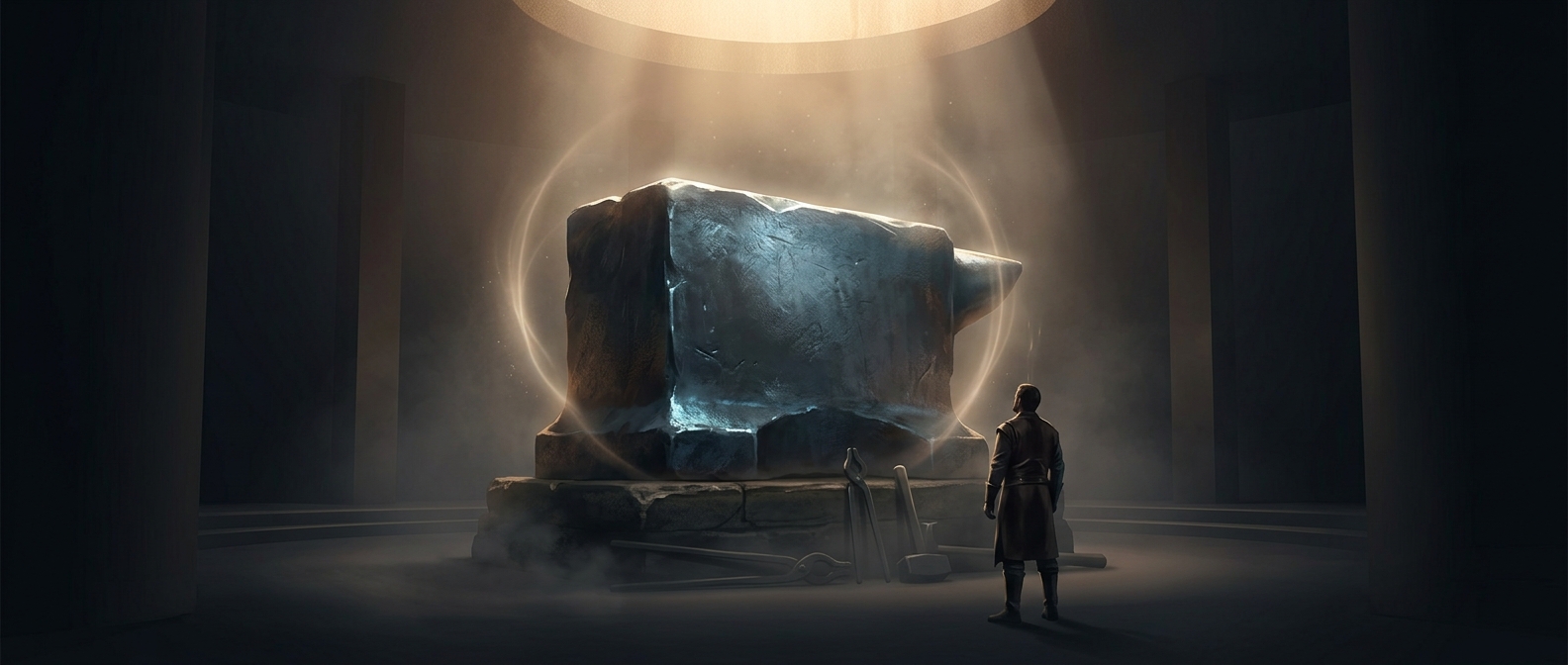
Why a blacksmith’s anvil needs so much iron
An anvil is more than a hard surface: it is a firm reaction point for every hammer strike. When a smith hits hot metal, the workpiece is squeezed between hammer and anvil. The anvil’s mass and rigid support keep it from jumping or shifting, so more of the blow changes the shape of the metal instead of moving the tool beneath it.
That is why traditional anvils were built as dense iron bodies rather than thin plates. Their weight also helps them withstand years of repeated impacts. The anvil is usually secured to a sturdy block or stand, which carries the force into the floor and prevents the whole setup from rocking.
A hard face on a heavy body
The working surface has to resist dents as well as remain stable. Many traditional anvils combine an iron body with a harder steel face joined to it. The body supplies mass; the face takes the direct pounding. The broad flat area is for general shaping, while the horn—the tapered projection at one end—lets a smith bend metal into curves.
These features make an anvil a kind of mechanical partner to the hammer. Its weight holds the work steady, and its shaped surfaces give the smith different ways to direct force. A blacksmith can turn a blow into a flat, a bend, or a curve largely by choosing where the hot metal meets that solid block.