How a ratchet wrench turns a short swing into steady tightening
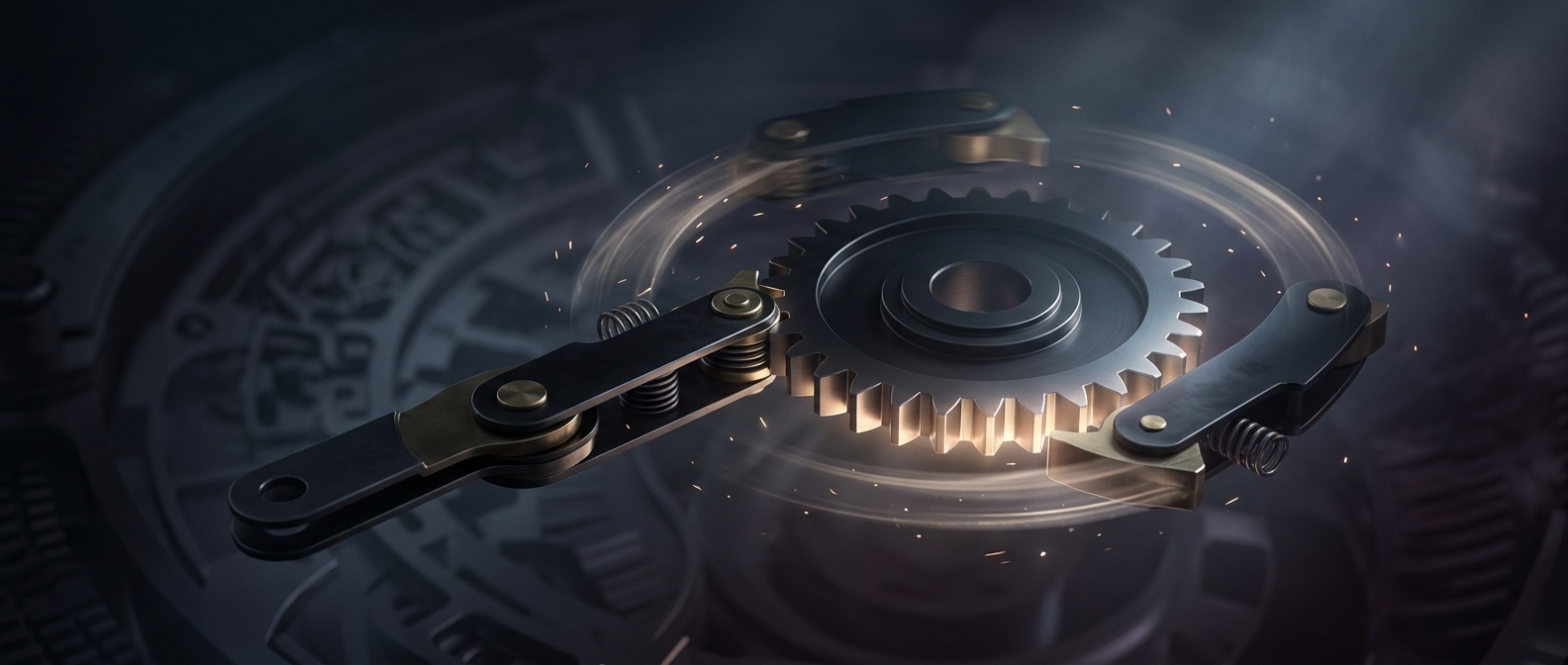
A ratchet wrench is useful when there isn’t room to rotate a wrench all the way around a bolt. Its head contains a toothed wheel connected to the socket and a small pivoting catch called a pawl. A spring presses the pawl toward the teeth, keeping it ready to engage.
The working stroke and the reset stroke
As you swing the handle in the tightening direction, the pawl bears against a tooth. That contact locks the pawl and gear together, transferring your force through the handle to the socket and bolt. The bolt turns even if the handle moves through only a small arc.
When you swing back, the angled backs of the teeth push the pawl aside against its spring. It clicks over the teeth instead of turning the socket backward. The spring then nudges it back into position for the next working stroke. Repeating these two motions lets the bolt advance a little at a time without removing the wrench.
Why the mechanism matters
A selector on many ratchets changes which direction the pawl can engage, so the same tool can tighten or loosen. The tradeoff is that the wrench needs enough clearance for its handle to move back and forth, even though it needs far less room than a conventional wrench for each turn. In a cramped space, each click marks a small advance—and the handle is already positioned for the next one.