Why a nut dictated the shape of its wrench
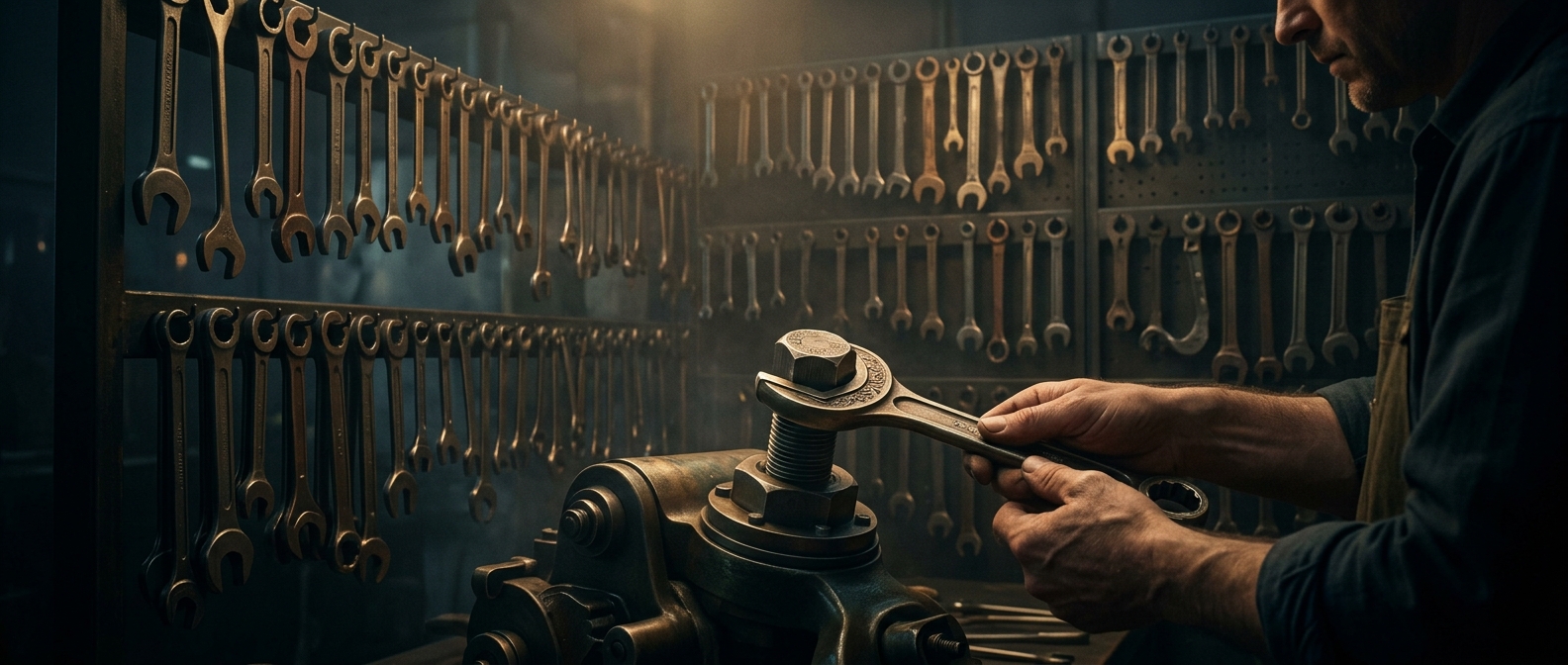
A wrench works by gripping the flat sides of a nut and turning it. If the opening is too wide, the tool can slip and round off the corners; if it is too narrow, it will not fit. Before sizes were standardized, a blacksmith making a nut could not assume that another maker’s wrench would fit it. The dependable solution was to shape the tool to the particular hardware.
That made each repair more dependent on having the right tool at hand. A mechanic working on equipment with differently sized nuts might need a collection of wrenches—or have to make or modify one when the available tools did not fit.
One movable jaw replaces many fixed openings
An adjustable wrench solves the assortment problem with a sliding jaw. Turning a screw moves that jaw closer to or farther from the fixed one, changing the width of the opening so the tool can fit different nuts. Instead of carrying a separate wrench for every size, a mechanic can reset one tool between jobs.
The adjustment adds a small step: the jaws must be set snugly against the nut before turning. A fixed-size wrench has no such adjustment and can provide a close fit immediately, while the adjustable design trades that convenience for versatility.
Standardized sizes made it possible to produce hardware and matching tools around shared dimensions. Adjustable wrenches offered a different kind of flexibility: even when a mechanic encountered more than one size, one tool could adapt rather than requiring a custom fit for each nut.