How a Garage-Door Spring Takes the Load
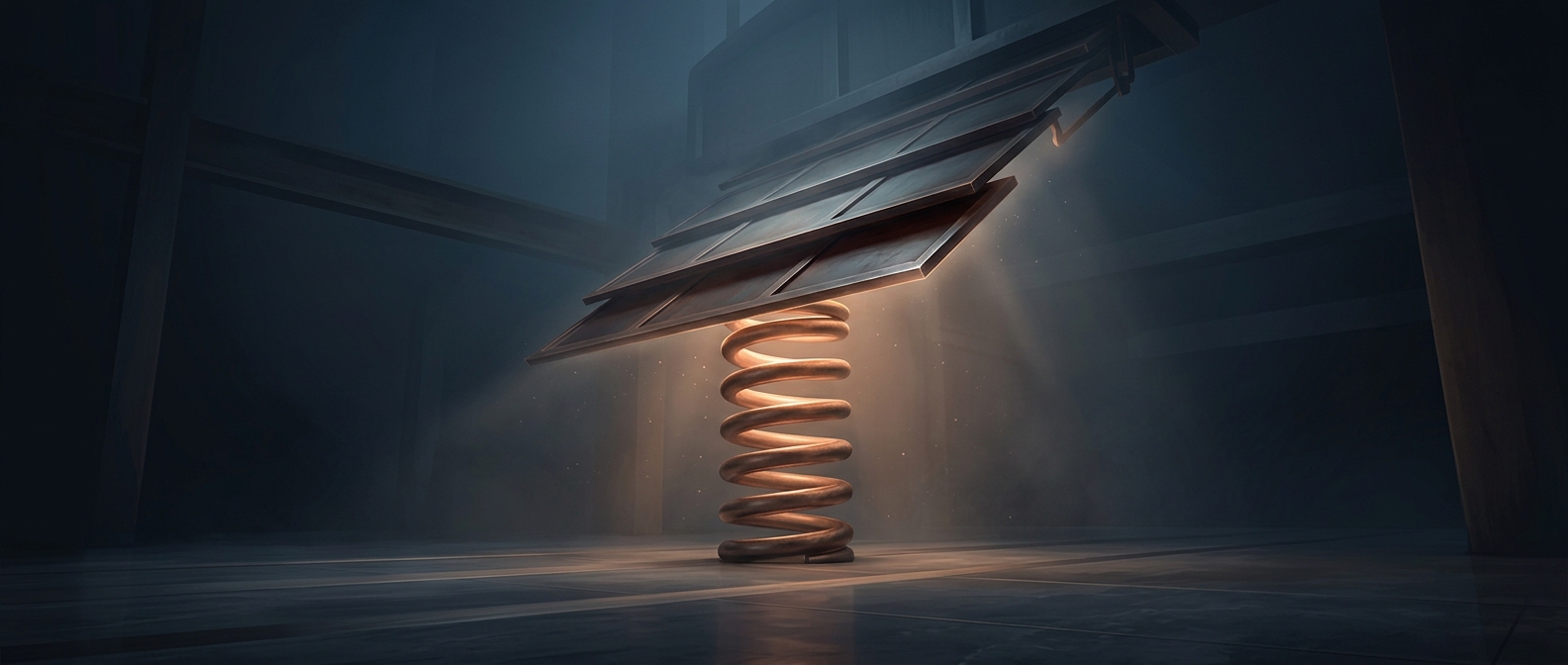
A sectional garage door is heavy, but its torsion spring helps keep that weight from falling on the opener. The spring sits on a shaft above the door. As the door closes, the shaft turns and winds the spring, storing energy in its twist. When the door opens, the spring unwinds and turns the shaft back.
That rotation drives drums at the ends of the shaft. Cables wrapped around the drums pull the door upward as it travels along its tracks. The spring is therefore not simply pushing the door from above: it is helping turn a cable-and-drum system that counterbalances the door’s weight.
Why the Motor Can Be Small
The opener’s motor supplies the motion, while the spring supplies most of the lifting force. With the door properly balanced, the motor mainly has to move it and overcome friction in the tracks and hardware. That division of labor is why a compact opener can handle a door that would be difficult to raise by hand without assistance.
The balance matters in both directions. A spring that is too weak leaves the motor struggling; one that is too strong can make the door rise too readily. The opener is not a substitute for that counterbalance—it depends on it.
Stored Energy Means Real Risk
A torsion spring holds substantial energy even when the door is closed. If it breaks, the door can suddenly become much harder to control, and handling the spring itself can be hazardous. The same twist that quietly helps lift the door is why spring repairs are not ordinary work on a small motor: the spring is the heavily loaded part of the system.