A soldier with a working jaw
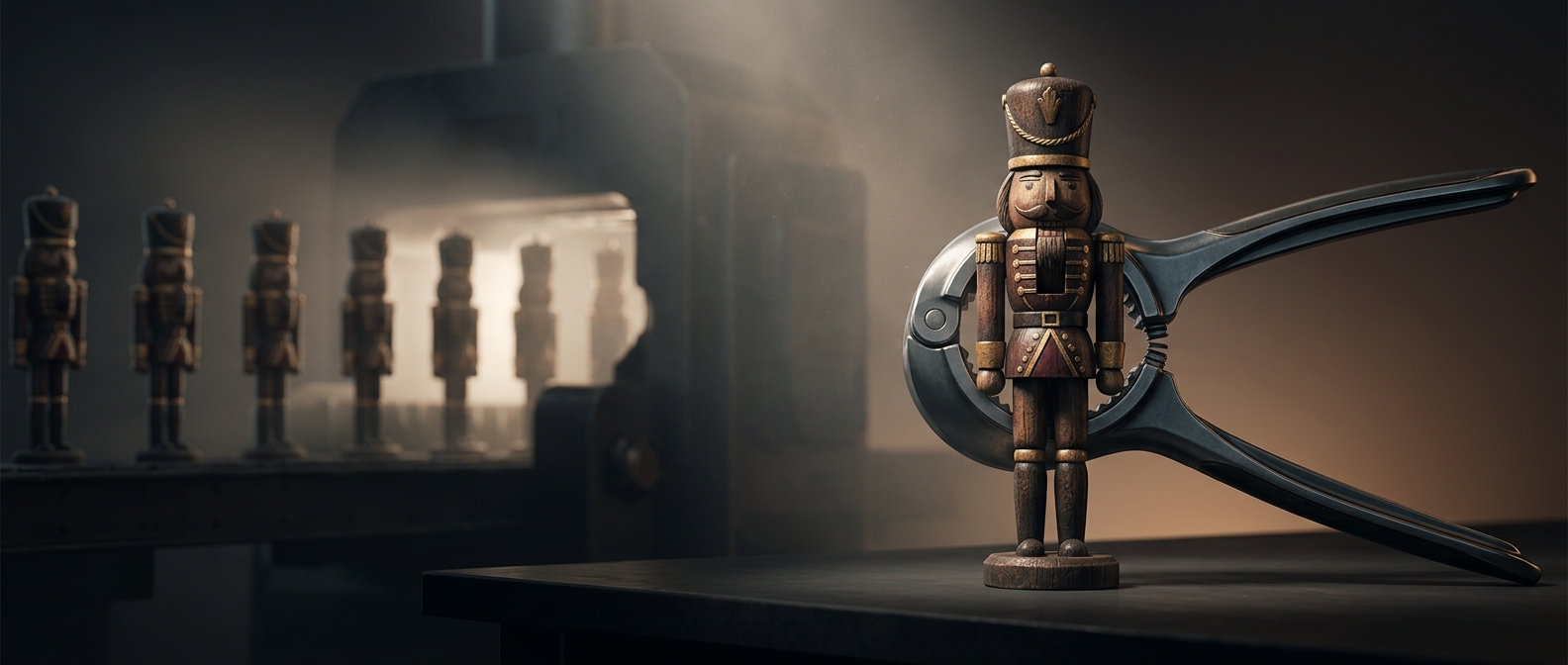
A traditional wooden nutcracker was more than a decorative figure. Its hinged jaw acted as a simple lever: place a nut between the teeth and press the handle or head, and the jaws close with enough force to split the shell. Carving the tool as a soldier or other character made a practical household object look like a little person standing guard on the table.
That combination of function and personality helped make the nutcracker memorable. Its oversized mouth and stiff, uniformed body were not just ornaments; they made the tool’s purpose visible at a glance.
From household tool to storybook character
In the ballet, the nutcracker’s role shifts from cracking nuts to coming alive. The story follows a girl whose toy nutcracker becomes a soldier and leads her into a fantastical battle. The stage figure draws on the familiar image of the carved toy: a small, rigid soldier with a mouth designed to open and close.
The ballet’s route to the stage also ran through literature. It was adapted from E. T. A. Hoffmann’s tale The Nutcracker and the Mouse King, first published in 1816, through a retelling by Alexandre Dumas. The wooden figure supplied a vivid visual identity for the character, while the story gave that figure a larger adventure.
Why the design endured
The transformation works because the object already suggests a character. A nutcracker’s jaw can snap shut like a soldier’s bite, and its uniform makes it seem ready for action even when it is standing still. Onstage, those simple features become expressive: the once-useful household tool can march, fight, and carry a child into an imagined world.