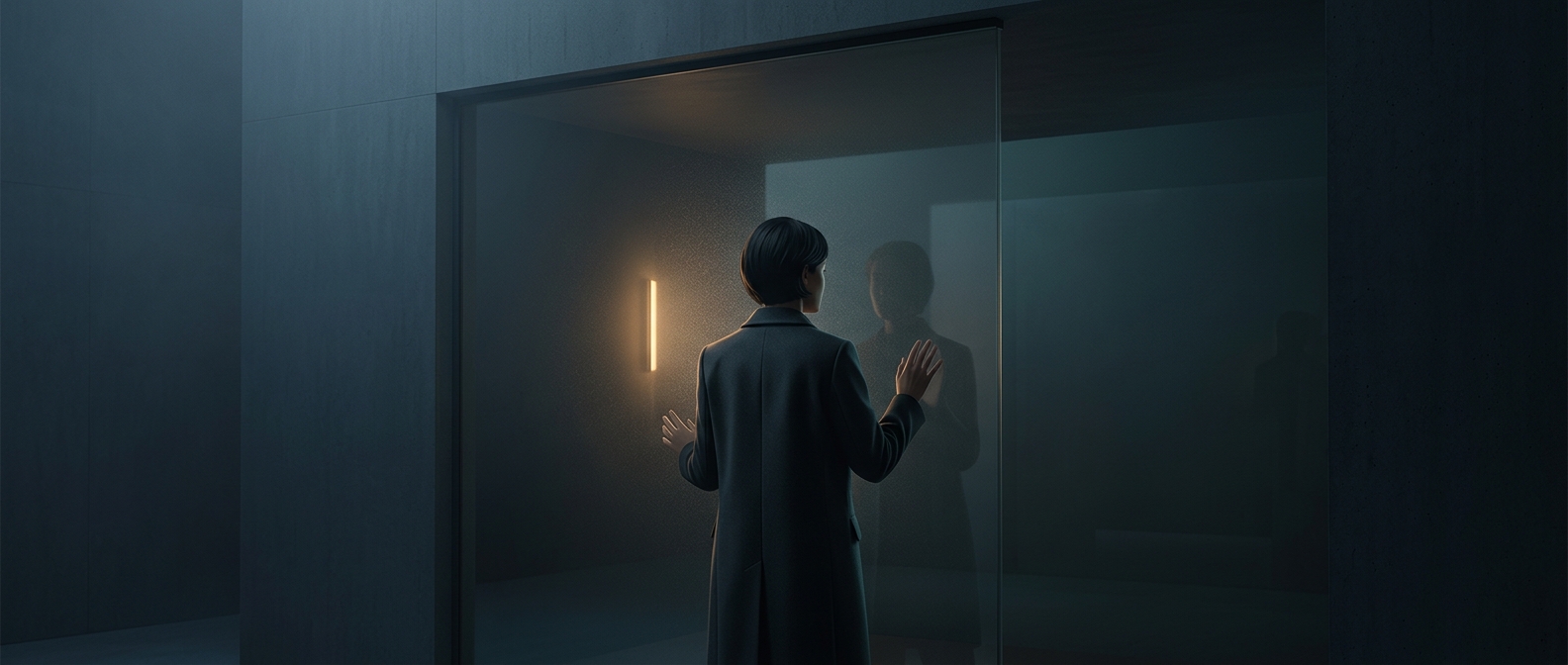
The coating splits incoming light
A one-way mirror is not a special kind of glass that lets light travel in only one direction. It is ordinary glass with a thin, partially reflective coating. Light striking that surface is divided: some bounces back, and some passes through.
That means people on both sides can, in principle, see light from the other side. What matters is how much light each side sends toward the glass—and how bright the reflected scene is compared with the view through it.
Why the brighter side sees a mirror
From a brightly lit room, the coating reflects plenty of light from the room itself: walls, furniture, and people. That reflection can overwhelm the weaker light arriving from the darker space beyond the glass, so the surface looks mirror-like.
Someone in the dimmer room receives more light from the bright room than from their own surroundings. The view through the glass is therefore easier to make out, while their own reflection is faint. The apparent one-way effect comes from contrast, not from a one-directional coating.
The effect can reverse
If the lighting changes—say, the room that looked like a mirror becomes darker while the other room is lit—the balance shifts. The person who previously saw a reflection may now see through the glass more clearly. Curtains, bright lamps, or other changes in the rooms can also weaken the effect by making the two sides more similar in brightness.
That is why installations designed for observation need controlled lighting: the room being watched is kept brighter, and the observer’s space is kept dim. Without that contrast, the “mirror” may reveal more than its name suggests.