How a game can stop you at an edge you cannot see
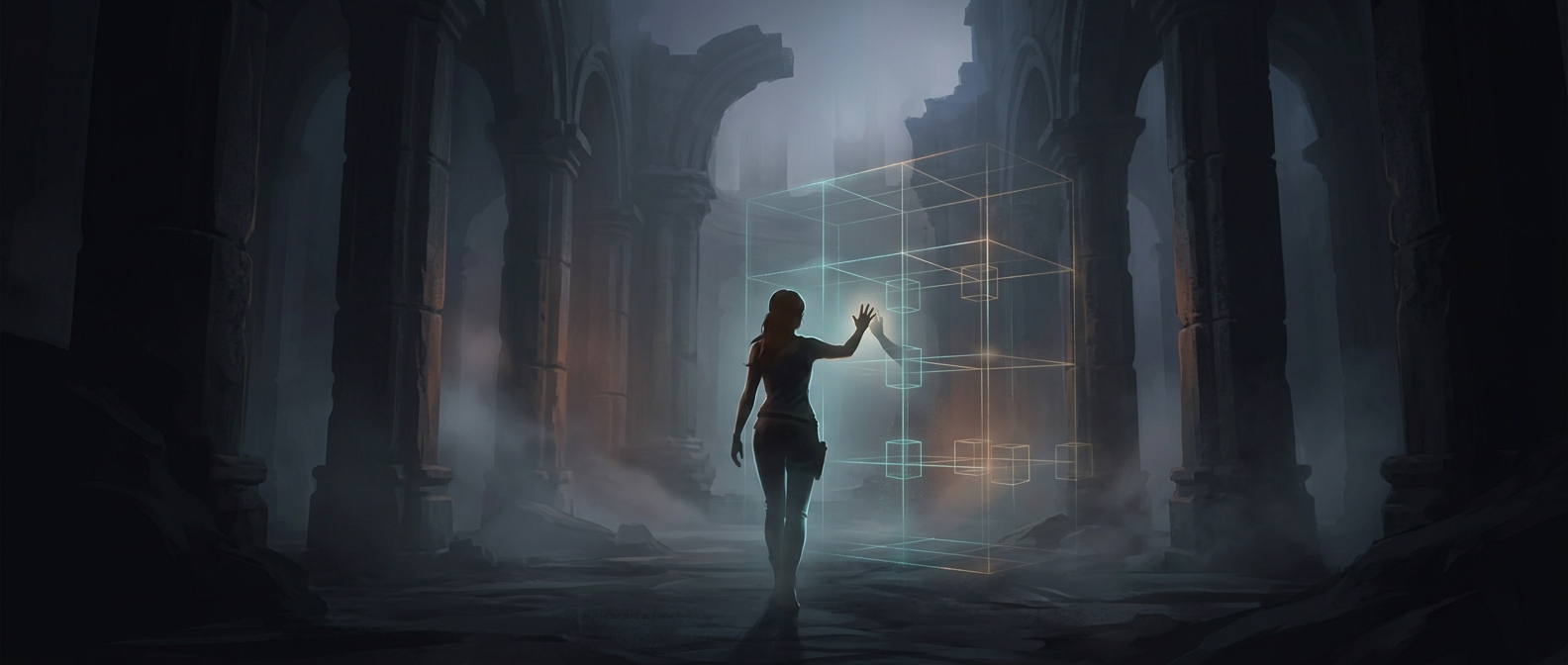
A character’s movement is checked against collision geometry: shapes the game uses to decide what can pass through what. These shapes do not have to match the visible scenery. A level designer can place a simple, hidden volume across a path, and the game will treat it as an obstruction when the player tries to cross it.
During movement, the game tests whether the character’s collision shape would overlap that barrier. If it would, the game blocks or redirects the movement instead of letting the character continue. The player may see an open horizon, a distant landscape, or empty space, while the underlying rules still mark the route as closed.
Why block a route without building a wall?
A hidden barrier gives designers a direct way to control where players can go without adding a visible fence or cliff. It can keep a character inside the playable area, prevent entry into unfinished scenery, or stop movement into a space the game is not prepared to handle. A visible boundary might feel more natural, but it can also interrupt the view or make the world seem smaller.
The tradeoff is that players notice when the scenery suggests a route but movement says otherwise. Designers may place barriers behind terrain or along an apparent drop so the restriction feels consistent with the setting. When the mismatch is hard to hide, the invisible wall becomes a reminder that the landscape is not all part of the playable world.