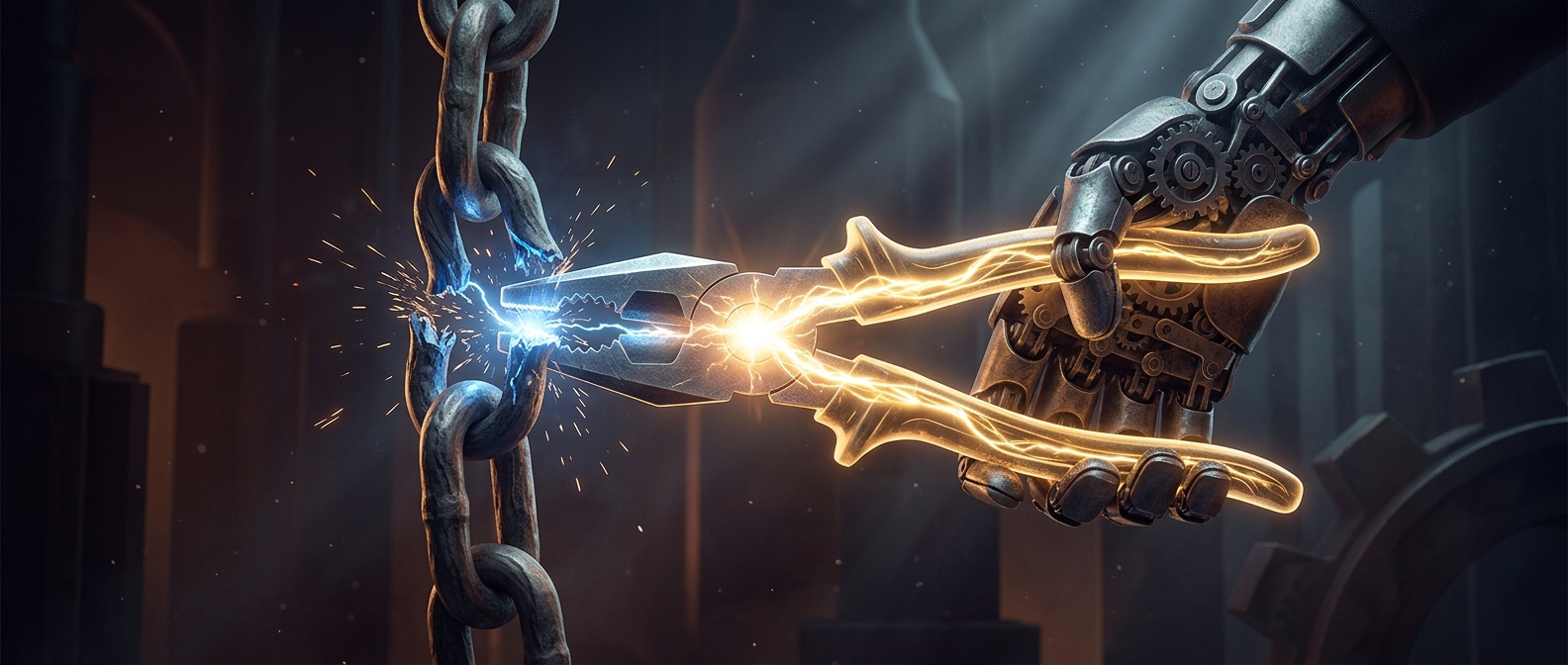
How a Small Hand Squeeze Becomes a Strong Jaw Grip
Pliers work as a pair of levers joined at a pivot. The pivot is the fulcrum: when you squeeze the handles, they rotate around it, pushing the jaws together on the opposite side. Because your hand presses on the handles farther from the pivot than the jaws reach, the tool can apply more force at the jaws than your fingers apply to the handles.
The size of that advantage depends on the geometry. In a simple lever, force is multiplied roughly in proportion to the distance from the pivot to where you push, compared with the distance from the pivot to where the tool pushes back. Longer handles and shorter jaws can increase the jaw force, though the exact result also depends on the pliers’ shape and how they are being used.
The Tradeoff Behind the Leverage
Force amplification does not create energy. The jaws move a shorter distance than your hands do, so you trade jaw travel for a stronger push. That is useful when a small movement must clamp a wire firmly or grip a stubborn part. Serrated jaw faces help by biting into the material and resisting slips; cutting pliers use sharpened edges to concentrate force along a narrow line.
Pressure is force spread over an area. When the same jaw force acts on a small contact patch, pressure rises, helping the jaws grip or cut. But the same concentrated force can also damage what they hold. On a bolt head, for example, pliers may deform the corners rather than turn it cleanly, especially if the jaws slip. The tool’s leverage is powerful precisely because it concentrates your squeeze—and that makes controlled placement as important as strength.