A wound effect is built into the costume
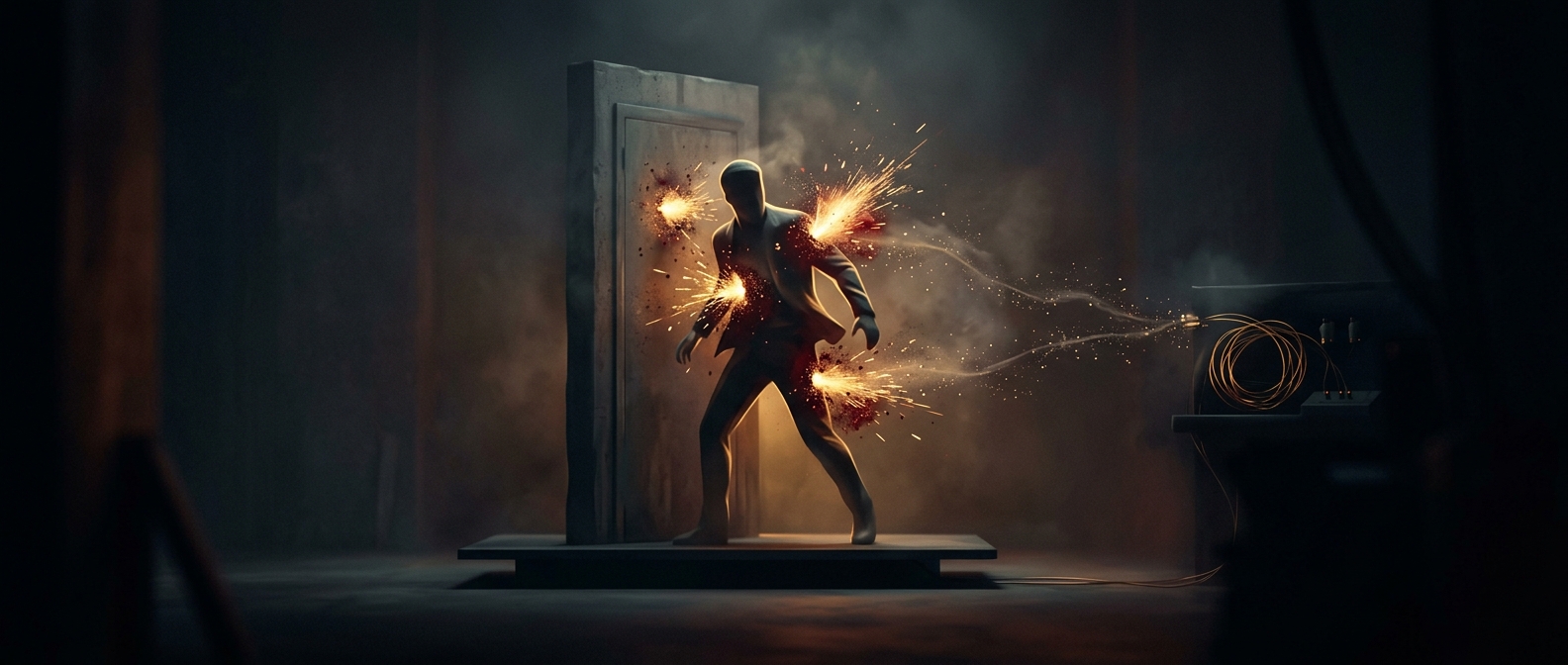
A screen “bullet hit” is a small piece of coordinated stagecraft, not a projectile striking the actor. The squib is a compact pyrotechnic device attached beneath the clothing, usually alongside a packet of theatrical blood. When triggered, it ruptures the packet and jolts the fabric outward, making the impact visible for a split second.
The placement matters as much as the burst. Costume and effects teams arrange the charge and blood so the material breaks outward through a chosen spot, while the camera sees the splash rather than the mechanics underneath. A prepared costume may be designed for only one take: once the packet has burst and the fabric is marked, the effect has to be reset or the clothing replaced.
Timing sells the impact
The effect must go off at precisely the moment the actor reacts. A delay makes the hit look disconnected; an early burst gives away the cue. The actor’s movement, the sound of the shot, the camera angle, and the squib trigger are therefore rehearsed as one sequence. Editing and sound can strengthen the illusion, but the brief outward kick of cloth and blood gives the camera a real event to capture.
The practical effect has limits
Because a squib is a pyrotechnic charge worn close to a performer, it requires specialist handling and controlled conditions. It is used only when the production can manage those risks; digital effects or other non-pyrotechnic methods can create a similar image without a live charge. The convincing part is not simply the burst—it is the carefully timed combination of costume, blood, performance, and camera.