A Human Hand Kept the Script Moving
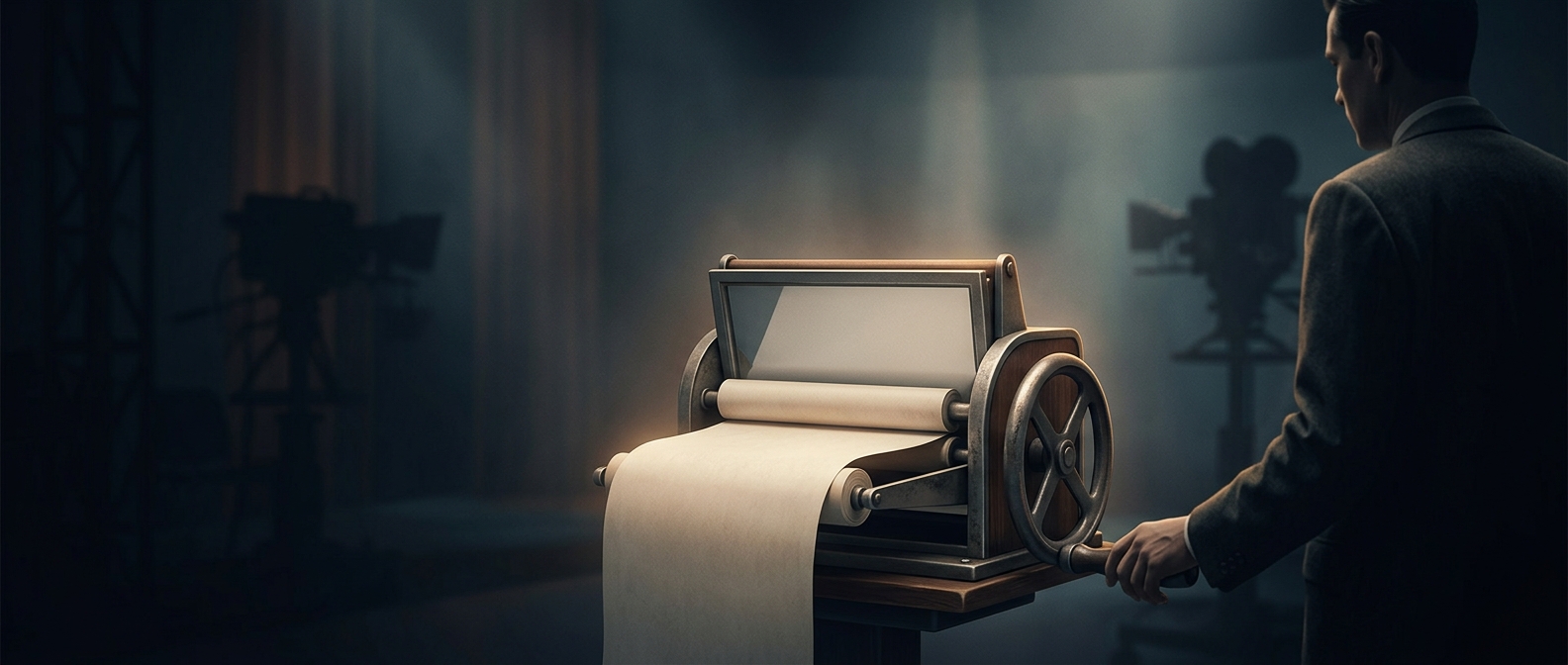
The earliest teleprompter setup was less a screen than a paper feed. Dialogue was written in marker across a large roll of butcher paper, and an intern beneath the camera turned a crank to advance it as the presenter spoke.
That arrangement solved a practical problem: a presenter needed the next line without repeatedly looking away from the camera to consult a page. The script could move through the shot at roughly the pace of delivery, keeping the words available while the speaker faced forward.
The Operator Was Part of the Machine
Because the roll had no automatic timing, the intern had to follow the speaker in real time. Turn the crank too quickly, and the presenter could lose the line; too slowly, and the text would lag behind. The human operator supplied the judgment that a later motorized system could handle more consistently: when to move the words and how fast.
The paper format also made the script itself a physical constraint. It had to be prepared in advance, written large enough to read, and fed through the setup without tangling or jerking. A seemingly simple aid therefore depended on coordination among the presenter, the person turning the crank, and the camera arrangement.
From Paper Roll to On-Camera Reading
The central idea was already in place: keep the script near the camera so reading could look more like direct address. What changed over time was how the words were displayed and advanced. The hand-cranked roll made the presenter’s smooth delivery depend on an intern’s steady hand—an early, conspicuously mechanical version of a familiar television illusion.